Last updated November 18, 2026








Free written scope consultation - allowances, timeline, and change-order rules on paper before a single trade is scheduled
Bathroom Remodeling Warning Signs Every Homeowner Should Know
A contractor can skip the waterproofing membrane behind your shower tile, set the tile perfectly, and hand you a finished bathroom that looks flawless. You won’t know anything is wrong until the wall behind it is saturated two years later, the drywall crumbles, and the phone number you saved no longer works. Bathrooms fail differently than kitchens. A bad kitchen shows up as a crooked cabinet door you can see. A bad bathroom hides inside the wall and rots your framing quietly. We’re Sawyer Remodel Enterprise, and we’ve walked into plenty of Enterprise homes where the real problem was buried under good-looking tile. This guide teaches you the specific warning signs tied to water and moisture management, so you can spot the cut corners before they cost you.
Quick Answer
The biggest bathroom remodel warning signs are a contractor who never mentions a waterproofing product or method, who can’t explain the moisture barrier behind cement board, who specs an undersized exhaust fan or skips one in a windowless bath, and who tiles without spacers or consistent grout lines. If your contractor can’t tell you exactly how water gets managed in the shower assembly, walk away before you sign. Those answers separate someone who knows moisture control from someone who knows how to make tile look nice.
Styles & brands we work with
- Kitchen remodeling
- Bathroom remodeling
- Home additions & ADU
- Roofing
- Windows & doors
- Driveway & pavers
- Fence
Table of Contents
- Pre-Contract Red Flags Specific to Bathrooms
- What Proper Shower Waterproofing Actually Looks Like
- How to Verify Waterproofing Before Tile Goes Up
- Ventilation Warning Signs Owners Miss
- Tile Installation Signs You Can Catch in Real Time
- Questions That Separate Moisture Experts From Talkers
- Why Enterprise Moisture and Ventilation Details Matter
- Common Mistakes to Avoid
Pre-Contract Red Flags Specific to Bathrooms
The conversation before you sign tells you almost everything. When a contractor discusses your bathroom and never once says the words “waterproofing,” “membrane,” “moisture barrier,” or “vapor,” that’s a signal worth taking seriously. Tile is decoration. The waterproofing underneath is what makes the room survive. Anyone who treats the shower like a wall you stick tile to has skipped the part that matters.
Listen for how they describe the shower pan and the walls. A contractor who knows the work will name the system: a bonded sheet membrane, a liquid-applied waterproof coating, or a foam board system with sealed seams. They’ll tell you what goes on the substrate before anything else. They’ll also mention the moisture barrier that sits behind cement board on the walls, because cement board is not waterproof on its own, despite the name. If they call cement board waterproof, that’s a red flag big enough to stop the meeting.
Other pre-contract signs to watch for in Enterprise:
- No written scope for the shower. If the estimate says “tile shower” with no waterproofing line item, you have no idea what’s going in that wall.
- Vague answers about the pan. Ask what kind of pan they build. A real answer names the liner, the pre-slope, and the drain connection.
- No mention of a flood test. A pan should hold water for a period before tile goes on. Contractors who skip this are betting your floor.
- Pressure to start without a written price. Our rule at Sawyer is simple: a written price lands in your hands before any work starts. Contractors who won’t do that are hiding something.
If you’re comparing this against whole-home work, our General Contractor in Enterprise page explains how the same upfront pricing standard applies to larger projects.
What Proper Shower Waterproofing Actually Looks Like
A correctly waterproofed shower is a layered assembly, and each layer has a job. Seeing it done right once makes every shortcut obvious forever. Here’s what a proper install includes, so you know what you’re looking at before tile covers it up.
- A sloped substrate under the pan. The floor under the waterproofing must slope toward the drain. Flat pans trap water and grow problems.
- A waterproof membrane over the pan and up the walls. This can be a bonded sheet membrane or a liquid-applied coating. It covers the floor, wraps up the walls at least to the shower head height, and overlaps every seam.
- Sealed seams and corners. Every corner gets a pre-formed piece or a fabric embedded in the coating. Sharp inside corners are where leaks start.
- A moisture barrier behind the wall board. On the studs, before cement board goes up, a vapor-retarding sheet keeps interior moisture from soaking the framing.
- A flood test. The pan holds standing water for a period and gets checked for loss before anything else happens. This is the single most important step and the one most often skipped.
- Tape and thinset at the board joints. Seams get reinforced, not just butted together.
None of this is optional in a wet environment. In our experience across Enterprise, the failures we’re called to fix almost always trace to one of these layers missing. A shower built without a waterproofed pan will last long enough to get past any warranty window, then quietly destroy the subfloor beneath it.
How to Verify Waterproofing Before Tile Goes Up
You don’t need to install anything to check the work. You need to look before the tile hides it. The best contractors expect this and will walk you through it. Here’s how to verify, step by step, without getting in the way.
- Ask for a photo before tile. Request a picture of the waterproofed shower before any tile is set. Every job we run includes before-and-after photo updates through The Relay Visibility Guarantee, so you always have this record.
- Look for continuous coverage. The membrane should be one unbroken surface up the walls and across the floor. Gaps at corners or around the drain are where water gets in.
- Confirm the drain connection. The drain should sit flush with the waterproofing, sealed to it, not screwed through it.
- Ask about the flood test result. A simple “the pan held for the test period with no loss” is what you want to hear. If they can’t tell you it happened, it probably didn’t.
- Check the wall behind the board. If you can, confirm the moisture barrier is present before the cement board goes up.
If your contractor resists showing you these stages, that resistance is the answer. You’re not being difficult. You’re being a homeowner with a serious budget who wants the wall to survive. If you want to see how we handle a full bathroom project with this level of visibility, our Bathroom Remodeling in Enterprise page lays out the process.
Ventilation Warning Signs Owners Miss
Moisture management doesn’t stop at the shower walls. It’s also the air in the room. A windowless bathroom without a properly sized exhaust fan is a moisture trap, and it will feed mold and deteriorate the finishes you just paid for. Yet ventilation is the part most homeowners never think to question.
Watch for these signs:
- An undersized fan. Fan capacity is measured in cubic feet per minute, or CFM. A fan rated too low for the room’s size won’t clear the moisture. Ask how they sized it.
- No fan at all in a windowless bath. This is a code problem and a moisture problem at once. If your plan has no fan in a room with no window, ask why.
- No ducting plan. A fan that dumps moist air into the attic or a wall cavity is worse than a fan that runs short. The duct has to go outside.
- No timer or humidity control. A fan tied to a switch gets turned off too soon. A humidity sensor or timer runs long enough to actually dry the room.
In Enterprise, the dry desert air outside works in your favor only if moisture actually gets out of the house. A fan blowing into a sealed attic does nothing. Whether the fan is present and where the duct goes are just as important as whether it turns on.
Tile Installation Signs You Can Catch in Real Time
Tile work is visible while it’s happening, which means you can spot problems as they appear. You don’t need to be a tile setter to notice these.
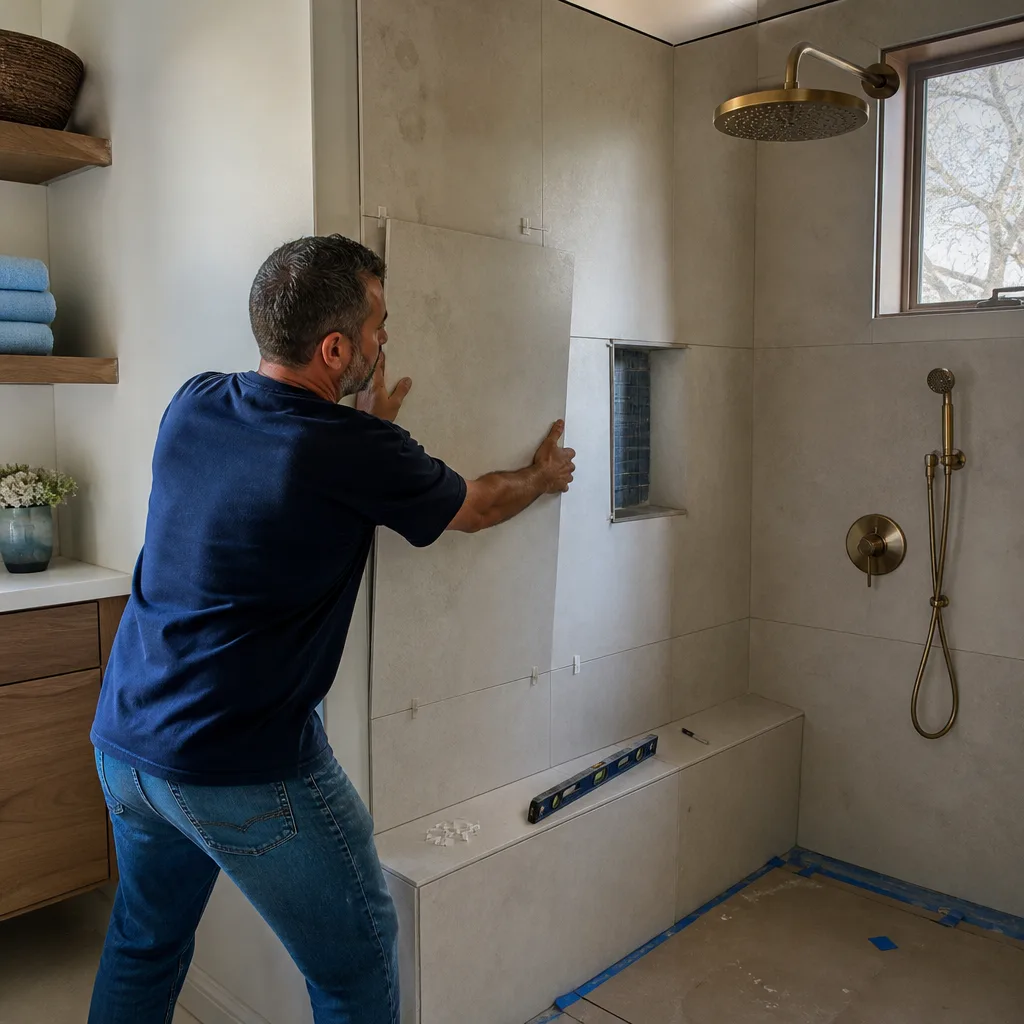
- No spacers. A proper install uses tile spacers or a leveling system to keep joints even. If the installer is eyeballing gaps by hand, the grout lines will show it.
- Inconsistent grout lines. Even widths across the wall and floor signal careful work. Lines that wander, widen, or jog are a sign of rushing.
- Hollow-sounding tile on walls. Tap a set tile gently. A dull hollow sound means there’s a void behind it, usually from thinset not covering the back of the tile. That void collects moisture.
- No back-buttering. Large-format tile needs thinset spread on the back as well as the wall for full coverage. Skipping it creates the hollow spots you just heard.
- Lipless edges without trim. Where tile meets a floor or a niche, a proper transition matters. A metal profile like a Schluter edge trim (the strip that finishes and protects where tile meets another surface) is the difference between a durable edge and one that chips.
If you notice any of these, raise it right away, before grout goes in. A good contractor welcomes the question. For the surfaces themselves, we build with materials from brands homeowners recognize, including KraftMaid and Cambria, so every choice comes from a proven supplier rather than an unknown one.
Questions That Separate Moisture Experts From Talkers
You can run an entire waterproofing interview in ten minutes. These are the questions we’d want any contractor to answer clearly before signing:
- What waterproofing system are you using in the shower, and how is it applied?
- Is there a moisture barrier behind the cement board, and what product?
- How do you waterproof the shower pan, and do you flood-test it?
- How will you connect the drain to the membrane?
- What size exhaust fan are you installing, and where does the duct terminate?
- What’s the written price, and will it change once work starts?
- How will you keep me updated on progress and arrival times?
Notice that most of these have nothing to do with design. They’re all about water. A contractor who can answer every one of them knows moisture management at a level that matters. One who stumbles on the drain and the fan questions doesn’t, no matter how smooth the sales pitch.
Our answer to the last three is built into The Relay Visibility Guarantee: a written price before any work starts, a live arrival time, and before-and-after photo updates. The number on the invoice is the number you approved. That’s our standing commitment, included on every job, not something you have to ask for.
Why Enterprise Moisture and Ventilation Details Matter
Local conditions change the stakes. Enterprise sits in a dry climate, and that can lull homeowners into thinking moisture is a small concern. It isn’t, because indoor moisture behaves differently than outdoor air. A shower generates steam that has to leave the room. In a tight, windowless bathroom, that moisture lingers and soaks into the very walls and finishes you’re paying to install. Ventilation and waterproofing are what keep that water from becoming a structural problem.
That’s why a proper exhaust fan run is not a luxury in Enterprise, and why a shower pan that isn’t fully waterproofed is a slow-motion failure. We also see how permit and inspection requirements shape a proper bathroom project here, and pulling permits and passing inspections is part of how a legitimate remodel runs. If you’re also planning larger work, our Kitchen Remodeling in Enterprise page addresses the same standard for kitchens, where wet areas around sinks and appliances need the same discipline.
Contractors who skip the waterproofing and the fan throw out the two things that keep the room dry. In dry-country bathrooms, that’s why we check these layers every single time rather than assuming the room will be fine because the air outside is dry. The air inside is the one doing the damage.
Common Mistakes to Avoid
- Accepting “cement board is waterproof” as an answer. It isn’t. A contractor who says it is has skipped the membrane entirely.
- Skipping the flood test to save a day. The pan test is the cheapest insurance in the whole project. Contractors who cut it are betting your subfloor against their schedule, and in Enterprise that’s a losing bet.
- Leaving a windowless bathroom without a properly sized fan. The steam has to go somewhere. If a fan isn’t specified, ask what’s happening instead.
- Letting the duct vent into the attic. Moist air has to reach the outside. A fan that exhausts into a cavity just moves the moisture problem.
- Accepting a verbal price. The number is only real when it’s in writing. Callback quotes and “we’ll figure it out” quotes are how surprise invoices happen.
- Ignoring hollow tile during the install. Tap and listen. Hollow spots are voids that hold moisture. A quick check before grout can catch work that would fail later.
- Signing before the waterproofing system is named. If they can’t tell you what product goes in the shower before work starts, they aren’t going to tell you after.
See the difference
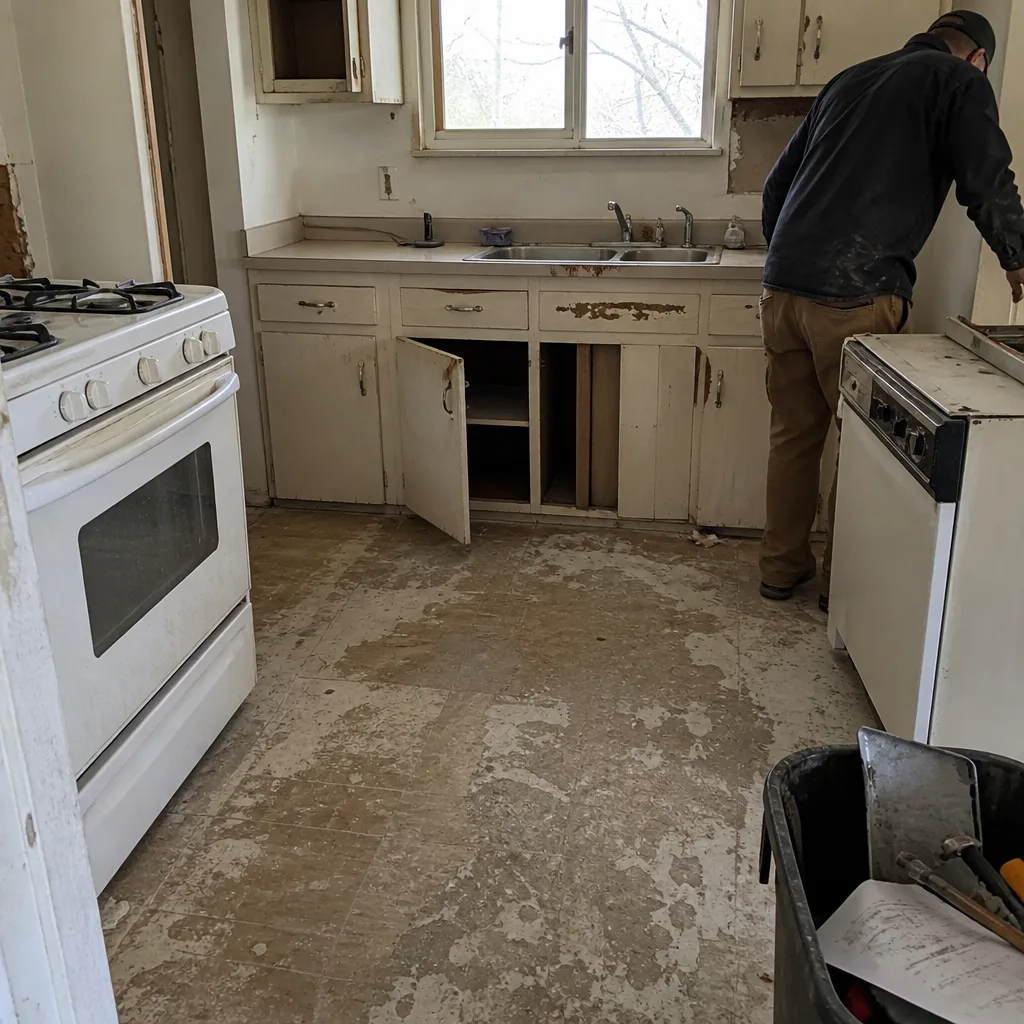 Before
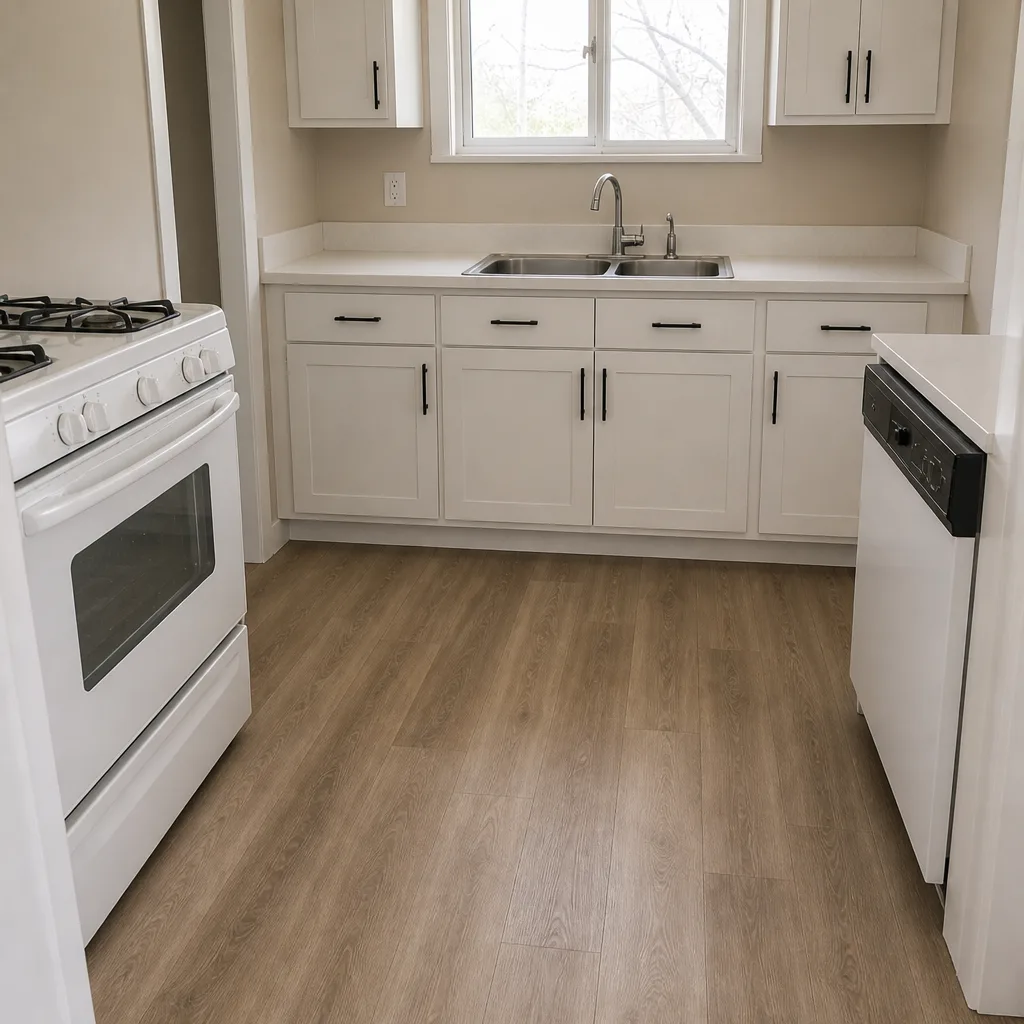 After
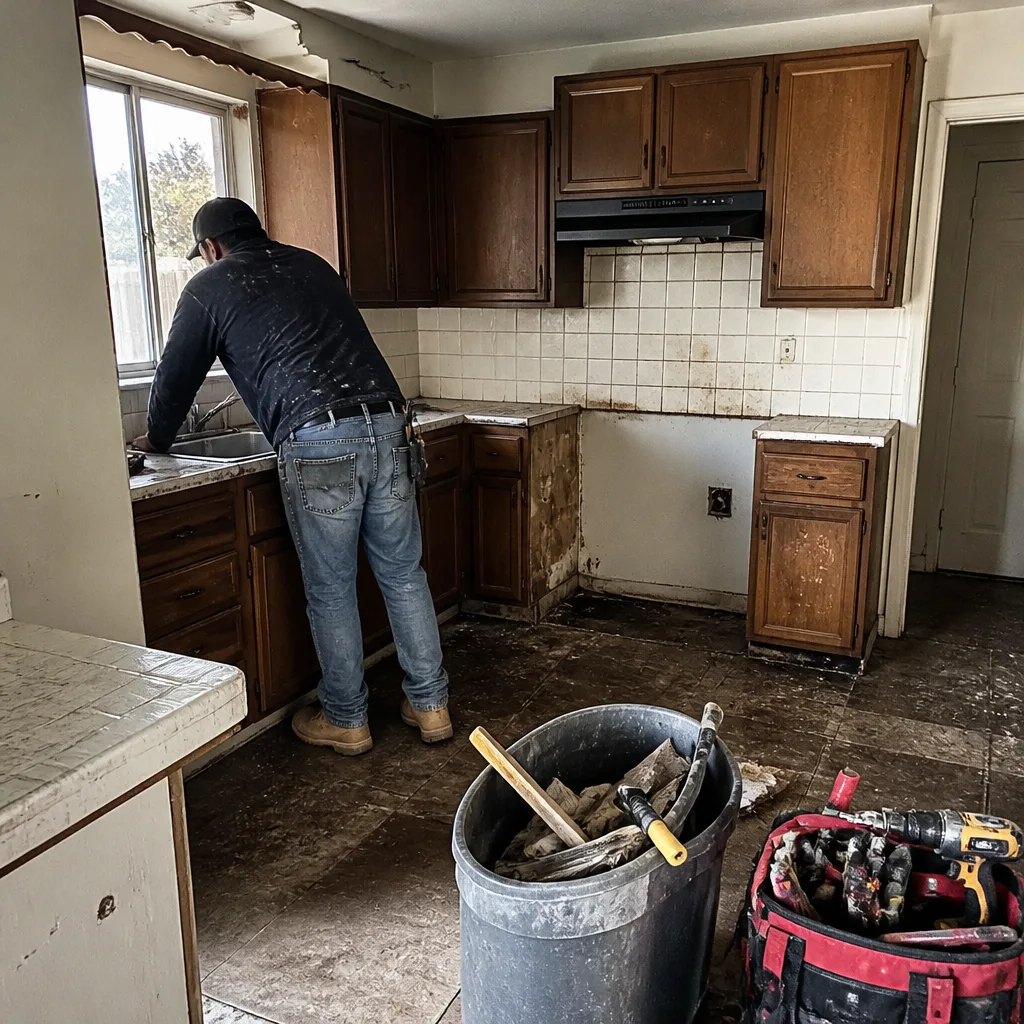 Before
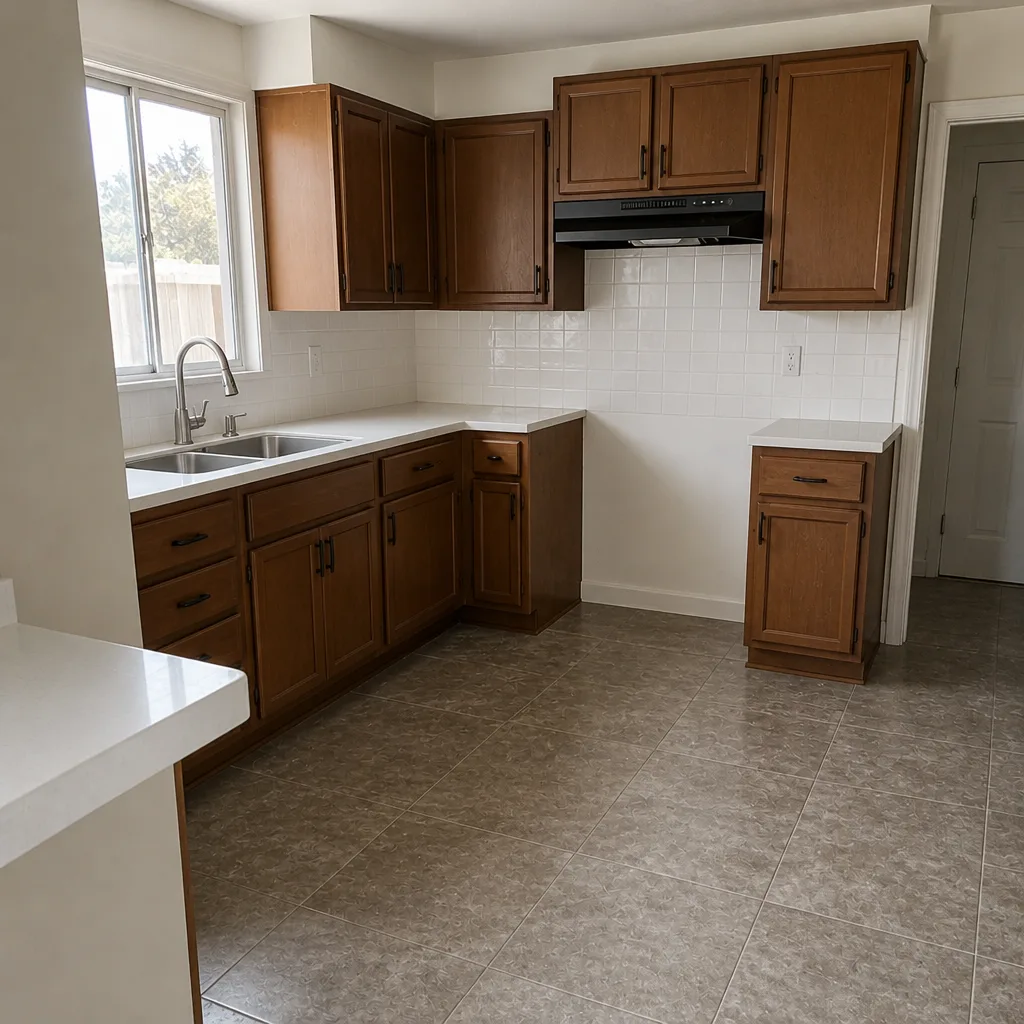 After
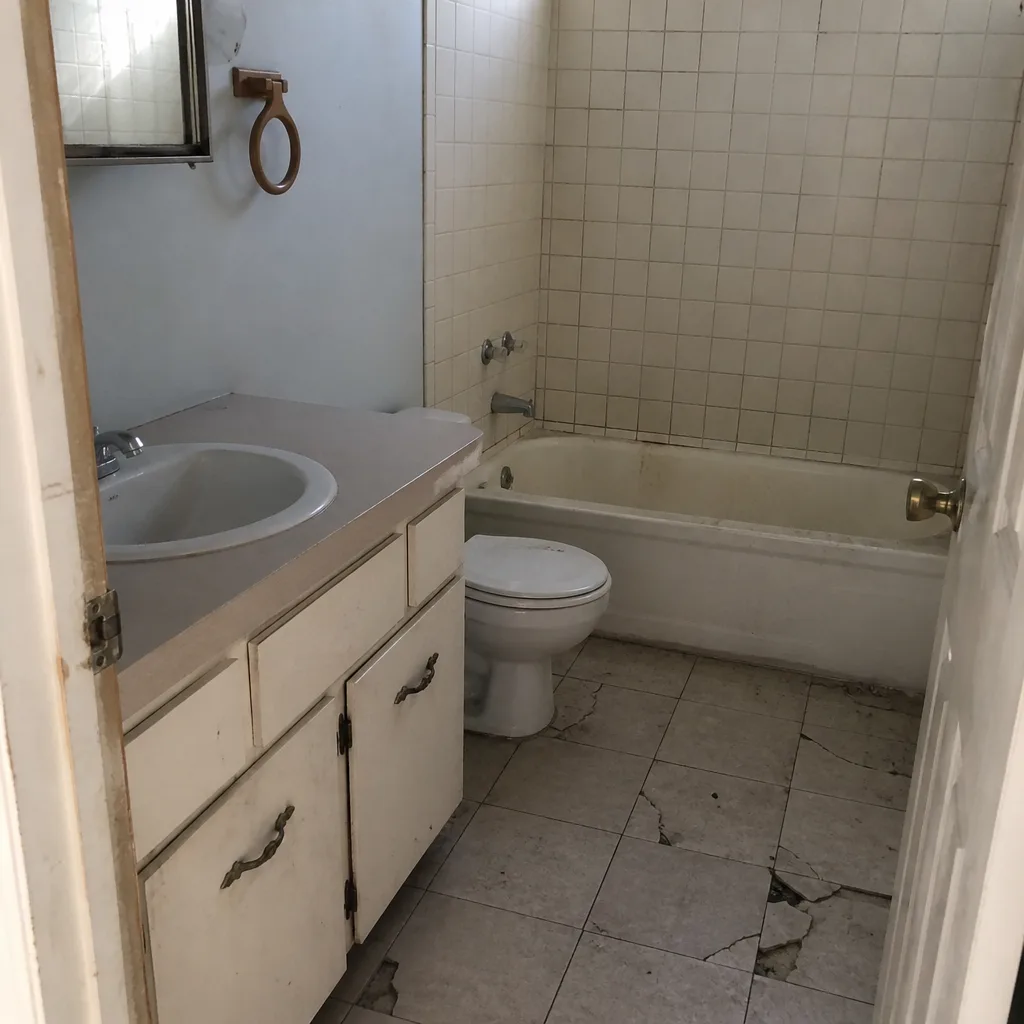 Before
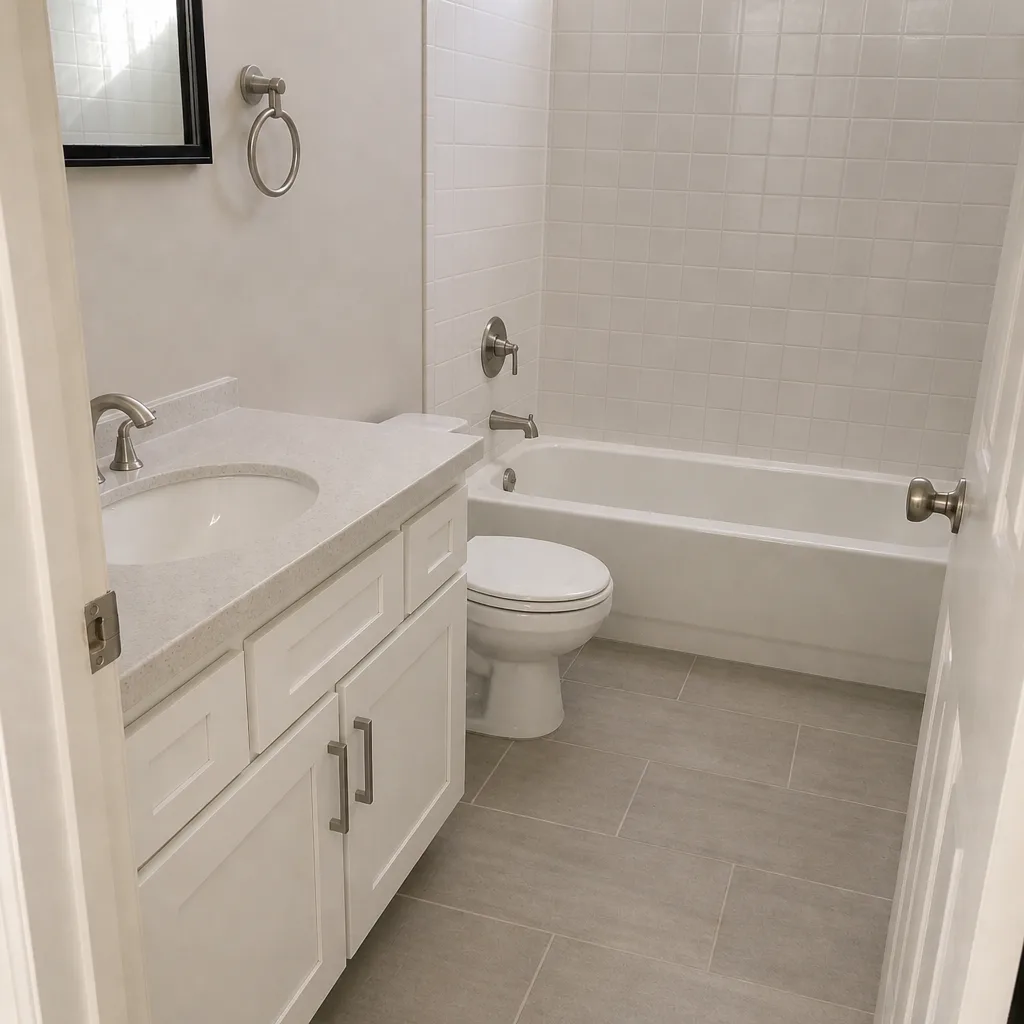 After
When to Call a Professional
Call a professional the moment you spot a contractor who can’t explain their waterproofing, or who specs a tile shower with no moisture barrier, no flood test, or no exhaust fan in a windowless bath. Call if you’re seeing hollow tile, uneven grout lines, or a fan that dumps into the attic. Those are signals a professional needs to step in before the cost gets buried in the structure. For a repair that showed up after a previous install, call before a small moisture issue becomes a framing problem. We also back our work in writing: the 365-Day Done Right Promise means if it’s not done right, we make it right, and there’s a free second visit if a repair fails. Sawyer Remodel Enterprise offers free estimates in Enterprise. Call (844) 797-5994 for a free estimate, and a live person answers around the clock.
Frequently Asked Questions
A contractor who can’t name their waterproofing system for the shower is the biggest red flag, because it’s the part of the job that fails silently and costs the most to fix. Tile can look perfect over a missing membrane. Ask what product goes in the shower walls and pan before you sign. Call (844) 797-5994 for an exact quote if you want a second set of eyes on a plan.
No. Cement board is water-resistant at the surface but not waterproof, which is why a moisture barrier behind it and a waterproof membrane over it both matter. A contractor who calls cement board waterproof has skipped the layer that keeps water out of your framing. Call us and we’ll walk through what a correct shower assembly includes.
Waterproofing is part of the shower scope, not a separate line you should expect to skip. The exact cost depends on the shower size and the system used. What you shouldn’t accept is an estimate with no waterproofing line item at all, because that means the wall assembly is being left to chance. We put the written price in your hands before any work starts. Call (844) 797-5994 for your free estimate.
A window helps, but it’s not a reliable substitute for a properly sized exhaust fan, especially when it’s cold or closed. Many windowed bathrooms still run a humidity sensor or timer-driven fan to clear steam consistently. Ask your contractor how the fan is sized and where the duct goes, because a fan that exhausts into the attic causes a different moisture problem. Call us if you’re unsure what your bathroom needs.
Ask for a photo of the waterproofed shower before tile is set and confirm the membrane runs unbroken up the walls and across the floor with sealed corners. Ask whether the pan passed a flood test. A contractor who expects the question will answer easily. Our projects include before-and-after photo updates so you always have this record, and we’re happy to explain each stage.
Moisture gets into the wall cavity and stays there, feeding mold and rotting the wood framing over time. The damage usually shows up long after the warranty window has passed. That’s why our work is backed by the 365-Day Done Right Promise: if it’s not done right, we make it right, in writing. Call (844) 797-5994 to schedule your free estimate.
The Bottom Line
Bathrooms fail from the inside out, and the warning signs are all about water: a contractor who skips the waterproofing membrane, a pan with no flood test, a windowless bath with no properly sized fan, tile set without spacers or consistent grout lines, and a hollow-sounding wall tile that hides a void. Catch those before tile goes up and you avoid the expensive repair later. Insist on a written system, a written price, and a contractor who can explain moisture management clearly. The best ones, like the crew here at Sawyer Remodel Enterprise, expect every one of these questions. Call (844) 797-5994 for a free estimate in Enterprise and for information on our Sawyer Remodel Enterprise home page on the standard we run every job against.
Written by the team at Sawyer Remodel Enterprise.