Last updated November 18, 2026







Free written scope consultation - allowances, timeline, and change-order rules on paper before a single trade is scheduled
DIY vs Professional Bathroom Remodeling: What’s Safe to Do Yourself
Painting a bathroom yourself saves about $300. Tiling a shower wrong can cost $4,000 or more to tear out and rebuild. Those two projects look equally doable on a weekend video, but they sit in completely different risk categories, and the gap between them isn’t skill. It’s what happens downstream when the work fails. This guide draws the line at liability and physics instead of ego, so you can keep the savings on the tasks that deserve them and stay away from the ones that quietly wreck a house. We’ve walked through enough Enterprise bathrooms to know which mistakes show up fast and which ones hide behind fresh grout for a year.
Quick Answer
In Enterprise, homeowners can safely DIY demolition, painting, hardware swaps, and hanging a vanity mirror. Plumbing rough-in, electrical work, shower waterproofing, and anything sealed inside the wall cavity should go to a licensed professional, both because Nevada law requires it and because failures there are expensive and invisible until the damage is done. The safe-to-DIY list saves real money. The high-risk list is where DIY turns a $1,500 savings into a $6,000 remediation bill.
Styles & brands we work with
- Kitchen remodeling
- Bathroom remodeling
- Home additions & ADU
- Roofing
- Windows & doors
- Driveway & pavers
- Fence
Table of Contents
- Where Nevada Law Draws the Line
- The Tasks That Are Genuinely Safe to Do Yourself
- The Tasks Where DIY Mistakes Are Expensive and Invisible
- How Partial DIY Affects Permits and Inspections in Clark County
- The Honest Cost Comparison: Pro Price vs. Failed DIY Remediation
- Where DIY Saves the Most Money Without Risking the House
- Why Enterprise Bathrooms Fail Differently Than Most
- Common Mistakes to Avoid
- When to Call a Professional
Where Nevada Law Draws the Line
Nevada keeps the legal boundary clearer than most states, which is good news if you’re planning a partial DIY remodel in Enterprise. The dividing line isn’t about whether you’re capable. It’s about which work requires a license to perform at all, regardless of skill.
Under Nevada Revised Statutes, plumbing and electrical work on a home’s permanent systems require a licensed contractor. That covers moving a drain line, adding a GFCI circuit for a new vanity light, replacing a shower valve, and running a new dedicated circuit for a heated towel bar. A homeowner can legally swap a faucet or replace a light fixture on an existing circuit, but the moment you’re opening a wall to reroute a pipe or pull new wire, you’ve crossed into licensed territory.
Structural work has its own rules. Cutting a load-bearing wall to widen a shower opening, sistering joists to level a sagging floor, or modifying framing around a new tub alcove all require permits and licensed oversight in Clark County. Cosmetic surface work does not. Painting, hanging a mirror, swapping hardware, and installing a freestanding vanity that doesn’t touch the plumbing are all yours to handle.
- Requires a licensed contractor by law: plumbing rough-in, electrical rough-in and new circuits, gas line work, structural framing changes, waterproofing inside a wet area (by permit, not always by statute, but inspections will require it)
- Legally yours to perform: demolition down to the studs, painting, tile on a properly prepared substrate (if inspected), hardware and fixture swaps on existing connections, vanity and mirror installs that don’t require plumbing relocation
If you’re planning a full renovation rather than a partial one, our Bathroom Remodeling in Enterprise page lays out how we sequence a project from permit to final walkthrough. For work that touches the wider house, our General Contractor in Enterprise team handles the coordination and inspections side.
The Tasks That Are Genuinely Safe to Do Yourself
We’re not going to pretend every DIY task is a trap. Some truly save money with almost no downside, and a homeowner who does them well gets a better result than one who pays a pro to do them badly. These four are where the smart money goes.
- Demolition. Tearing out tile, cabinets, and the old vanity is hard work but low-skill work. The only rules are shut off the water and power first, protect the subfloor, and don’t swing a sledgehammer at anything you can’t identify. A typical bathroom demo runs $400 to $900 if a crew does it; a homeowner with a pry bar and a weekend handles it for the cost of a dumpster rental.
- Painting. A bathroom repaint in Enterprise runs $350 to $800 professionally. You’ll spend $80 to $150 on a bathroom-rated paint and supplies. Use a satin or semi-gloss finish that stands up to humidity, and prime any bare drywall first.
- Hardware swaps. Towel bars, robe hooks, cabinet pulls, showerhead, and faucet replacements on existing connections take an hour and almost no risk. The only caution is turning off the supply valves under the sink before you unscrew the old faucet.
- Vanity mirror install. A framed mirror on drywall, hung into studs or with proper toggle anchors, is squarely in DIY territory. The one caveat: don’t drill into a wall where you don’t know what’s behind it. If the mirror is going on an exterior wall in a home of unknown age, check for wiring first.
These tasks add up. A homeowner who takes them on saves $1,000 to $2,000 on a mid-range Enterprise bathroom remodel with essentially zero added risk. That’s real money toward the countertops or the tile, which is exactly where we’d recommend spending it.
The Tasks Where DIY Mistakes Are Expensive and Invisible
Here’s where we earn our keep. The following tasks share one dangerous trait: when they fail, nobody knows for months. The shower looks perfect, the floor feels solid, the toilet flushes fine, and then a soft spot shows up in the hallway subfloor or the ceiling below stains through.
Waterproofing
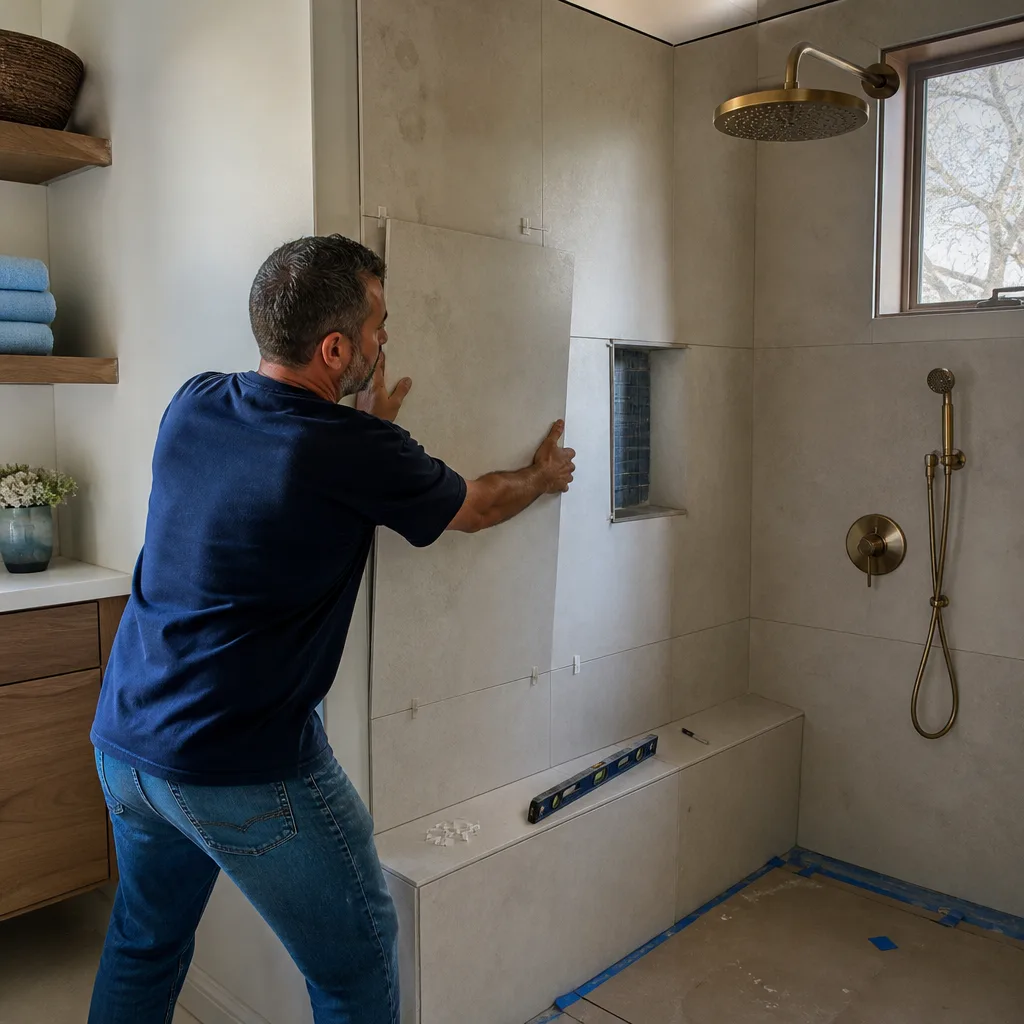
This is the single highest-risk task in the entire bathroom. A shower stall needs a continuous waterproof membrane behind the tile, and the transition points (curbs, corners, drain flanges, wall-to-floor seams) are where 90% of failures happen. A missing bead of sealant in one corner won’t show for two to five years, then it’s a $3,500 to $6,000 rebuild once the rot reaches the framing. A pro waterproofing package runs $800 to $1,400 as part of a shower installation. There is no safe partial DIY here.
Tile Substrate
Tile isn’t waterproof. It’s a decorative layer sitting on a substrate that has to be flat, structurally sound, and correctly built for the wet environment. Cement board installed with the wrong fasteners, or plywood used as a tile base, will crack grout lines and pop tiles within a year. A $400 substrate rebuild done right is much cheaper than a $2,800 tile tear-out.
Anything Inside the Wall Cavity
Once a wall closes up, anything wrong inside it stays wrong. Rough plumbing with a slow weep, electrical without a proper junction box, or insulation left out of an exterior wall in a colder stretch all sit quietly and cause damage. The brick and stucco homes common in older Enterprise neighborhoods make interior wall access tighter than most videos suggest, which raises the cost of fixing a mistake later.
Shower Valve and Rough Plumbing
Moving a shower valve or drain line requires cutting into the wet wall. A slow leak from a poorly soldered fitting will rot framing before you smell it. This is also where Nevada law requires a licensed plumber, so the DIY version isn’t just risky, it’s a code violation that can complicate an inspection or a future sale.
How Partial DIY Affects Permits and Inspections in Clark County
Clark County’s permit and inspection system is where the DIY vs. pro decision gets complicated for homeowners who want to do part of the work. The short version: a homeowner can pull an owner-builder permit for their own primary residence, but once the project includes licensed-trade work (plumbing or electrical), those portions must be performed by a licensed contractor with their own permit or under the general contractor’s permit.
What this means in practice:
- You can legally demo, paint, hang a mirror, and install a vanity on an owner-builder permit if no plumbing or electrical is being moved.
- The moment a shower pan, drain relocation, or new circuit is involved, a licensed trade needs to be on the permit.
- Inspection sequencing is where DIY-most-of-it plans fall apart. Framing inspection has to pass before substrate goes up. Waterproofing inspection has to pass before tile is set. If you’ve tiled over an un-inspected shower pan, the inspector will require you to remove the tile to see the work.
- Unpermitted plumbing and electrical work that shows up at resale can be flagged by an appraiser or buyer’s inspector, and remediation costs land on the seller.
For homeowners who want the DIY savings on the surface work and the pros on the rough-in, the cleanest path is to hire the licensed contractor for the permitted scope and handle the finish work under a signed scope that spells out who does what. Our team runs projects this way regularly in Enterprise. The key is deciding the split before the permit is pulled, not after.
The Honest Cost Comparison: Pro Price vs. Failed DIY Remediation
The real question isn’t what the pro charges. It’s what the pro charges versus what a failed DIY attempt costs to fix. Here’s the numbers we see in the Enterprise market.
- Shower waterproofing (pro): $800 to $1,400. Failed DIY remediation: $3,500 to $6,000.
- Tile substrate build (pro): $400 to $800. Failed DIY remediation: $2,200 to $3,500.
- Shower valve and rough plumbing (pro): $600 to $1,200. Failed DIY remediation: $2,000 to $5,500 if moisture reaches framing.
- New GFCI circuit and vanity lighting (pro): $400 to $900. Failed DIY remediation: $600 to $1,800 plus inspection complications.
- Wall removal for a wider shower (pro, if load-bearing): $1,800 to $4,500. Failed DIY remediation: $8,000 to $20,000 if structural deflection is missed.
Add up the risk column and the DIY advantage on the safe list ($1,000 to $2,000 of savings) is real, while the DIY gamble on the danger list is a losing bet every time. Nevada requires licensed work on the highest-risk items anyway, so the debate is settled by statute before it’s a matter of judgment.
Where DIY Saves the Most Money Without Risking the House
If the goal is to stretch a remodel budget, here’s where a homeowner can realistically move the number without putting the structure at risk, ranked by dollars saved per hour of effort.
- Full demolition: $400 to $900 saved. Half a day to a day of honest work.
- Painting walls and ceiling: $350 to $800 saved. A weekend of careful work.
- Hardware and fixtures: $150 to $400 saved. An afternoon.
- Mirror install and vanity assembly: $150 to $350 saved. A couple of hours.
- Waste hauling and dumpster coordination: $100 to $250 saved.
Stacked together, the savings are meaningful, and none of these tasks touch the risk list. For a sense of how the full project budget breaks down once you account for materials and labor, our Kitchen Remodeling in Enterprise guide follows the same budgeting logic for a different room, and the framework carries over.
Why Enterprise Bathrooms Fail Differently Than Most
Enterprise sits in a climate that makes bathroom moisture management harder than the video tutorials assume. Summers push well past 100°F, and the air inside a bathroom during a shower gets close to saturated. That combination means shower surfaces dry out fast but the moisture that gets past the surface doesn’t evaporate at the same speed. In our experience, shower failures in Enterprise often show up in the wall cavity first: soft drywall near the shower, a stain on the ceiling of the room below, or a faint musty smell in an adjacent closet.
Older homes around the older residential pockets of Enterprise often have plumbing that wasn’t designed for modern water pressure, which means the shower valve you’re swapping might be feeding a line that needs attention anyway. Homes built more recently sometimes have tile installed over drywall in bathrooms from previous quick flips, and that’s the sort of thing that surfaces the moment you pull tile. If you’re phasing the work and want it done in one pass by a crew that knows what to expect behind the wall, our Bathroom Remodeling in Enterprise team writes up a scope that assumes the worst and prices it up front.
We also see the resale side of this in Enterprise. A buyer’s inspector who finds an unpermitted shower pan or an open junction box behind a vanity will flag it, and the cost of clearing it falls to the seller. The saved $1,200 on DIY waterproofing becomes a $5,000 negotiating chip at closing.
Common Mistakes to Avoid
- Waterproofing the shower last. The waterproofing layer has to go in before substrate and tile. Homeowners who tile first and “seal it later” with a topical product are setting up a $4,000 rebuild.
- Cutting a “small” notch in a joist for a drain line. In Enterprise homes with older framing, joists are already near the limits of what they can carry. A notch can cause a bounce or a sag that shows up as a cracked tile floor within a year.
- Reusing the old shower pan. Pan liners fail at the drain flange and the curb, and old pans are often installed over a different substrate than the new tile will sit on. This is the most common hidden failure we find in Enterprise.
- Pulling a permit and then swapping in unpermitted trade work. Clark County inspectors will catch plumbing and electrical by rough-in stage. If the licensed trade isn’t on the permit, the inspection fails and the schedule stalls for weeks.
- Choosing tile before knowing the subfloor condition. A wavy or out-of-level subfloor that looked fine under carpet can crack tile in a few months. Check the floor before you fall in love with a large-format tile.
- Using drywall in a wet area. Greenboard is not waterproof, and cement board isn’t either without a membrane. “Water-resistant” isn’t the same as “waterproof.”
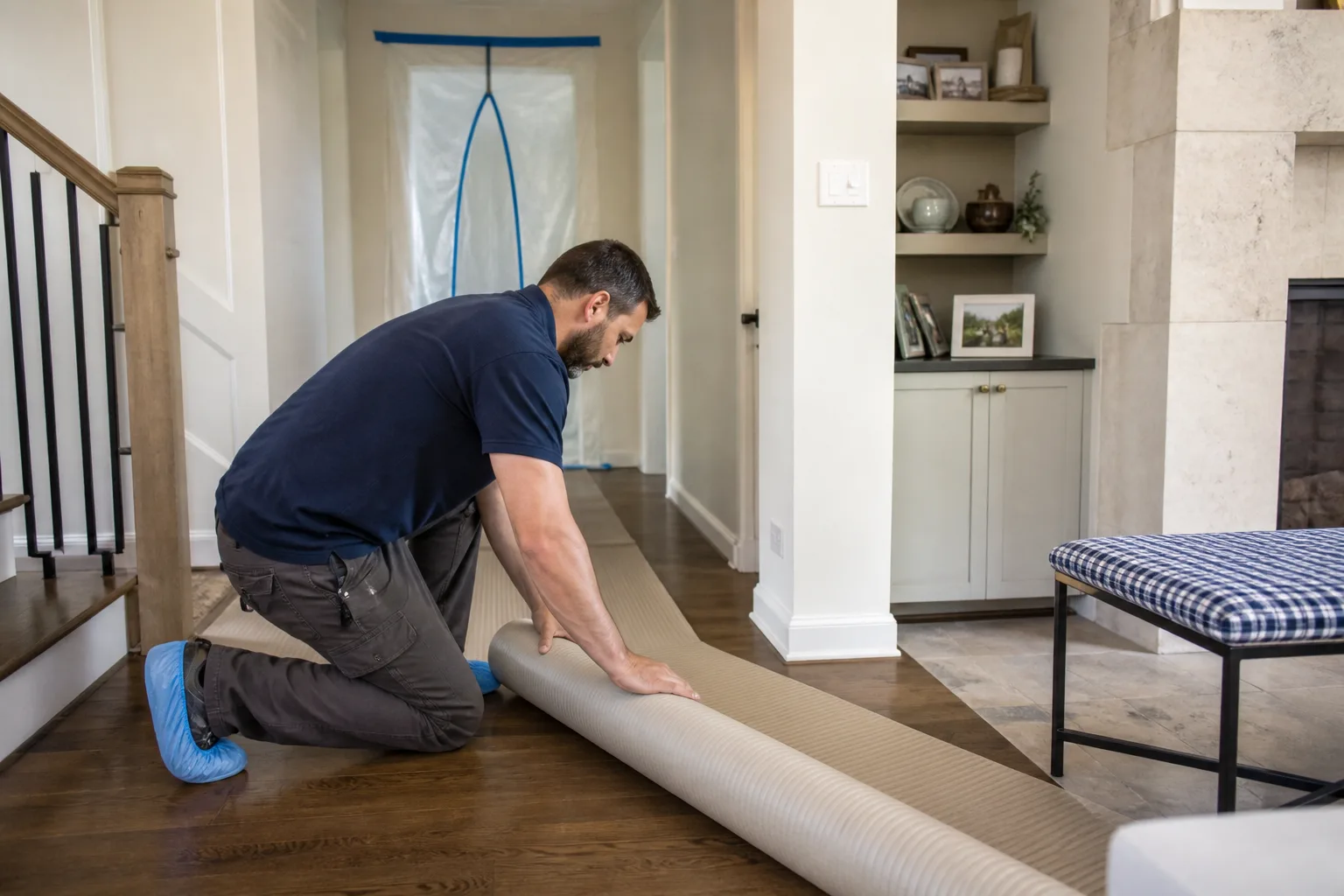
- Skipping demolition containment. Dust from demolition travels farther in an Enterprise home with forced-air HVAC than most people expect. Seal the doorway and turn the system off before you swing a hammer.
When to Call a Professional
If your project includes any of the following, call a licensed contractor before you buy a single tile: moving a shower valve or drain, adding a new electrical circuit, cutting into an exterior wall, removing a wall that might be load-bearing, or rebuilding the shower pan and waterproofing. All of these carry a remediation cost in the thousands if they fail, and Nevada law requires licensed work for the plumbing and electrical pieces. The professional cost on the high-risk tasks is roughly 20% of the project budget for most Enterprise bathrooms. A failed DIY attempt on the same tasks often runs 200% or more.
Sawyer Remodel Enterprise offers free estimates in Enterprise, with a written price before any work starts and a fixed scope that spells out what we deliver, so call (844) 797-5994 to walk through your project.
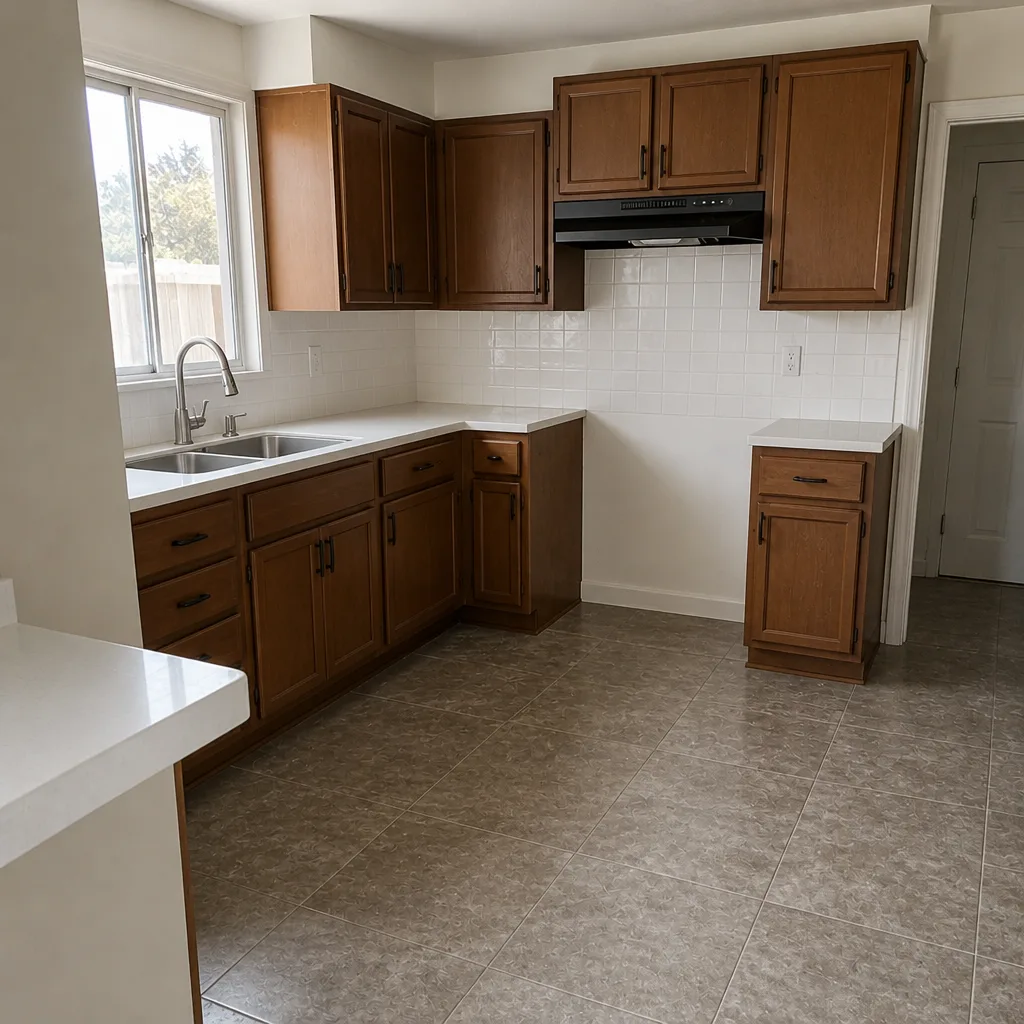
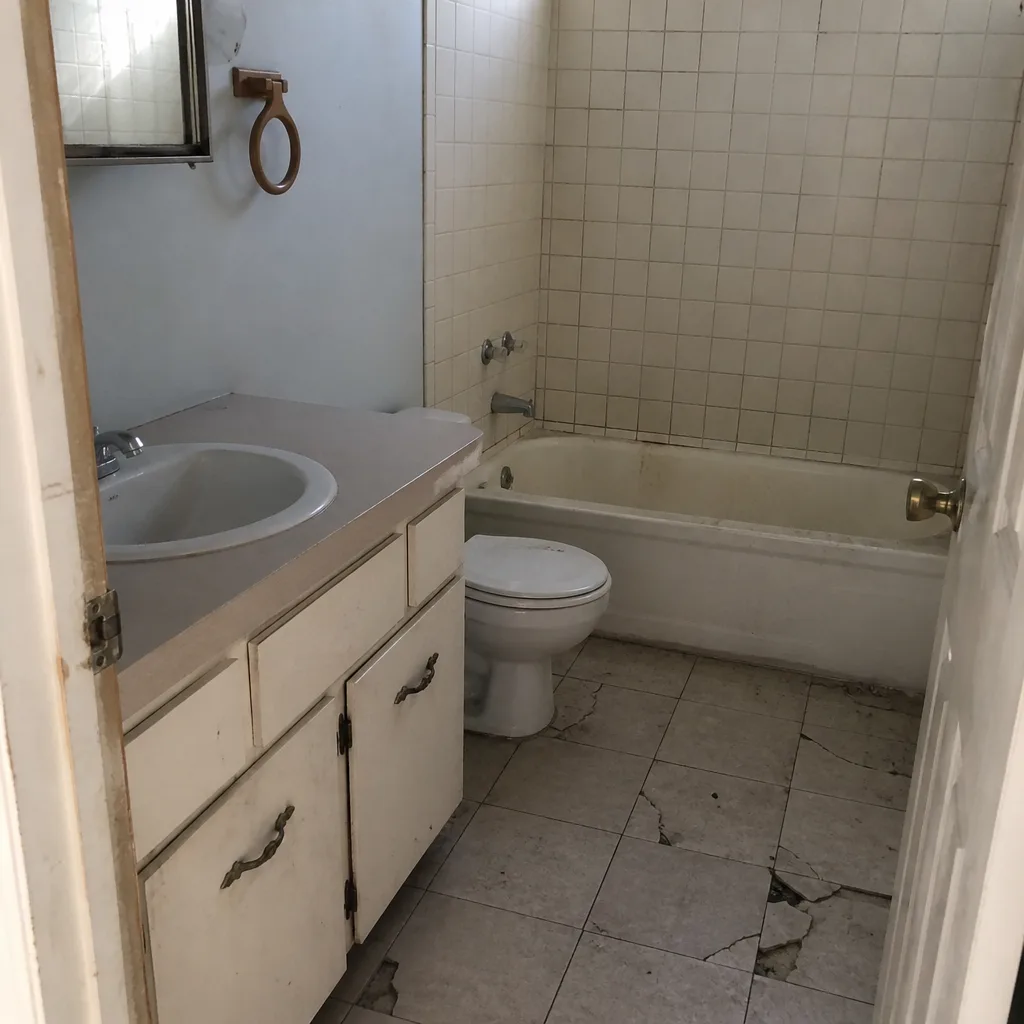
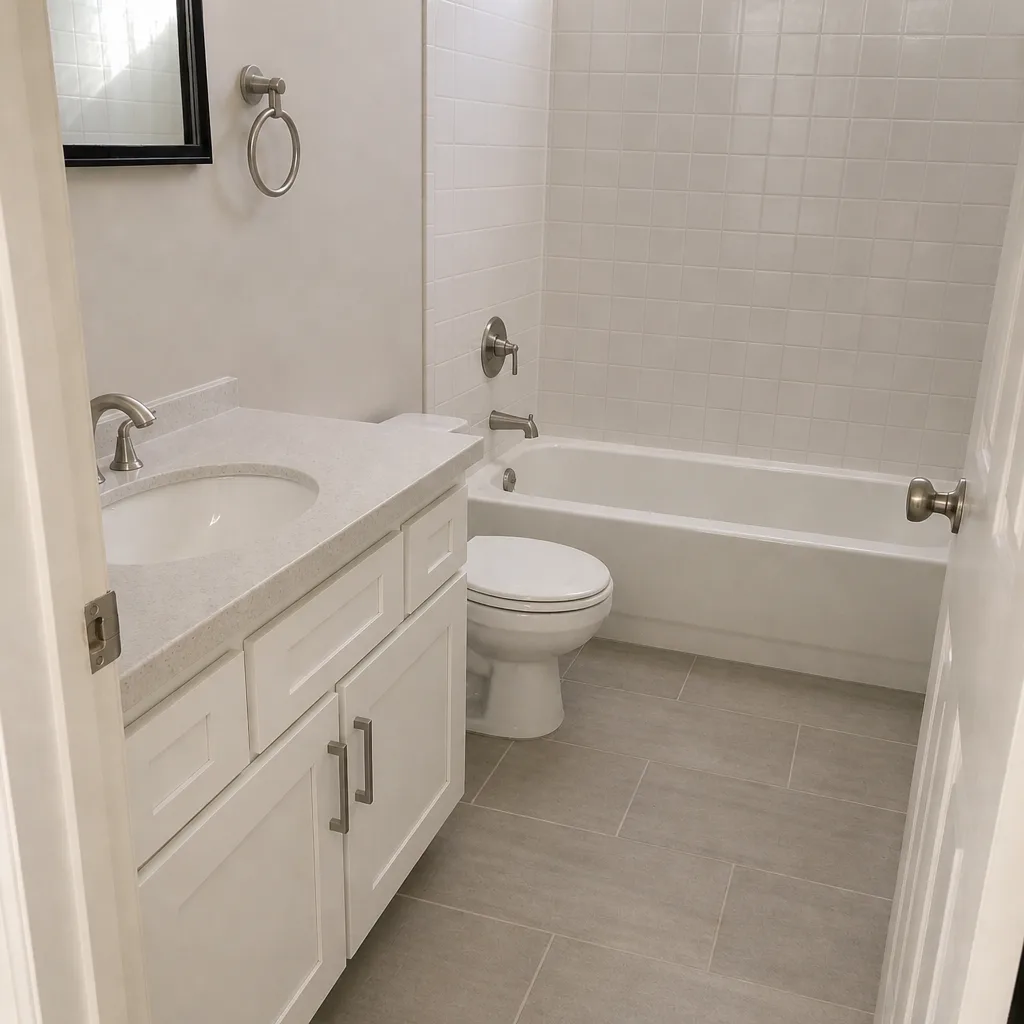
See the difference
 Before
 After
 Before
 After
 Before
 After
Frequently Asked Questions
Demolition, painting, hardware swaps, mirror install, and vanity assembly are all safe to DIY in Enterprise. These tasks don’t touch the plumbing or electrical systems, don’t require permits in most cases, and save $1,000 to $2,000 on a typical remodel. Plumbing rough-in, electrical circuits, shower waterproofing, and tile substrate should go to a licensed contractor.
Yes, if the work involves plumbing, electrical, or structural changes. Clark County requires permits for any project that moves or replaces a drain, adds a circuit, or modifies framing. Cosmetic work (paint, tile on a properly prepared substrate that wasn’t previously waterproofed by you, hardware) generally doesn’t need a permit. Call (844) 797-5994 for a free estimate that includes a permit scope walk-through.
Rebuilding a shower with a failed waterproofing job costs $3,500 to $6,000 in the Enterprise market. That figure assumes framing damage hasn’t spread. If the moisture has reached the subfloor or the ceiling below, remediation can run higher and can extend beyond the bathroom. Call (844) 797-5994 for an inspection before the damage spreads.
Nevada allows homeowners to pull an owner-builder permit on their primary residence for work they personally perform. The moment the scope includes plumbing or electrical, those portions have to be performed by a licensed contractor on the permit. Mixing owner-builder work with licensed-trade work is legal but requires careful sequencing so each inspection passes before the next phase begins.
It can, if the DIY work included unpermitted plumbing, electrical, or structural changes. A buyer’s inspector will flag open junction boxes, unpermitted shower pans, and unapproved wall removals, and remediation becomes a negotiating chip at closing. Done properly with permits and inspections, DIY cosmetic work doesn’t affect resale.
You can’t know for certain without reading the structural drawings or having an engineer or licensed contractor evaluate it. Interior walls that run parallel to the joists below sometimes look non-load-bearing and aren’t. In Enterprise, older homes sometimes have walls that were modified by previous owners without documentation, so the drawings can’t be trusted until the framing is exposed. Call (844) 797-5994 for a free estimate before you pick up a saw.
The Bottom Line
The DIY debate in Enterprise is settled by two rules, not by how confident you feel with a trowel. Rule one: Nevada law puts plumbing, electrical, and structural work in licensed hands, and Clark County inspections enforce it. Rule two: the tasks that fail invisibly (waterproofing, substrate, wall cavity work) can turn $1,000 of savings into $5,000 of remediation. Do the demo, the paint, the hardware, and the mirror install yourself. Keep those savings and spend them where they count. Hand the rest to a licensed crew with a written scope, a written price, and the phone number of a team that answers the call. Start with our Sawyer Remodel Enterprise home to see how the whole process is run, then call (844) 797-5994 to schedule your free estimate.
Written by the team at Sawyer Remodel Enterprise.