Last updated November 18, 2026








Free written scope consultation - allowances, timeline, and change-order rules on paper before a single trade is scheduled
Construction Warning Signs: An Enterprise Homeowner’s Reference Guide
A crack in your drywall corner isn’t always a foundation problem. In Enterprise, it’s usually thermal movement. Desert homes move every day: stucco heats up to 140°F in July, cools down 60 degrees overnight in January, and the whole shell expands and contracts with the sun. But a crack running at 45° from a window corner on an exterior wall is a different conversation entirely. Knowing which is which saves you from either panic or expensive ignorance. This guide covers the subtle early indicators we look for in desert-built homes, the ones that show up long before a five-figure repair bill.
Quick Answer
In Enterprise, the warning signs that matter most are hairline stucco cracks wider than a credit card edge, 45° cracks radiating from window or door corners, doors that bind only in summer, white mineral bloom on block walls, and dark streaking under soffits. Most cosmetic cracking is thermal movement from the desert swing between day and night temperatures. Structural movement, failed ventilation, and active moisture intrusion each leave a distinct signature, and the location and pattern of the damage tells you which one you’re looking at.
Styles & brands we work with
- Kitchen remodeling
- Bathroom remodeling
- Home additions & ADU
- Roofing
- Windows & doors
- Driveway & pavers
- Fence
Table of Contents
- How to read stucco cracks: hairline vs. structural movement
- Why interior doors and windows bind in a desert-built home
- Efflorescence on block walls: what the white bloom is telling you
- Fascia and soffit discoloration: ventilation failure vs. active leak
- GC walkthrough or structural engineer: the triage decision
- Seasonal patterns specific to Enterprise homes
- How to document a problem before anyone shows up
How to read stucco cracks: hairline vs. structural movement
Stucco over frame is a flexible skin on a structure that moves. Some cracking is inevitable, and in Enterprise’s climate it’s almost guaranteed on any wall that faces full afternoon sun. The question isn’t whether you have cracks. It’s which ones are cosmetic and which ones are talking to you.
We use three rules: width, pattern, and location.
- Width. A hairline under 1/16 inch (about the thickness of a credit card) that hasn’t changed in a year is cosmetic. Anything you can slip a nickel into (about 3/16 inch) is a call-someone crack.
- Pattern. Spiderweb or map cracking spread evenly across a stucco field is almost always shrinkage and thermal cycling. A single crack running diagonally at roughly 45 degrees is a movement crack. Stair-step cracks following a mortar joint in block are their own signal.
- Location. Cracks radiating out from the corner of a window or door opening are concentrated stress. The opening is a weak point in the wall, and the crack is telling you where the movement is loading. Cracks at the corners of a large sliding glass door in a west-facing wall are the most common version we see in Enterprise.
The test that matters most is time. Photograph the crack with a tape measure laid alongside it, note the date, and check again in 60 days. A crack that’s stable is a patch and paint job. A crack that’s grown a sixteenth of an inch in two months needs a professional eyes-on assessment before you do anything else.
Why interior doors and windows bind in a desert-built home
In a humid climate, a door that sticks is usually swelling wood or a shifted frame from moisture. In Enterprise, it’s almost always something else, and the cause changes the urgency entirely.
The first suspect is thermal. Desert homes expand measurably between early morning and late afternoon. A door that swings free at 7 a.m. and drags on the jamb by 4 p.m. on a south-facing wall is doing exactly what the physics predicts. That’s a fit-and-finish issue, not a structural one. It’s annoying, and it’s fixable by adjusting the strike plate or planing the edge.
The second suspect is foundation movement, and this is the one worth paying attention to. The signature is a door that binds year-round, or binding that clusters in one area of the house. If the back bedroom door and the hall bathroom door both drag, and the drywall above them has a hairline crack, and there’s a diagonal crack in the tile floor nearby, those symptoms add up. Add a window that won’t latch in the same zone and the picture sharpens further.
Here’s the diagnostic sequence we walk a homeowner through:
- Note which doors bind and whether it changes with time of day or season.
- Check whether the binding is one door or a cluster in one part of the house.
- Look at the floor under and around the binding doors for cracked tile or gaps at the baseboard.
- Look at the wall above the door header for a hairline or diagonal crack.
- Test the windows in the same zone for latching and square.
One door that binds in summer is a hinge adjustment. A cluster of symptoms in one zone is worth a professional assessment. We’ve seen enough of these in Enterprise to know that the cluster pattern is the one that deserves the call.
Efflorescence on block walls: what the white bloom is telling you
Efflorescence is the chalky white or powdery deposit that shows up on masonry and block walls. It’s salt: water dissolves minerals inside the block, the water migrates to the surface and evaporates, and the minerals are left behind. The deposit itself is harmless. The moisture movement that creates it is the part worth understanding.
In Enterprise, efflorescence on an exterior block wall or a patio wall can come from three sources, and they rank very differently in urgency.
- Construction moisture. New block walls can bloom for a season as the wall dries out. This is common and usually resolves without intervention beyond a rinse and a wait.
- Irrigation overspray or grade issues. Sprinkler heads hitting a wall, or soil piled against the base of the wall holding moisture, feed the bloom. Fix the water source and the efflorescence stops.
- Water entering from above or behind. Bloom concentrated at the top of a wall, under a cap, or along a roofline indicates water getting in where it shouldn’t. This one needs a professional look.
The pattern matters as much as the presence. A uniform dusting across the lower half of a wall that faces the sprinklers is a landscaping conversation. A concentrated band near a cap or a roofline is a water-intrusion conversation. Efflorescence that reappears within weeks of cleaning is telling you the moisture source is still active.
Look for the companion signs: paint blistering, a soft spot in the stucco, or a dark tide line at the base. If you see those, the efflorescence is a symptom of a leak, not a cosmetic resident. Call for a professional assessment rather than washing the wall and moving on.
Fascia and soffit discoloration: ventilation failure vs. active leak
The fascia is the board along the roof edge; the soffit is the underside panel you see when you stand under the eave. Discoloration on either one is a signal, and the pattern tells you what kind.
Ventilation failure shows up as an even, dark staining across a broad section of soffit, often with a musty smell in the attic and condensation on the underside of the roof sheathing in cooler months. Attics in Enterprise get brutally hot in summer and cool at night, and an attic that can’t vent that heat and moisture load will show it on the soffit. Paint peeling on fascia in a broad, even band is the same story.
Active water intrusion has a different signature. You see streaking rather than even staining: vertical drip trails down the fascia from a specific point, rust stains at a fastener, or a defined dark patch under a valley or a roof penetration. Water intrusion in a desert climate is often ice-dam-adjacent in the mountains, but in the valley it’s mostly wind-driven rain, failed flashing, or a roof detail that was never right. Streaks with a defined starting point are a flashing or roof-detail problem and should get a professional look promptly.
The practical check is on a cool morning after a windy rain. Walk the perimeter and look up. Even, uniform staining plus attic condensation in winter points to ventilation. A defined streak or rust trail points to a leak. When in doubt, get eyes on it: a small flashing repair in Enterprise is cheap, and a rotted fascia and sheathing replacement is not.
GC walkthrough or structural engineer: the triage decision
This is the question homeowners ask most often, and the answer is plainer than the industry makes it sound. A general contractor is the right first call for the majority of warning signs. A structural engineer is the right call for a specific, smaller set.
Call a GC first when you see:
- Hairline or widening stucco cracks, especially at window corners.
- Efflorescence with a suspected water source.
- Soffit or fascia discoloration, streaking, or peeling paint.
- A single door or window binding, or binding that changes seasonally.
- A bathroom or kitchen area that smells damp or has soft drywall.
- Any concern about work a previous contractor left behind.
Call a structural engineer first when you see:
- A crack wider than 3/16 inch, or any crack that has grown visibly in weeks.
- Diagonal cracks at both corners of the same opening, or a crack that runs wall-to-ceiling.
- A sloping or bouncy floor, or a floor that’s visibly out of level across a room.
- A wall that bows inward or outward, or a foundation crack with displacement (one side proud of the other).
- Any sagging roofline or a ridge that looks out of level.
The reason for the split is simple. A GC can assess, repair, and rebuild anything cosmetic or waterproofing-related. A structural engineer can sign off on whether the frame and foundation are sound. If the answer to the structural list is yes, you want the engineer’s report before anyone starts cutting. We’ve seen homeowners pay for cosmetic repairs to hide a movement problem that needed an engineer, and it’s the most expensive order of operations there is. Our General Contractor in Enterprise page covers what a proper walkthrough includes.
Seasonal patterns specific to Enterprise homes
Warning signs in Enterprise have a calendar. Knowing it helps you separate normal from concerning.
Late spring into summer. This is when stucco cracks appear or widen as walls heat and dry. It’s also when a door that’s been sticking all winter binds worst. In our experience, most calls about cracked drywall at exterior corners come in June and July.
Monsoon season (roughly July through September). Wind-driven rain finds every failed flashing, every gap at a roof penetration, every loose window seal. This is the season for interior water staining and efflorescence spikes on exterior walls. If you see efflorescence bloom right after a storm, note it and watch whether it returns after the wall dries.
Late fall and winter. Attic condensation shows up, musty smells appear, and ventilation problems become visible. Fascia and soffit staining is easiest to see on a cool, clear morning. This is also the season when thermal movement is largest overnight, so cracks that were hairline can widen.
Year-round. Foundation and frame movement is the one thing that doesn’t care about the season. If a symptom shows up all twelve months, treat it as structural until someone qualified says otherwise.
If you’re planning a project, this calendar is also useful: the best time to schedule a repair is when the symptom is visible, not after it’s been buried by another season. Our Kitchen Remodeling in Enterprise and Bathroom Remodeling in Enterprise pages both start with a walkthrough for exactly this reason.
How to document a problem before anyone shows up
The difference between a fast, accurate assessment and a lot of back-and-forth is the documentation you collect before you call. Here’s the routine we recommend to every Enterprise homeowner.
- Photograph each crack with a coin or a tape measure in frame for scale. Date every photo.
- Photograph the same spots 30 and 60 days later and compare. Note whether anything grew.
- Write down when each symptom appears: time of day, weather, season, and which wall faces which direction.
- Note which doors and windows bind, and whether they all bind at once.
- For water signs, photograph from the same angle on a dry day and after rain.
- Keep any records from previous work: permits, inspection sign-offs, and receipts.
When a professional arrives, that folder is worth an hour of guessing. It also protects you: a documented, stable crack is an easy repair, and a documented, growing crack is a conversation you can have with confidence. If you’re considering an addition or a structural repair, our team at Sawyer Remodel Enterprise can walk the documentation through with you before a single decision is made.
Common Mistakes to Avoid
- Panicking over every stucco crack. In Enterprise’s climate, hairline cracking is the norm, not the exception. The mistake is treating a stable hairline the same as a growing diagonal crack.
- Patching a crack that’s still moving. If you paint over a widening crack, you’ve hidden the evidence and delayed the diagnosis. Photograph and measure first, patch second.
- Calling a structural engineer for a cosmetic issue. Engineers are the right first call for displacement and bowing, but not for a single stuck door. Match the call to the symptom.
- Washing efflorescence and calling it done. If the moisture source is still active, the bloom comes back within weeks. Fix the source, not the stain.
- Ignoring clusters. One symptom is a coincidence. Three symptoms in one zone of the house is a pattern, and that’s when to call.
- Assuming desert means no moisture problems. Wind-driven rain, irrigation, and plumbing leaks are all real in Enterprise. Drywall that smells damp is a problem here too.
- Hiring the first quote without a written scope. A verbal estimate is not a price. Ask for a written, line-item scope before anyone picks up a tool.
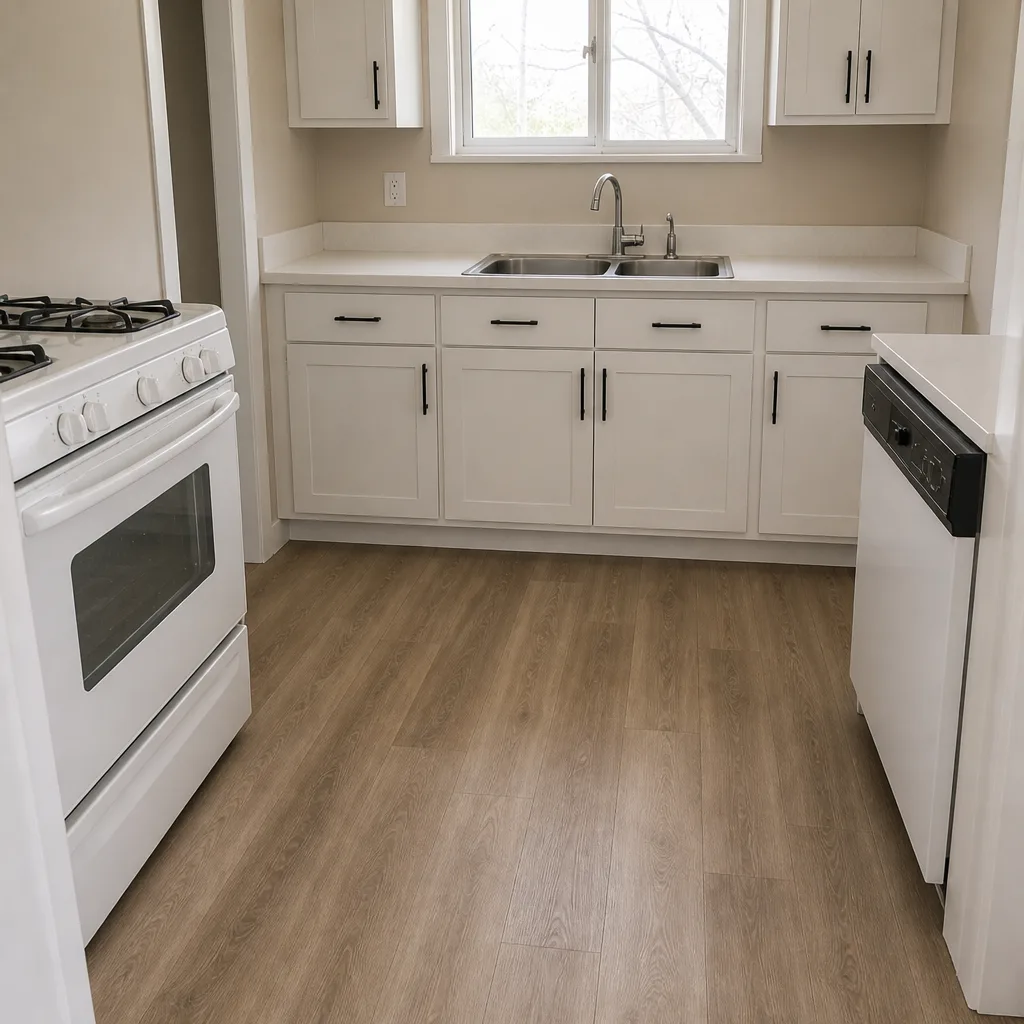
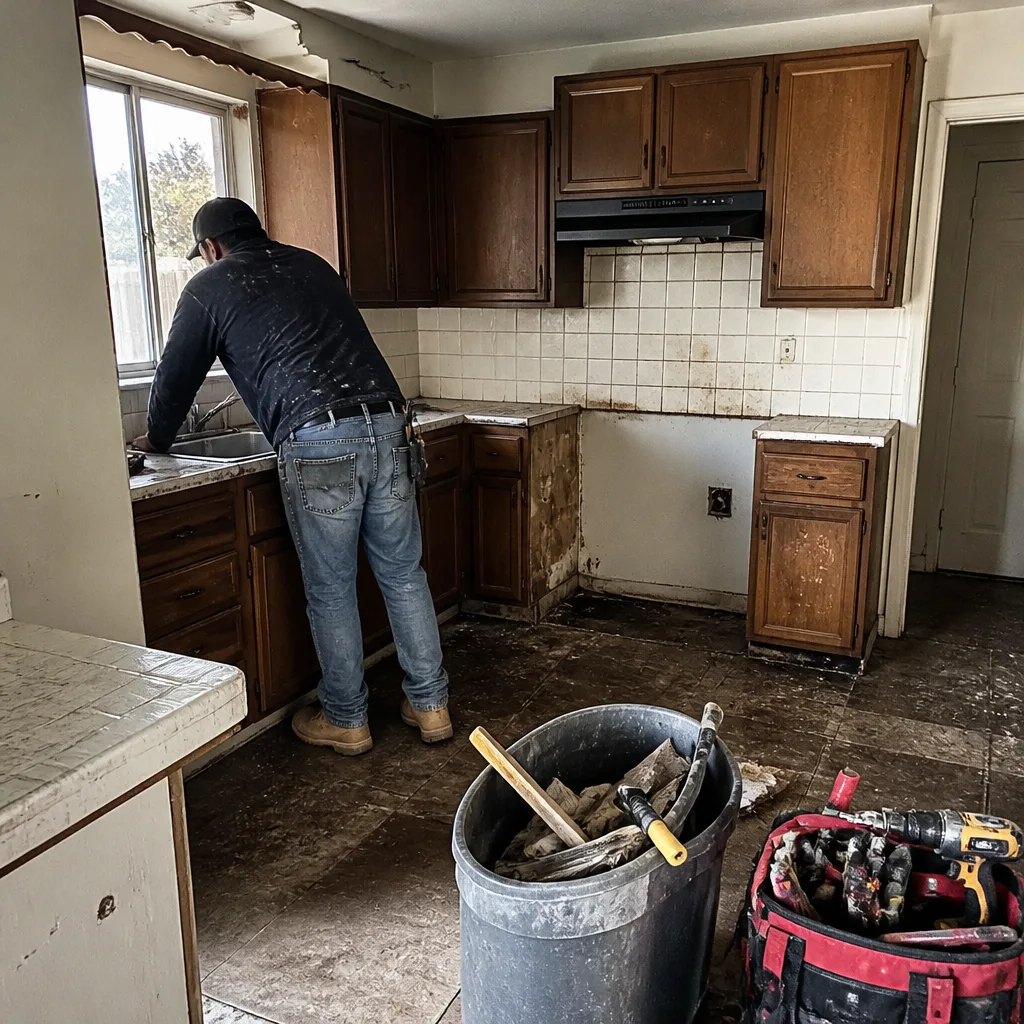
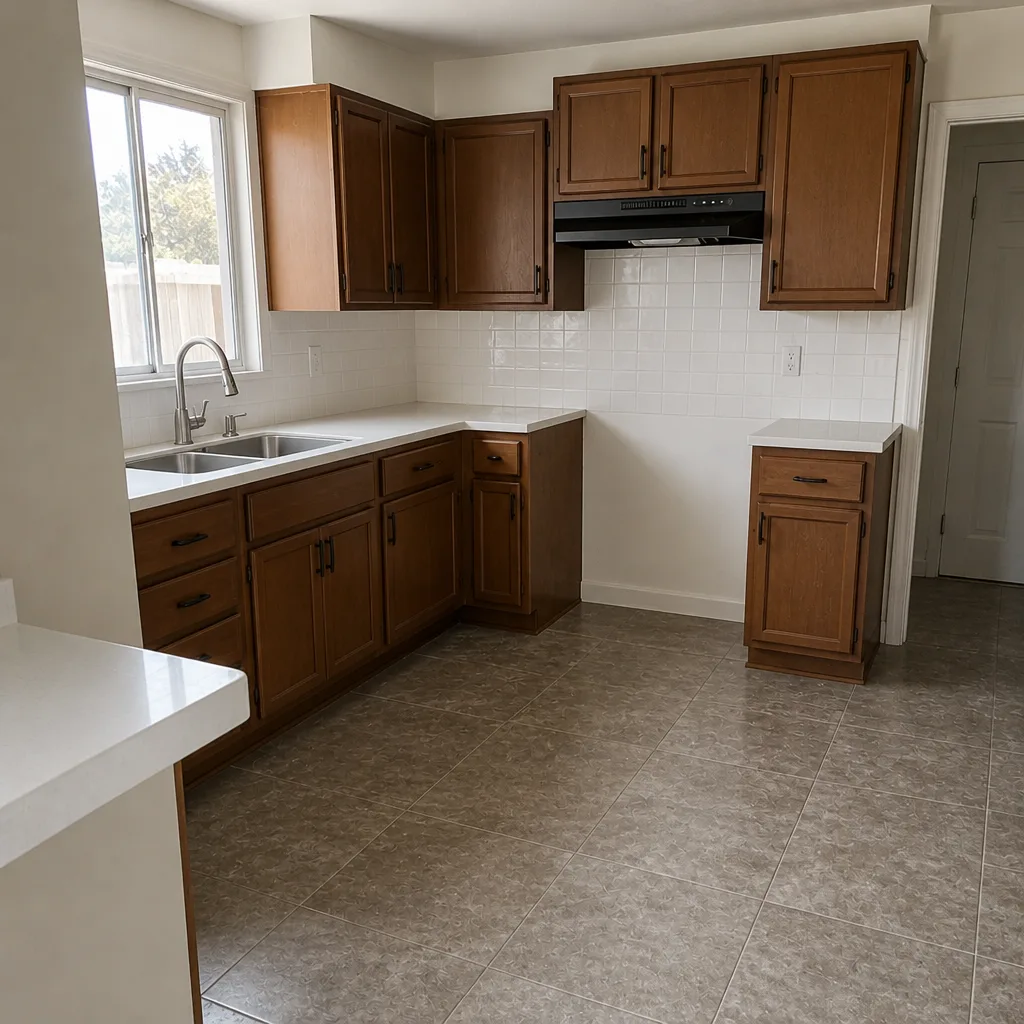
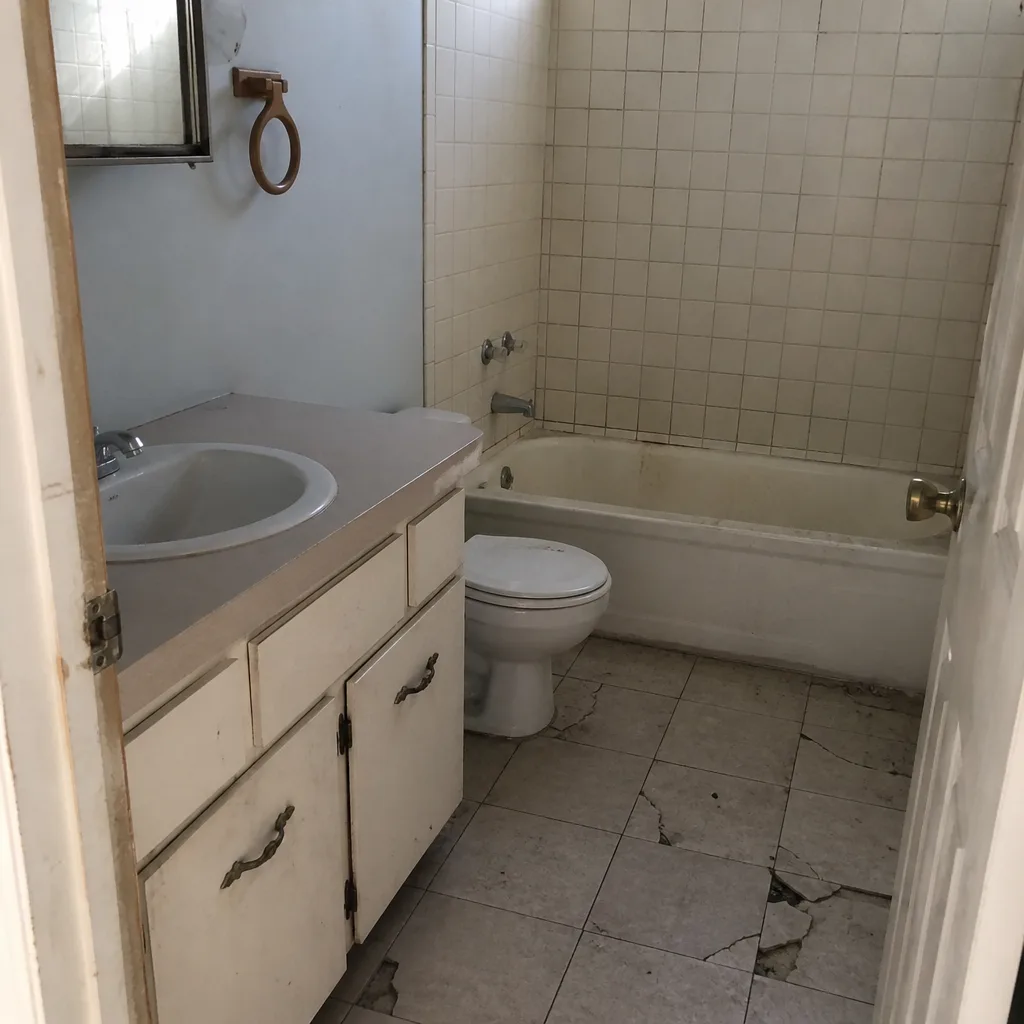
See the difference
 Before
 After
 Before
 After
 Before
 After
When to Call a Professional
Call a professional when a crack has widened since you first saw it, when symptoms cluster in one part of the house, when you see displacement in a foundation crack, when soffit or fascia streaking has a defined starting point, or when you smell damp drywall you can’t explain. Also call before you start any repair that involves cutting into structure or stucco, because the diagnosis has to come before the fix. In Enterprise, our team will come out and walk the building with you, document what we find, and tell you plainly whether a GC repair or an engineer is the right next step. We give a written price before any work starts, and our technicians have up to 21 years of experience. Sawyer Remodel Enterprise offers free estimates in Enterprise. Call (844) 797-5994.
Frequently Asked Questions

A crack under 1/16 inch that’s stable over 60 days is cosmetic. A crack you can fit a nickel into is roughly 3/16 inch and needs a professional assessment. In Enterprise, width matters less than growth: a stable 1/8-inch crack is usually fine, and a crack that’s gained a sixteenth of an inch in two months is not. Call (844) 797-5994 for a free estimate if you’re unsure.
Summer door binding in a desert-built home is usually thermal expansion, not a structural problem. Desert homes expand measurably as walls heat, and a door on a sun-facing wall can drag by afternoon and swing free by evening. If the binding is year-round or clusters with other symptoms, that’s when it’s worth a professional look. Call (844) 797-5994 for a free estimate.
Efflorescence itself is harmless: it’s salt left behind as water evaporates from masonry. The question is where the water is coming from. Bloom from irrigation or a new wall is cosmetic. Bloom concentrated at the top of a wall or under a cap means water is getting in from above and needs a professional look. Call (844) 797-5994 for a free estimate.
For most warning signs, a general contractor is the right first call. You need a structural engineer first if a crack is wider than 3/16 inch, if a floor is visibly out of level, if a wall bows, or if a foundation crack shows displacement. Our team can walk the building with you and tell you which call is right before anyone starts work. Call (844) 797-5994 for a free estimate.
Ventilation failure shows as even, uniform dark staining across soffit or fascia, often with attic condensation and a musty smell. A roof leak shows as vertical streaking with a defined starting point, rust trails at fasteners, or a dark patch under a valley. Uniform staining means ventilation; a defined trail means water entry. Call (844) 797-5994 for a free estimate.
Yes. Any repair that touches structure, framing, or waterproofing in Enterprise gets pulled and inspected where the work requires it. We put the scope and the price in writing before any work starts, so the number on the invoice is the number you approved. Call (844) 797-5994 for a free estimate.
The Bottom Line
The warning signs that matter in Enterprise are quieter than the ones most guides describe. Thermal stucco cracking is normal; a growing 45° crack is not. Seasonal door binding is thermal; a cluster of binding doors with cracked tile is a foundation conversation. Efflorescence is harmless; efflorescence that keeps coming back is a moisture problem. Streaking fascia with a starting point is a leak; even staining is ventilation. Match the symptom to the cause, document before you patch, and call for a professional assessment when symptoms cluster or grow. Sawyer Remodel Enterprise gives a written price before work starts, backs every job with the 365-Day Done Right Promise, and answers the phone 24/7 at (844) 797-5994. Estimates are free.
Written by the team at Sawyer Remodel Enterprise.