Last updated November 18, 2026








Free written scope consultation - allowances, timeline, and change-order rules on paper before a single trade is scheduled
General Contractor Maintenance Schedule: What to Do and When
Most contractor workmanship warranties in Nevada run one year. That’s the number that should be sitting in the back of your mind when a remodel wraps and the dust settles, because the defects that surface in month thirteen were almost always visible in month ten if someone knew what to look for. A finished remodel isn’t the finish line. It’s the starting point for a maintenance clock that’s already running whether you’re paying attention or not. Below is the schedule we hand homeowners after a remodel in Enterprise so the investment holds its value and warranty windows don’t quietly expire.
Quick Answer
After a remodel, you should inspect caulk and grout at month one, three, six, and twelve; touch up paint and trim by month six; check mechanical connections and HVAC filters quarterly; and register every manufacturer warranty within 30 days of installation. A hands-on review of the whole job at the one-year mark catches anything before the workmanship window closes, and annual professional inspections cover the items you can’t safely assess yourself.
Styles & brands we work with
- Kitchen remodeling
- Bathroom remodeling
- Home additions & ADU
- Roofing
- Windows & doors
- Driveway & pavers
- Fence
Table of Contents
- The Month-by-Month First-Year Checklist
- Manufacturer Warranties: Register Them Before the Window Closes
- Nevada-Specific Maintenance: Heat, Dry Air, and Dust
- Document the Work Immediately: Your Baseline
- What You Can Check Yourself vs. What Needs a Licensed Pro
- Seasonal Rhythms in Enterprise
- The One-Year Anniversary Review
The Month-by-Month First-Year Checklist
The first twelve months after a remodel are when settlement, humidity cycling, and normal use expose anything that’s going to become a problem. In Enterprise we watch homes go through their first full summer after a renovation and we know what the heat does to fresh caulk lines. Here’s the cadence we recommend.
Month 1: Walk every caulk joint in the bathrooms and kitchen. Press the bead with your thumb; if it lifts or cracks at the corner, note it. Caulk that’s failing at week four is a call-back, not a maintenance item.
Month 3: Re-check all caulk and grout. Check paint at inside corners and around trim where settling is most visible. Open and close every cabinet door and drawer and adjust hinges if needed. Test every GFCI outlet with the test button.
Month 6: Touch up paint where drywall has moved. Re-seal grout if you’re seeing color change or dark spots. Check the weatherstripping on exterior doors and windows. Tighten any loose cabinet hardware.
Month 12: Full walkthrough. This is your warranty review point. Everything below in this schedule applies.
- Replace HVAC filters every 60 to 90 days for the first year (construction dust lingers longer than you think)
- Photograph any cracks in drywall corners and note the date
- Check shower and tub surrounds for soft spots or discoloration at corners
- Test smoke and carbon monoxide detectors monthly
- Inspect roof flashing at any new penetrations after the first big rain
Manufacturer Warranties: Register Them Before the Window Closes
Your contractor warranty covers the installation. It does not cover the products themselves, and most homeowners don’t realize this until a fixture fails and the manufacturer has no record of the install. The brands on your job carry their own warranty clocks – and they start without you.
Countertops from Cambria and Caesarstone, fixtures from Kohler and Toto, roofing from GAF, and siding from James Hardie each carry their own warranty terms. Some require registration within 30 days. Some require the original invoice. Some require both, plus proof of the installer’s licensing. Miss the registration window and you’re arguing from a weaker position years later.
Do this in the first week after completion:
- Collect every product manual, spec sheet, and warranty card the crew leaves behind.
- Photograph each card and manual and store it in a dedicated folder on your phone.
- Register each product on the manufacturer’s website (GAF, James Hardie, Kohler, and Toto all have online registration portals).
- Save the confirmation emails to the same folder.
- File the contractor’s written invoice alongside the registrations so you have proof of professional install.
We’ve watched homeowners lose coverage on a $12,000 countertop because the registration email went to an old address. The ten minutes of admin is the cheapest insurance in the file.
Nevada-Specific Maintenance: Heat, Dry Air, and Dust
Enterprise sits in a high-desert climate, and the maintenance rhythm here is different from coastal or humid regions. Three factors dominate the first year after a remodel.
Heat expansion on new framing
New lumber installed in winter moves substantially by mid-July. In Enterprise we see drywall stress cracks at ceiling corners and above door headers in nearly every new remodel by the end of the first summer. Most are cosmetic. A crack wider than a credit card edge along a load-bearing wall is not – that’s a call to your GC.
Low humidity effects on wood
Interior relative humidity routinely drops below 20 percent in the summer. Hardwood floors gap. Cabinet doors shrink. Paint film on trim splits at the seams. A whole-home humidifier is the practical fix, and it’s worth pricing out during the remodel when the ductwork is still accessible.
Construction dust and HVAC intrusion
Even with plastic barriers, fine drywall dust migrates into ducts and settles in the returns. Change the HVAC filter the day the crew packs up, again at 30 days, and every 60 to 90 days for the rest of the first year. Consider having the ducts professionally cleaned six months after a major remodel – the dust load is real even in an Enterprise ranch home with a short run.
Document the Work Immediately: Your Baseline
Everything you do to protect your investment later depends on having a clear record of what the finished work looked like on day one. A warranty claim in month eight is much easier to win when you can show the contractor exactly what the tile looked like before the hairline crack appeared.
Here’s what we tell every homeowner to capture in the first 48 hours after final walkthrough:
- Wide shots of every room, photographed from the doorway
- Close-ups of every caulk transition (countertop to backsplash, tub to surround, baseboard to floor)
- Close-ups of every grout line in the shower and floor tile
- The data plate on every new appliance and HVAC component
- The inside of every vanity cabinet and the top of every new door frame
- A video walkthrough with narration, room by room, pointing out anything you want the GC to remember
Save the folder as a shared cloud album, not just a phone roll. If you sell the home in five years, that folder answers most of a buyer’s inspection questions.
What You Can Check Yourself vs. What Needs a Licensed Pro
Not every maintenance item is a do-it-yourself job, and some of them are genuinely dangerous to touch. Here’s the split we use.
Safe to self-check
- Caulk joints – visual and press-test only
- Grout color, texture, and softness
- Paint and trim condition
- Cabinet hardware and drawer slides
- Weatherstripping and door sweeps
- HVAC filter replacement
- GFCI and smoke detector test buttons
- Water pressure at a hose bibb
Requires a licensed professional
- Anything inside the electrical panel – the main breaker, AFCI/GFCI breakers, and any new wiring are not inspection items for a homeowner. Even opening the dead front is a real electrocution risk. Don’t.
- Gas line connections at a new range, dryer, or water heater
- Roof penetrations, flashing, and any inspection at height
- Framing movement that shows as door stick, floor squeaks, or cracks wider than a credit card
- Any water intrusion at a new window or skylight
- HVAC refrigerant, compressor, or controls issues
If you’re not sure which category something falls into, call us before you climb the ladder or open the panel. This is the point where a $200 service call saves a $4,000 problem.
Seasonal Rhythms in Enterprise
Maintenance in Enterprise follows the desert calendar, not the national magazine version. Here’s how we tell homeowners to plan the year.
- Spring (March-May): Inspect roof flashing and caulk around exterior penetrations before the dry season. Pre-cool your A/C system, replace filters, and check the condensate line.
- Summer (June-August): Watch for heat expansion cracks in drywall and movement at door headers. Keep interior humidity at 30-45 percent if you have hardwood or solid wood cabinets. Check irrigation and hose bibs for leaks at the foundation.
- Fall (September-November): Test the furnace or heat pump before the first cold night. Inspect weatherstripping. Touch up any paint failures before the sun angle changes. Check the roof after the first big rain.
- Winter (December-February): This is when the annual review window usually falls if your remodel completed in the spring. Schedule any warranty items now, not in month thirteen.
The One-Year Anniversary Review
This is the most important item on the whole schedule and the one most homeowners skip. Workmanship warranties expire at the twelve-month mark. The pre-expiration walkthrough is where you get everything corrected while it’s still on the contractor’s tab.
- Book the review 30 to 45 days before your warranty expires, not on the last day.
- Pull out your day-one photo folder and your month-one through month-twelve notes so you know exactly what changed.
- Have a written list of every issue, however small. Cosmetic items count.
- Walk the job with the contractor. Get the corrections scheduled in writing before you leave the conversation.
- File the resolved punch list with the rest of your project documents.
If your contractor has gone quiet, that’s a different conversation – and it’s why written terms matter. Sawyer Remodel Enterprise home hands every client the written scope and warranty terms before work starts, so the anniversary review isn’t a debate about what was promised.
Common Mistakes to Avoid
- Skipping the month-one caulk check. In Enterprise, caulk that fails at week four is a callback, not maintenance – and if you wait until month six, you’ll be arguing about when it actually failed.
- Throwing out the warranty cards. GAF, James Hardie, and Kohler all require registration and proof of install. Losing the card in the post-remodel cleanup is the number-one reason coverage evaporates.
- Ignoring construction dust in the HVAC. Desert homes with new drywall dust in the returns can foul a blower motor within two years. Change the filter earlier than you think you need to.
- Waiting for the “big problem” before calling. A drywall crack the width of a credit card is a real issue. A crack the width of a hairline is normal settling. Learn the difference so you don’t burn a service call on a cosmetic item – or ignore a structural one.
- Letting the anniversary slide. Workmanship warranties are a use-it-or-lose-it asset. Booking the review in month eleven is a completely different conversation than month fourteen.
- Trusting a humidistat that was never calibrated. Desert homes with new hardwood should be monitored with a $20 digital humidity gauge, not a wall-mounted unit that came with the build.
- Forgetting the exterior. New James Hardie siding needs caulk inspection at penetrations in the first year, just like interior trim. Enterprise sun will find the weak seam.
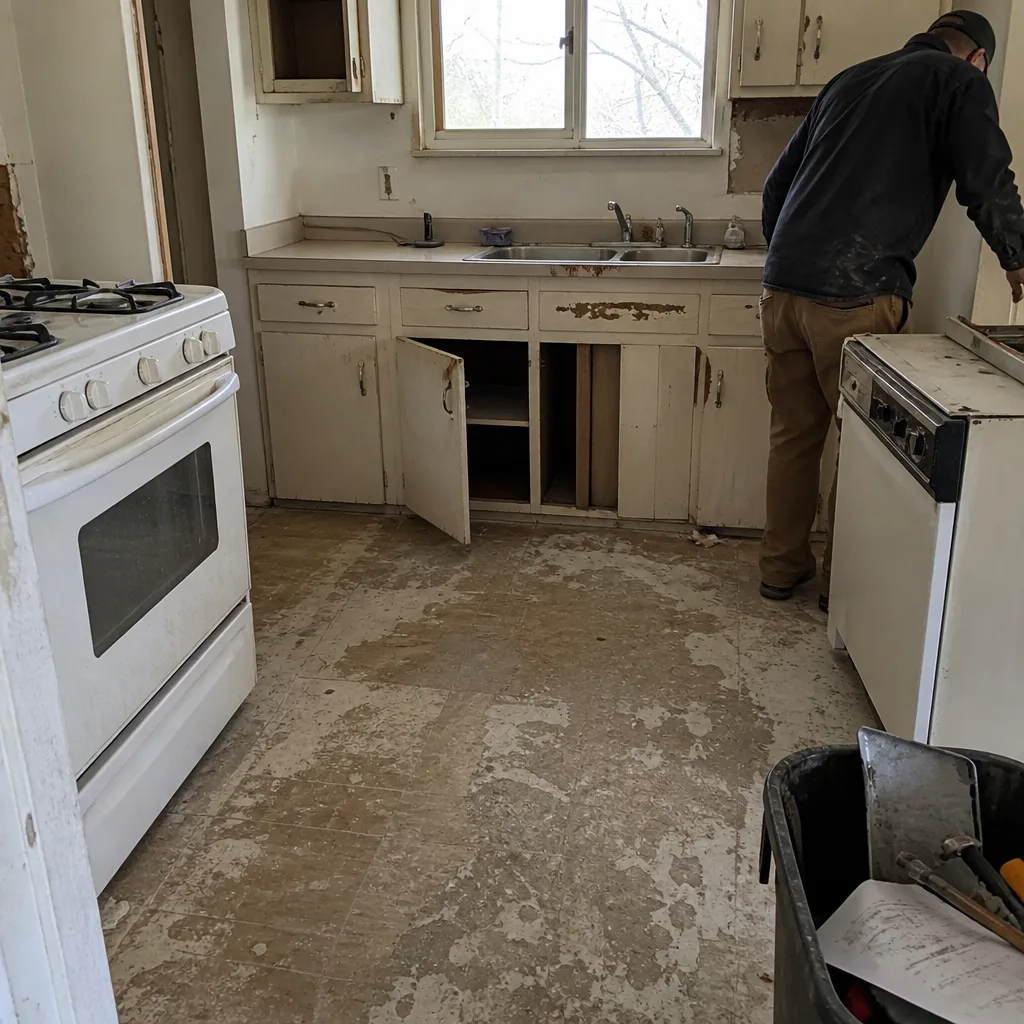
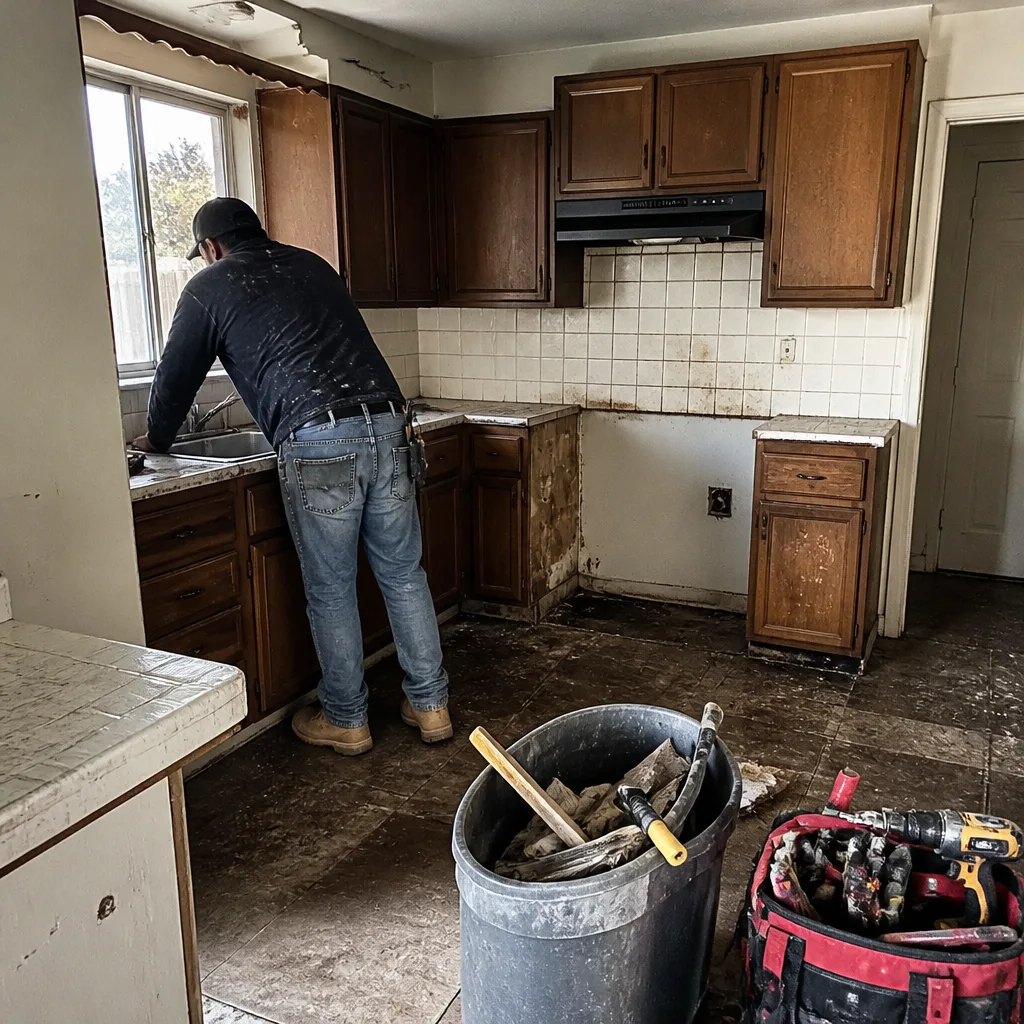
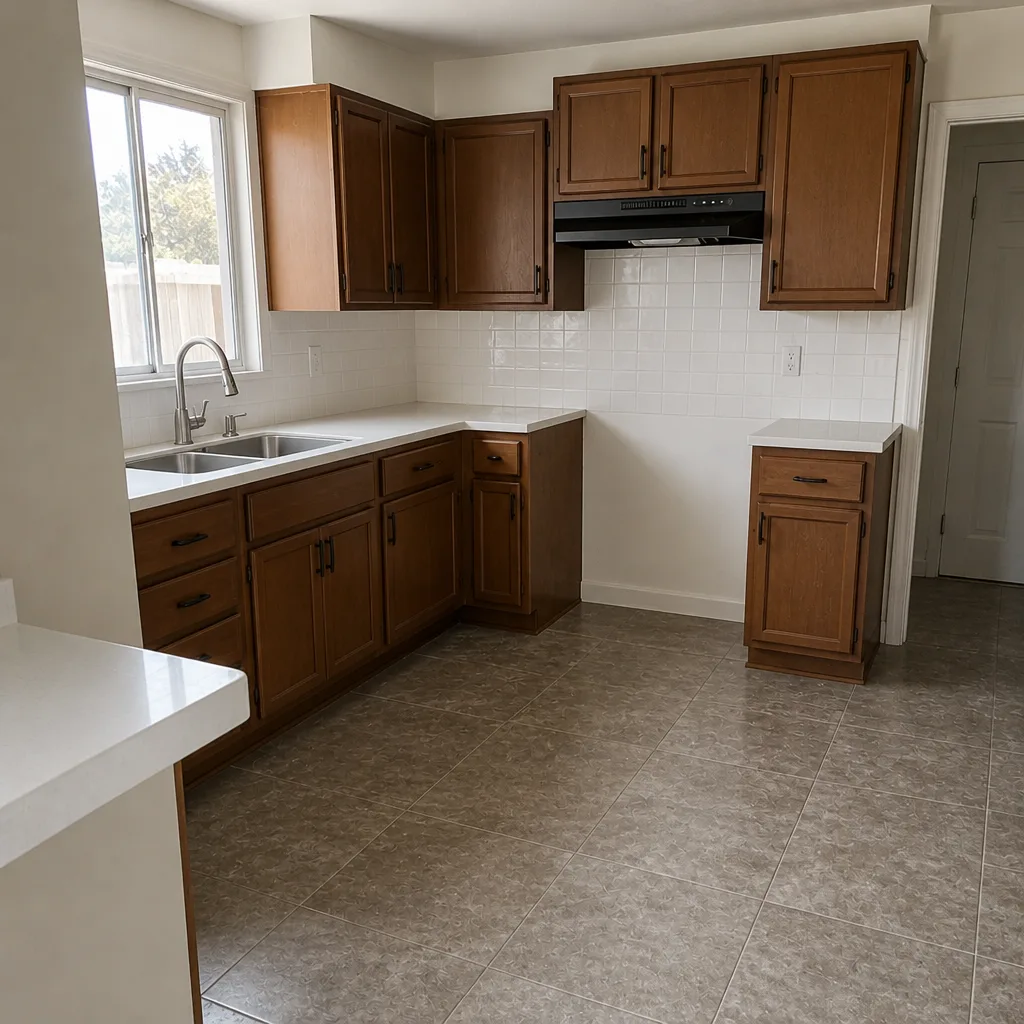
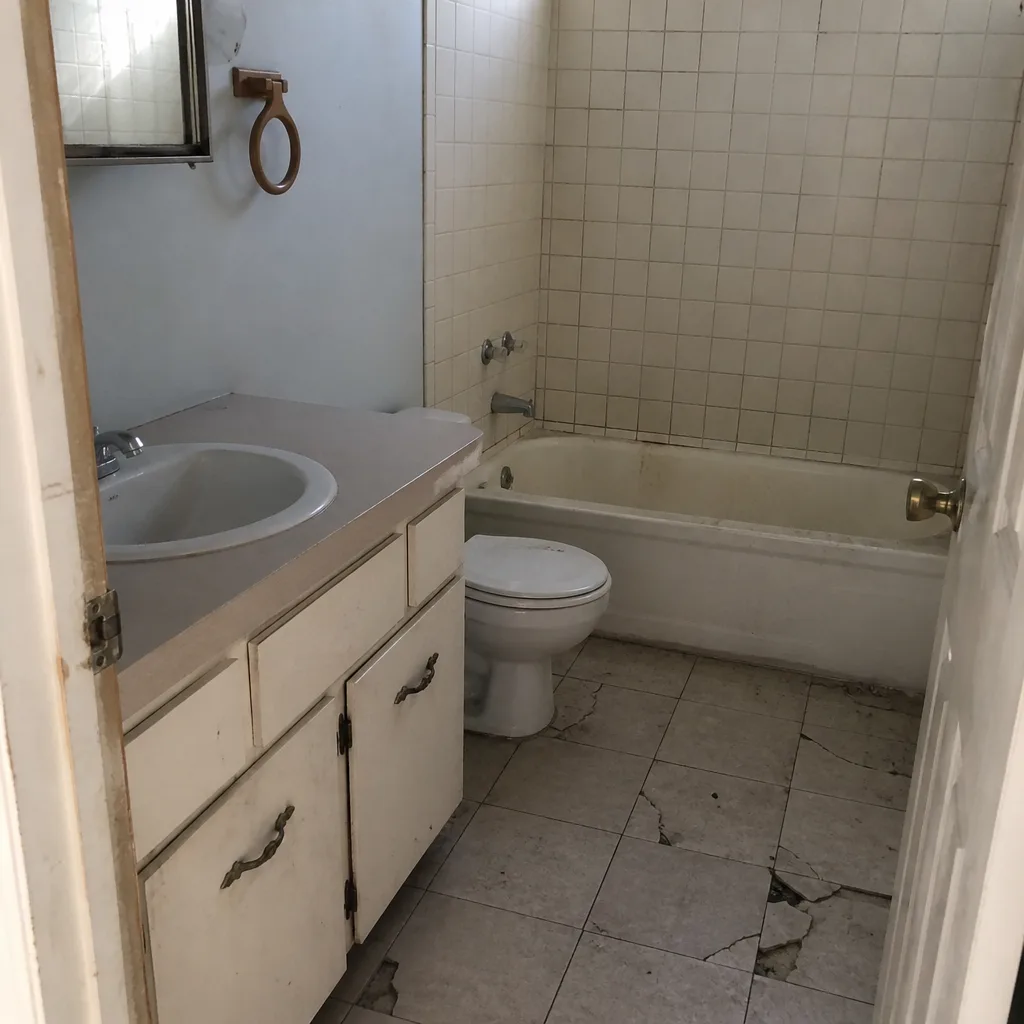
See the difference
 Before
 After
 Before
 After
 Before
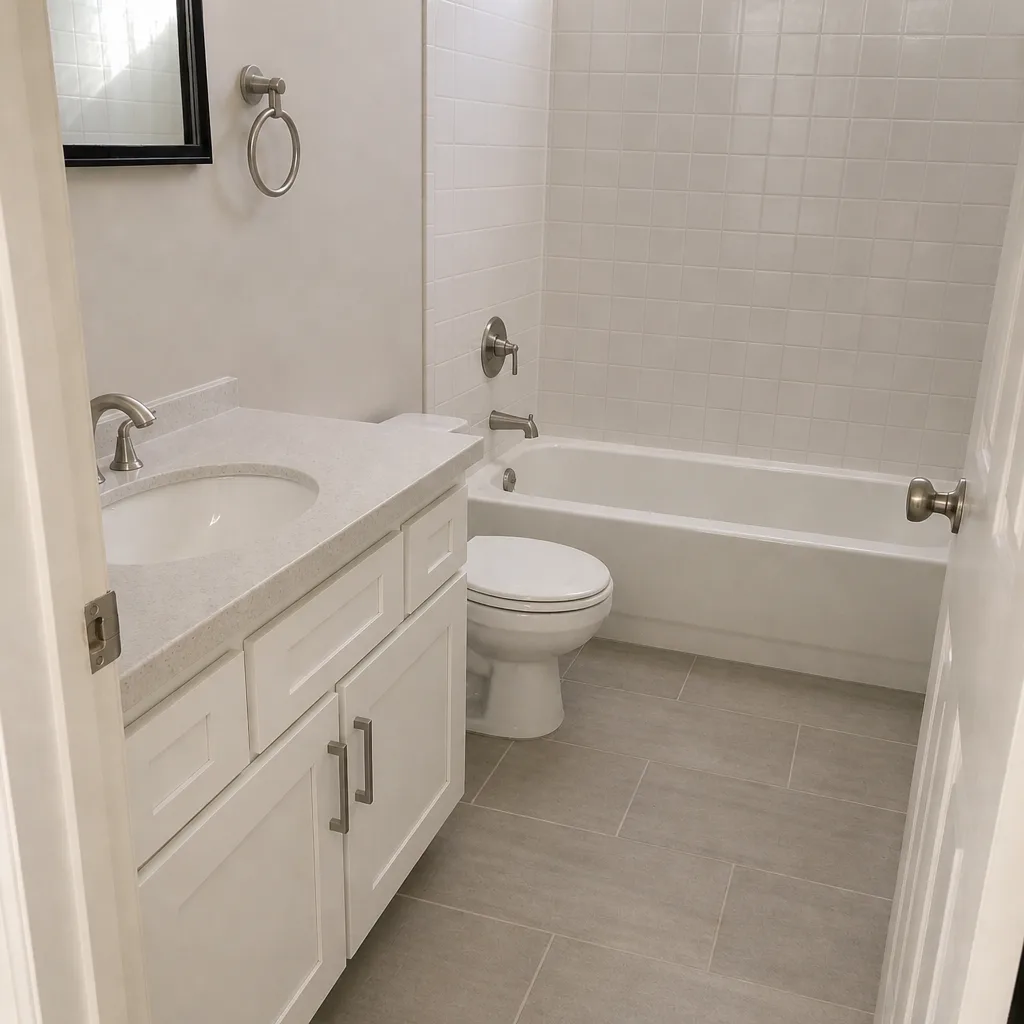 After
When to Call a Professional
Call your contractor or a licensed pro when a caulk joint fails within the first year, when drywall cracks are wider than a credit card or run diagonally from a corner, when you see water intrusion at any new window or roof penetration, when a door suddenly sticks or a floor squeaks in one specific spot, or when the electrical panel or any gas connection needs a look. Those aren’t maintenance items – they’re calls for someone with the tools, licensing, and insurance to touch them safely. Sawyer Remodel Enterprise offers free estimates in Enterprise for the ones in our scope. Call (844) 797-5994 and we’ll tell you honestly whether it’s a warranty item, a maintenance item, or a call for another trade.
Frequently Asked Questions

Thirty days after completion. That’s early enough to catch a failing caulk line or a settling drywall crack while it’s still a workmanship issue, and it establishes a baseline for everything that follows.
A contractor warranty covers the installation work – typically one year in Nevada – while manufacturer warranties cover the products themselves and often run longer (5, 10, 25 years, or lifetime depending on the product). You need to register the manufacturer warranties yourself; nobody does it for you.
Roof penetrations, electrical panel components, any gas connection, HVAC refrigerant and controls, and any window or skylight installed in the previous 24 months. Everything else can be checked visually by the homeowner on a quarterly cadence.
Hairline cracks at ceiling corners and above door headers are normal settling, especially through the first Enterprise summer. A crack wider than a credit card, a diagonal crack from a corner, or a crack that’s growing month over month needs a professional look.
Every caulk transition, every grout line, every appliance data plate, every new door frame, and a narrated room-by-room video walkthrough. Save everything to a shared cloud folder, not just your phone roll, so it’s still accessible when you need it.
Usually yes, around six months post-construction. Drywall dust migrates into returns even with plastic barriers, and in an Enterprise desert home with a short duct run, the load sits longer than most people expect. Change filters at day one, day thirty, and every 60 to 90 days after.
The Bottom Line
The remodel is the easy part to track. The twelve months that follow are where most of the value is either protected or quietly lost. Check caulk and grout at month one, three, six, and twelve. Register every manufacturer warranty within the first month. Photograph the finished work in the first 48 hours. Book your anniversary review in month eleven, not month thirteen. And know which items to hand off to a licensed pro before you open a panel or climb a ladder. That’s the schedule. If you want a contractor who’s still answering the phone when the anniversary review comes up, call (844) 797-5994 for a free estimate.
Written by the team at Sawyer Remodel Enterprise.