Last updated November 18, 2026








Free written scope consultation - allowances, timeline, and change-order rules on paper before a single trade is scheduled
Construction Emergency Preparedness Guide for Enterprise Homes
Most homeowners think a construction emergency means a burst pipe or a downed power line. In Enterprise, the more common disaster is quieter: a monsoon-season wind event peels back a piece of roof flashing at 2 a.m., or a 115-degree July afternoon pushes your aging AC condenser past the point where it can cool the house, and the insulation in your walls starts cooking from the inside. The surprising part is that the damage from these events is usually fixed within a week – what stretches into months is the insurance claim, the permit paperwork, and the contractor scramble that follows. This guide walks through how to prepare for that week and that scramble before either one happens, written from our vantage point as a remodeling company that has handled post-storm repairs and mid-project surprises across Enterprise.
Quick Answer
Construction emergency preparedness for an Enterprise home means three things: a documented “before” record of your property (photos, receipts, serial numbers), a short list of vetted contractors you can call without shopping in a panic, and a clear understanding of what your insurance actually covers for wind, water intrusion, and heat-related mechanical failure. In a desert climate where the threats are seasonal and predictable, most of the work is done in the calm months, not the crisis months. A prepared Enterprise homeowner spends about two hours a year on this and saves weeks of headache when something goes wrong.
Styles & brands we work with
- Kitchen remodeling
- Bathroom remodeling
- Home additions & ADU
- Roofing
- Windows & doors
- Driveway & pavers
- Fence
Table of Contents
- Why Enterprise Construction Emergencies Look Different
- Step One: Document Your Home Before Anything Breaks
- Step Two: Build a Contractor Shortlist Now, Not Later
- What Your Insurance Actually Covers in Enterprise
- A Seasonal Preparedness Checklist for Enterprise Homes
- What to Do in the First 48 Hours
- Permits, Code, and Reconstruction in Enterprise
- How Much Emergency Repairs Cost in Enterprise
Why Enterprise Construction Emergencies Look Different
Enterprise sits in a climate that compresses the usual timeline of home damage. The threats don’t arrive gradually over a season – they hit hard and then disappear. Summer highs routinely cross 110 degrees, which makes HVAC failure a genuine health event rather than an inconvenience. The monsoon window from July through September brings sudden wind gusts and flash flooding that can push water into places a slow rain never reaches: window wells, roof-to-wall seams, and the base of stucco walls where a hairline crack has been quietly widening for years. Winter lows near freezing, combined with the wide day-night temperature swing typical of high desert, work expansion and contraction into every exterior material on the house.
That swing matters. Stucco, concrete flatwork, and the sealant around windows all crack a little faster here than they would in a milder climate. So does the roofing – we’ve seen wind-driven shingle loss on Enterprise homes that would have held up fine in a calmer region. Because the threats are violent and short-lived, the difference between a minor repair and a five-figure insurance claim usually comes down to how quickly you catch the problem.
There’s a second factor specific to a growing metro: new construction and active remodeling next door. When a neighbor’s lot is graded or a foundation is poured, runoff patterns shift for everyone downhill. If you live near newer development, pay attention to where water pools after the first big monsoon of the year, because it won’t pool where it did last year.
Step One: Document Your Home Before Anything Breaks
The single highest-value thing you can do is build a “before” file that exists before the damage. Insurers process claims faster when you can prove what the house looked like and what was in it. Adjusters are pragmatic – a dated photo of intact drywall, a receipt for the water heater, a video walkthrough of the garage – gets you moving days earlier than a claim built from memory.
Do this once, update it yearly, and store it somewhere you can reach from your phone:
- Walk the exterior and shoot video. Roof edges, flashing, gutters, stucco at the base of walls, window and door seams, the AC condenser, the electrical panel. Do it in good light and narrate what you’re seeing.
- Photograph serial numbers and model plates. Water heater, HVAC air handler and condenser, washer, dryer, major appliances, and the inside of your electrical panel with the breaker labels visible.
- Keep a receipts folder. Digital is fine. Every appliance purchase, every roof repair, every remodel invoice. This is what lets an insurer or a contractor establish replacement value.
- Note the age of the roof, HVAC, and water heater. One line each, in a note on your phone. When a 14-year-old roof loses shingles, that age determines whether you’re repairing or replacing – and how much the insurer pays.
We’ve walked into Enterprise homes after a wind event where the entire claim hinged on whether a cracked tile in the bathroom predated the storm. A two-minute video from six months earlier settled it. It’s the least glamorous preparation on this list and by far the most useful.
Step Two: Build a Contractor Shortlist Now, Not Later
When your roof is open to the sky, you make bad decisions fast. The contractors with the loudest trucks and the pushiest sales pitch get the job, not the ones who’ll do it right. The fix is to do your shopping while nothing is broken, so the crisis call is a call to someone you already trust.
What to look for in each trade – roofing, plumbing, HVAC, electrical, and a general contractor who can coordinate a multi-trade repair:
- A written price before work starts. You should never hear a number for the first time after the job. At Sawyer Remodel Enterprise, a written price lands in your hands before any work begins, and that’s the number you pay.
- A real person answers the phone. After-hours voicemail is the worst possible thing in a genuine emergency. We answer live around the clock, so you’re not leaving a message into a void.
- Background-checked technicians. When a stranger is walking through your home at a stressful moment, you want to know who they are in advance.
- A written guarantee. The 365-Day Done Right Promise means if a repair isn’t right, it gets made right for a full year – covered in writing on every job, not something you have to negotiate for.
- Manufacturer-backed materials. A repair done with proven products holds up. For roofing, that means brands like GAF and Owens Corning; for windows, PGT and CGI are the names to know in this region; for exteriors, James Hardie siding has the track record.
Put the numbers in your phone under “Home – Roofing,” “Home – Plumbing,” and so on. If you’d rather have one call handle the coordination, a general contractor in Enterprise can pull the right trades together and keep one point of contact for the whole repair.
What Your Insurance Actually Covers in Enterprise
Most Enterprise homeowners learn what their policy covers only after a loss, which is backwards. Spend 20 minutes with your declarations page now and you’ll avoid the surprise of finding out at the worst moment that wind damage to a fence is excluded, or that water intrusion from the ground up (as opposed to the roof down) is classified differently than a burst pipe inside the house.
The categories that trip people up most in this climate:
- Wind-driven rain and roof damage is usually covered, but the deductible and the “cosmetic damage” exclusions vary widely. Read the section, not the summary.
- Flash flood and rising groundwater are almost never covered by a standard homeowner policy – that’s separate flood insurance, and it’s worth knowing whether you’re in an area where it matters after monsoon season.
- HVAC failure from heat is typically considered mechanical breakdown and usually isn’t covered unless a covered event (like a power surge from a covered cause) caused it. This is why an aging condenser should be replaced proactively, not waited out.
- Mold and secondary water damage often have sub-limits. If water sits for a week during a claim dispute, the mold remediation may not be fully reimbursed.
The practical takeaway: read your policy before the storm, note your deductible and any sub-limits, and keep your documentation in order. When you file a claim, having photos and receipts ready puts you ahead of the person who has to reconstruct their whole house from memory.
A Seasonal Preparedness Checklist for Enterprise Homes
The good news about a predictable climate is that a fixed seasonal rhythm catches most problems before they get expensive. Here’s what we recommend for an Enterprise home, divided by when the threats arrive.
Before Monsoon Season (April through June)
- Clear gutters and downspouts, and confirm every downspout carries water at least a few feet away from the foundation.
- Walk the yard and note low spots where water pools – grading and drainage are cheap to fix now and expensive to fix after a flood.
- Inspect roof flashing at seams, chimney penetrations, and where roof meets wall. A cracked sealant bead usually means a wet ceiling six weeks later.
- Check window and door seals, and the roof-to-wall transition where stucco meets trim.
- Trim trees that overhang the roof – wind-driven branches are the top cause of shingle and gutter damage we see after a storm.
Before Summer Heat Peaks (May)
- Have the HVAC system serviced and the filter changed before the first long stretch above 100 degrees.
- Clear debris around the outdoor condenser so it can move air.
- Check attic ventilation – a hot attic shortens roof and mechanical life.
Before Winter Cold (October and November)
- Insulate exposed pipes in the garage and any crawl space.
- Know where the main water shutoff is, and test that it turns.
- Seal cracks in exterior stucco and around penetrations before the freeze-thaw cycle gets to work on them.
Two hours in spring, one in fall. That’s the whole program, and it’s the difference between a proactive repair and an emergency one.
What to Do in the First 48 Hours
The first hours after a construction emergency set up everything that follows, including how much the claim pays and how fast the repair happens. Move in order, not in panic.
- Make it safe. If water is running or a wire is exposed, shut off the appropriate breaker or the main water valve. Do not go on a roof in wind or rain to inspect damage – wait. If you smell gas or see a downed line, leave the house and call the utility.
- Stop the damage from spreading. Move furniture, towels under leaks, buckets where water is coming in. Photograph every step, at the damage and as you mitigate it.
- Document before you clean up. Photograph and video everything before you throw anything away. Insurers want proof of what was damaged, and a trash bag is a lost claim.
- Call your insurer and get a claim number. Note the date and time, and the name of the person you spoke with.
- Call a contractor for a written repair scope. Do this before you accept a settlement. A proper written estimate with line items lets the insurer match the repair to actual cost, and it tells you whether the contractor can handle the job before you sign anything.
One more thing: keep the receipts. Hotel, meals, temporary cooling or heating, and anything you spend to protect the property can be part of a claim. And if the damage involves bathroom remodeling in Enterprise – say a leak that forces a full gut of the wet wall – you’ll want a contractor who can document the original condition for the adjuster and then rebuild it to a standard you’re happy with.
Permits, Code, and Reconstruction in Enterprise
This is where emergency repairs get complicated, and where a lot of homeowners get burned. The instinct after a damaging event is to hire whoever can show up first and skip the paperwork to save time. That shortcut costs you later – at resale, at the roof inspection, and worst of all if the repair itself fails.
What Enterprise homeowners should know about the permit side of a repair:
- Structural repairs, roof replacement, electrical work, plumbing changes, and any wall relocation need a permit. A good contractor pulls it and passes the inspection – it’s the difference between a repair the building department recognizes and one that only exists in the contractor’s word.
- Permits and inspections add time to the schedule, not months. A competent contractor builds them in.
- Unpermitted work can be a resale problem. When you sell, the buyer’s inspector looks for it, and the correction is often more expensive than the original permit.
- Code requirements change over time. A repair now may need to meet a newer standard than the original construction did – the contractor should tell you which ones apply and why, rather than waving it off.
We pull permits on every project and pass the inspections, and we’d tell you to ask any contractor if they will too. It’s a fast way to sort out who’s serious. For a full renovation that includes new construction or additions after damage, a kitchen remodeling in Enterprise contract can be the anchor project that lets a contractor handle structural and system work in one permitted scope.
How Much Emergency Repairs Cost in Enterprise
Homeowners want a number, and they should get one. The problem with emergency work is that pricing is hard to pin down until the damage is inspected, but here’s the range we see in this market for common emergency repair categories. These are line-item figures, not whole-roof or whole-house totals, and your actual number depends on the scope, access, and materials.
- Roof leak repair (after wind or rain damage): usually $350 to $900 for a targeted repair; full roof section replacement scales higher.
- Water-damaged drywall and insulation: often $400 to $1,200 for a small to moderate area, including mitigation and rebuild.
- Stucco crack sealing and exterior patching: roughly $250 to $700 depending on linear footage.
- Window and door seal replacement or reinstall: $200 to $600 per opening, more if a unit or frame is damaged.
- HVAC repair or condenser replacement: a repair can be a few hundred dollars; a full condenser replacement is a bigger line item and should always come with a written scope.
- Emergency mitigation and structural repair coordination: priced per project – ask for a written estimate before signing.
The most useful thing in any of these is a written price before a tool gets picked up. We put the number in writing so the figure on the invoice is the one you approved, and that’s true whether it’s a $300 crack repair or a much larger rebuild. No surprise line items after the work.
Common Mistakes to Avoid
- Waiting for the damage to “settle” before calling. A roof leak that goes a week into the ceiling becomes a mold claim. In a desert summer, the heat accelerates that timeline, and what was a caught-in-time repair becomes a gut job.
- Hiring the first contractor who shows up after a storm. Storm-chasing crews move through markets after big events and are gone before the work has to be warrantied. Ask for a written guarantee and a local reference before you sign.
- Skipping the permit to save two weeks. Unpermitted roof, electrical, or structural work is a resale liability and may not be covered by your insurer if a related problem shows up later.
- Not documenting before cleanup. Cleaning up before you photograph the damage is the single most common way homeowners lose part of a claim.
- Assuming your policy covers everything. Flood from rising groundwater, mechanical HVAC failure, and mold often have exclusions or sub-limits. Know them before you need them.
- Fixing only what you can see. After a water event, the wet insulation and the wet drywall behind the baseboard are where the real problem hides. A repair that stops at the visible damage is a repair that fails in six months.
- Forgetting the follow-up. After a big repair, get a final inspection report and file it with your insurance documents. It’s proof of a properly done job at resale time.
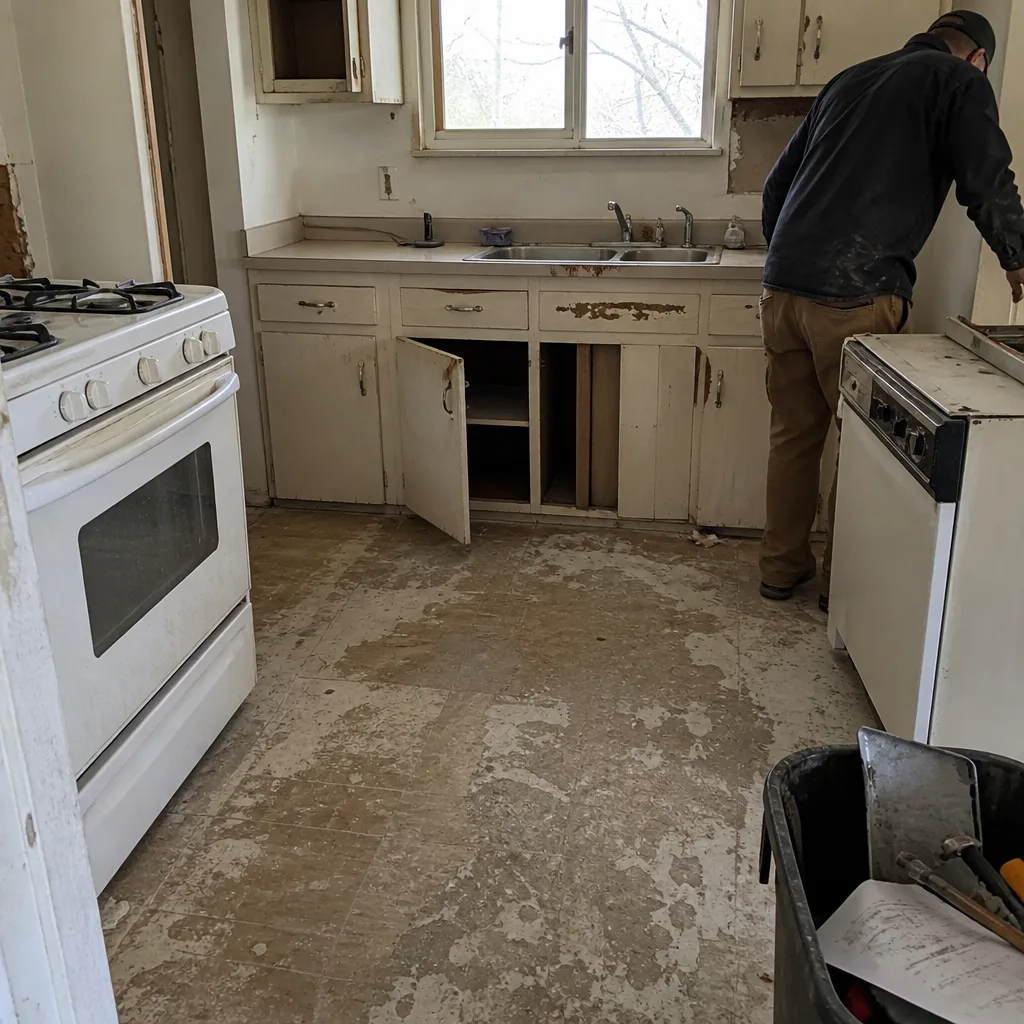
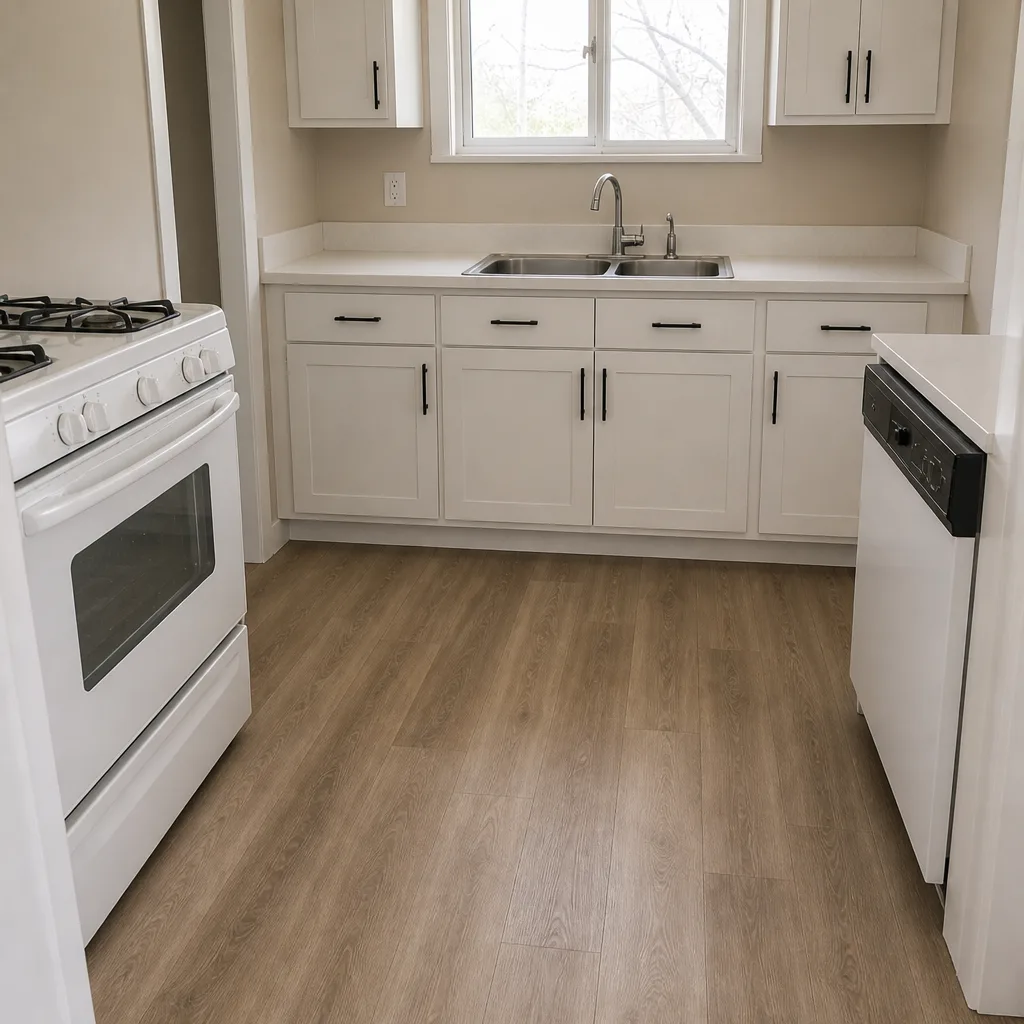
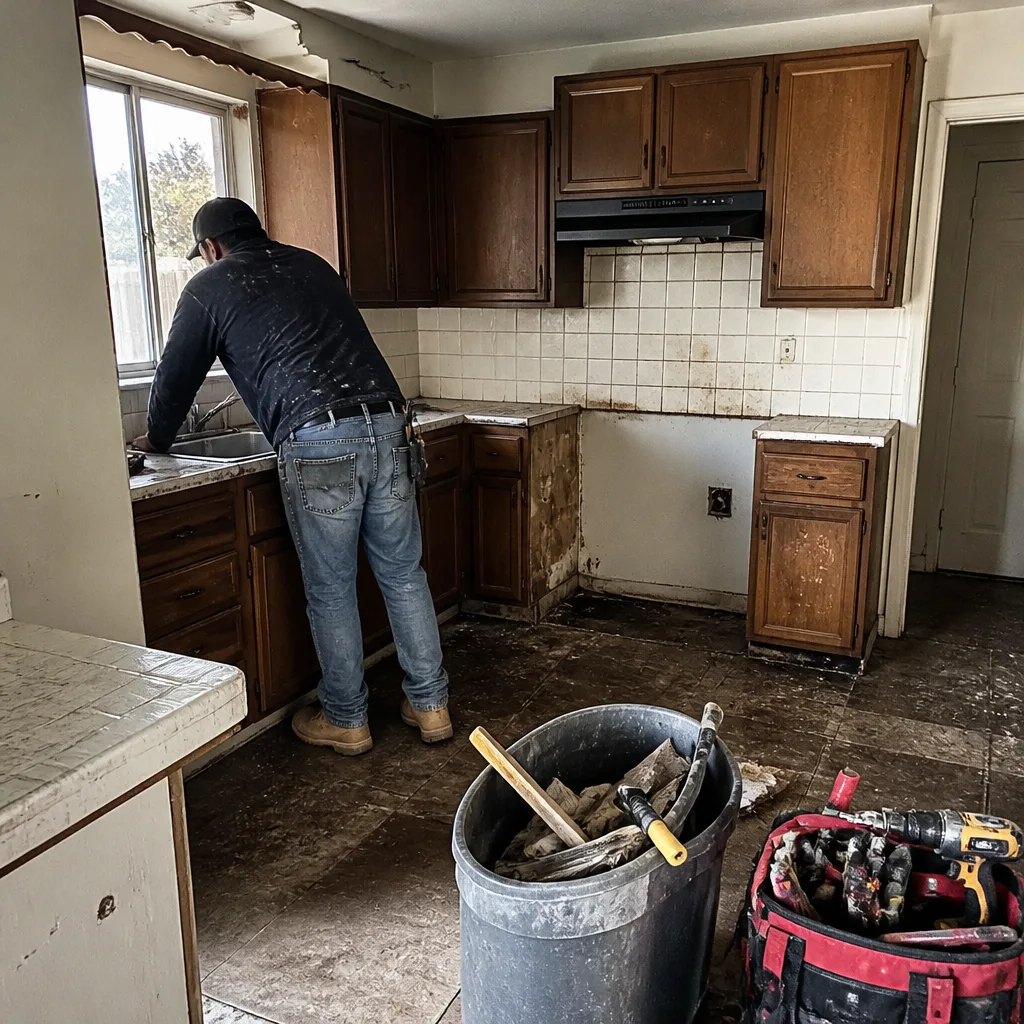
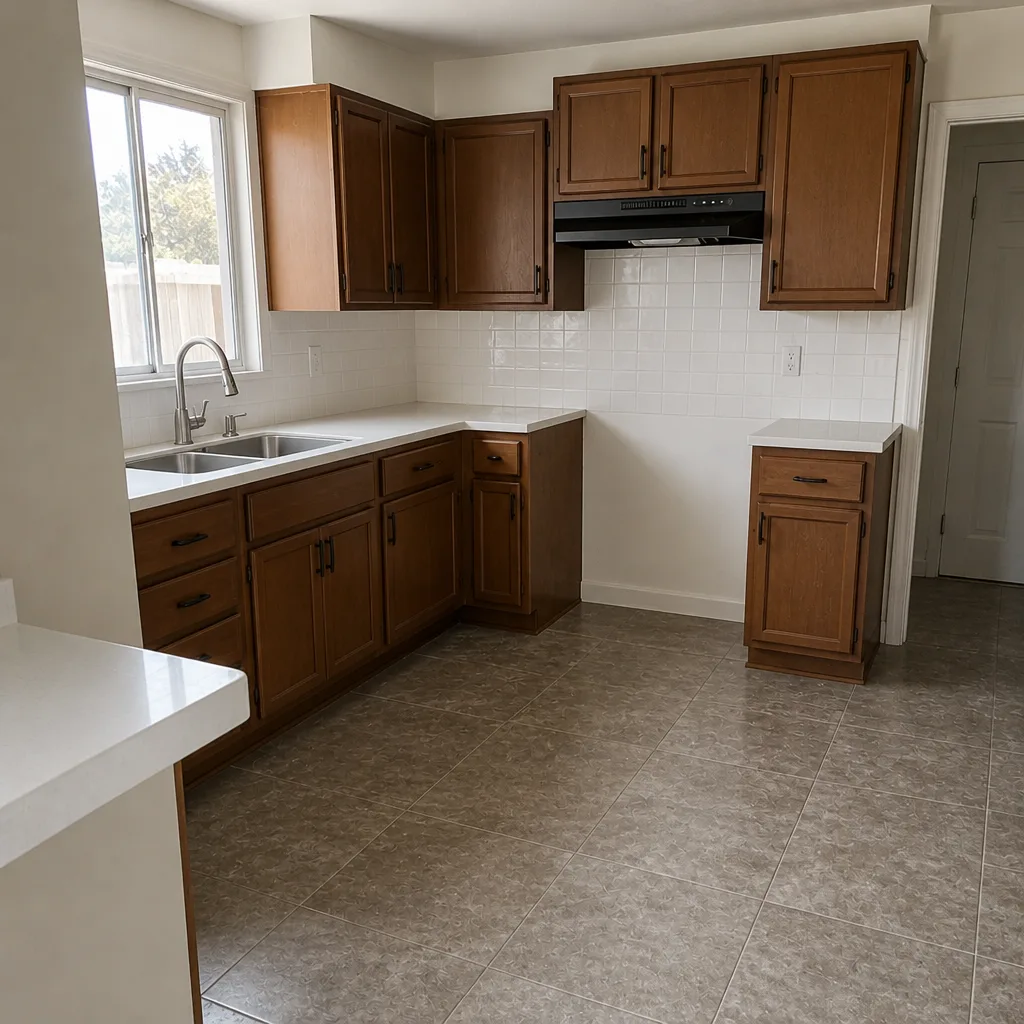
See the difference
 Before
 After
 Before
 After
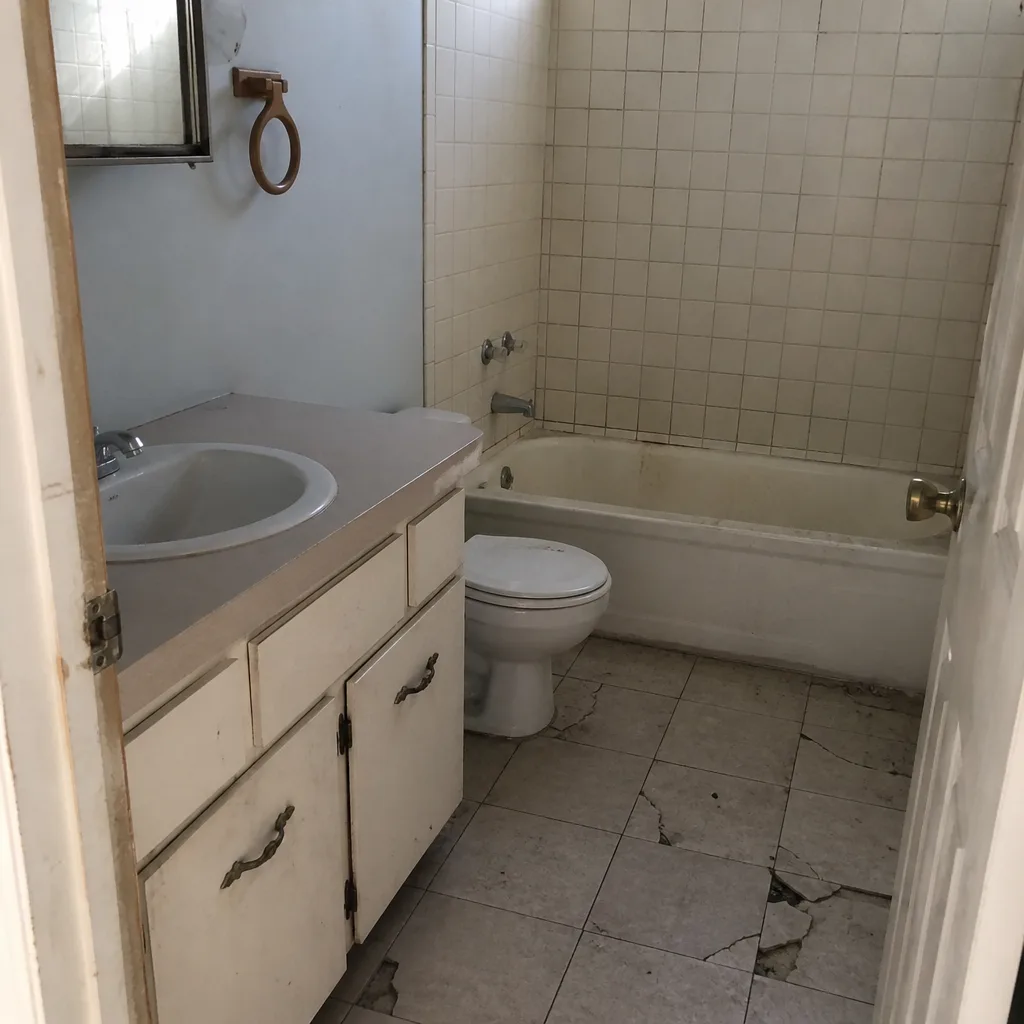 Before
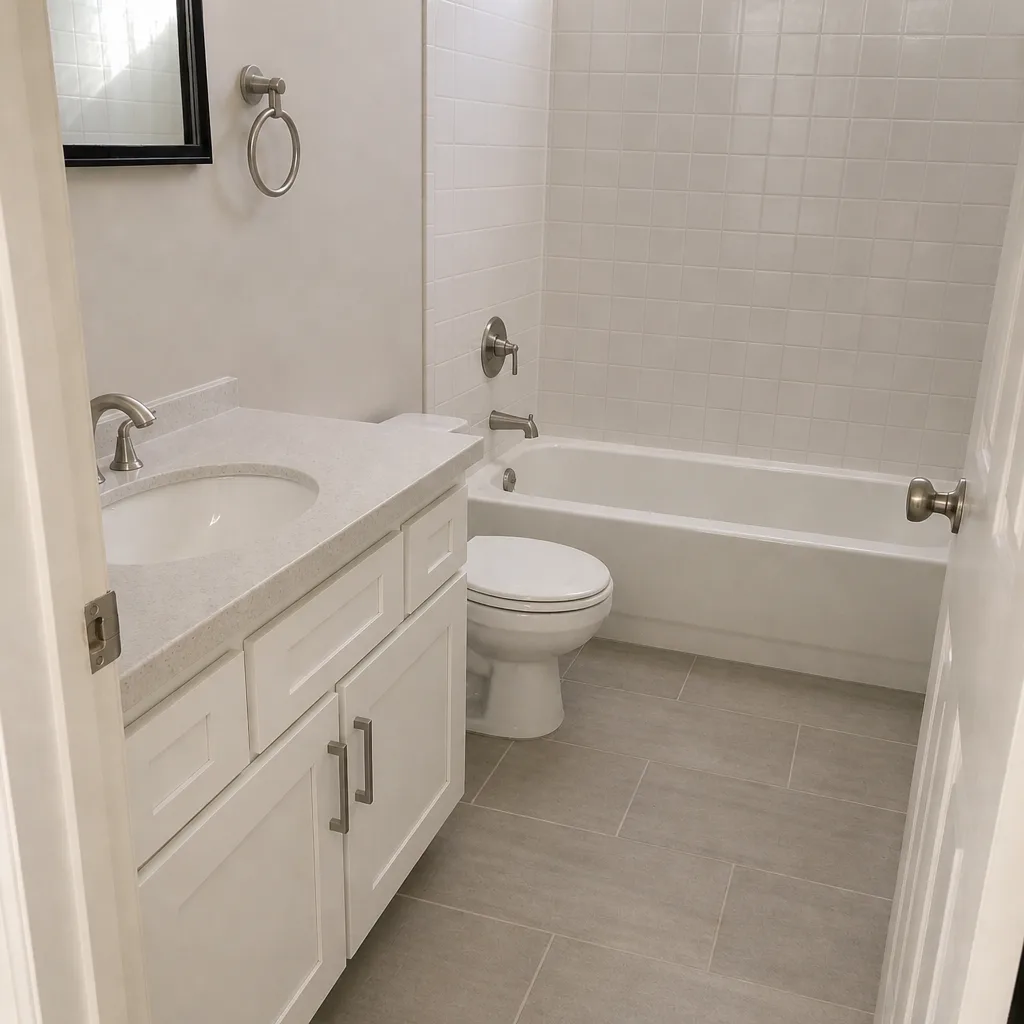 After
When to Call a Professional
Some fixes are homeowner jobs, but a good rule is that anything involving the roof, the electrical panel, plumbing behind a wall, structural framing, or the AC condenser goes to a trained professional. Those are the components where a mistake can cost far more than the repair – or worse, hurt someone. Call a pro if you have water actively coming in, a breaker that won’t reset, a roof that’s visibly lifted or missing shingles, a water heater leaking from the tank, or a wobble in the ceiling that wasn’t there before the last wind event. And if you’re unsure, call anyway – a free estimate beats a guess.
Sawyer Remodel Enterprise offers free estimates in Enterprise – call (844) 797-5994. We’ll give you a written price before anything starts, and we stand behind the work with the 365-Day Done Right Promise.
Frequently Asked Questions

A construction emergency is any damage that threatens the structure, the systems, or the people in the house and needs a fast response to prevent it from spreading. In Enterprise, the most common are roof damage from monsoon wind and rain, water intrusion through cracked stucco or window seams, HVAC failure during extreme heat, and burst or leaking pipes during a winter freeze. A cracked tile is not an emergency; a wet ceiling that’s spreading is.
Typical line-item ranges run from about $350 to $900 for a targeted roof leak repair, $400 to $1,200 for water-damaged drywall and insulation, $250 to $700 for exterior stucco patching, and $200 to $600 per window or door seal repair. Larger rebuilds vary based on scope and always come with a written estimate. Call (844) 797-5994 for an exact quote – estimates are free.
Wind-driven rain and roof damage are usually covered, but flash flood, rising groundwater, mechanical HVAC failure, and mold often have exclusions or sub-limits. Read your declarations page, know your deductible, and document everything before you clean up. When a settlement is on the table, having a contractor’s written line-item estimate helps the insurer match the repair to the actual cost.
Timing depends on how many homes were hit and which trades are involved. The realistic goal is to get a scope and a written estimate prepared quickly so you’re not stuck waiting on a number while the damage spreads. We keep a live arrival time on the schedule and answer the phone around the clock, so you’re not left chasing a callback.
Yes for anything structural – roof replacement, electrical, plumbing changes, or wall relocation. Small cosmetic repairs usually don’t need a permit, but any contractor will tell you upfront when one is required. Unpermitted work is a resale problem and can complicate an insurance claim, so a proper permit and inspection is worth the extra time.
Make it safe, then document. Shut off the water or the right breaker if there’s active leaking or exposed wiring, move what you can out of the way, and photograph every step before you clean up. Then call your insurer and call a contractor. Never go on a roof in bad weather – wait until it’s safe to inspect from the ground.
The Bottom Line
Emergency preparedness for an Enterprise home is really just planning done in advance. Document the house once a year, build a shortlist of vetted contractors before you need them, read your insurance policy in the calm months, and run the seasonal checklist before each threat window opens. Those four things take a few hours and save weeks, and they’re the difference between a repair you control and a scramble that controls you. When something does happen, you want a written price, a live person on the phone, and a guarantee in writing – that’s the whole formula, and it works whether the job is a $300 patch or a full rebuild. Call (844) 797-5994 for a free estimate and a written plan.
Written by the team at Sawyer Remodel Enterprise.