
Last updated November 18, 2026








Free written scope consultation - allowances, timeline, and change-order rules on paper before a single trade is scheduled
General Contractor Maintenance Checklist for Enterprise Homeowners
Gutters don’t appear on this checklist. Enterprise gets about 4 inches of rain a year, so the things that actually fail here are thermal expansion cracks in stucco, UV-degraded caulk joints, and attic framing stressed by 150°F summer heat loads. Most home maintenance checklists are written for wet climates and miss all three. This guide is built for the desert: what to inspect, when to inspect it, and what a general contractor’s eye catches on a walk-through that a phone app never will. It’s the list we wish every Enterprise homeowner had before small cracks turn into real money.
Quick Answer
In Enterprise, the highest-value home maintenance is seasonal and desert-specific: inspect stucco twice a year (spring and fall) for thermal expansion cracks, re-check exterior caulk joints every 12 months because UV degrades sealant far faster than in milder climates, and look at attic framing and sheathing after each summer heat season for truss uplift. Concrete flatwork, roof edges, and window seals round out the list. Handle the small stuff yourself; call a licensed general contractor for anything structural, moisture-related, or above your reach.
Styles & brands we work with
- Kitchen remodeling
- Bathroom remodeling
- Home additions & ADU
- Roofing
- Windows & doors
- Driveway & pavers
- Fence
Table of Contents
- Why Enterprise Maintenance Isn’t a Wet-Climate Checklist
- Bi-Annual Stucco Inspection for Desert Thermal Cycling
- Caulk Failure in Extreme UV: Why One Year Beats Five
- Attic Framing and Sheathing Checks After Summer Heat
- Concrete Flatwork: When a Hairline Is Just a Hairline
- Windows, Doors, and Exterior Seals
- What a GC Eyes on a Walk-Through
- Your Enterprise Maintenance Calendar
Why Enterprise Maintenance Isn’t a Wet-Climate Checklist
Most home maintenance advice online was written for climates with freeze-thaw cycles, heavy snow loads, and constant moisture. Copy it into a house in Enterprise and you’ll spend your Saturday cleaning gutters that barely catch anything while the problems that actually affect your home go unnoticed. The desert doesn’t attack your house with water. It attacks with heat, sun, and the daily expansion and contraction that comes with a 40-degree swing between afternoon and night.
Stucco cracks because it expands in the afternoon heat and contracts at night. Caulk dries and pulls away because ultraviolet light breaks down the polymers in sealant faster than in almost any other climate. Attic wood moves because the roof deck can hit 150°F while the air-conditioned living space below stays at 75°F. These aren’t cosmetic annoyances. Left alone, they let in the one thing that does real damage in the desert: the occasional monsoon rain finding a crack that’s been open for two summers.
What should an Enterprise homeowner actually watch? Three categories:
- Thermal cycling damage – stucco cracks, concrete flatwork joints, and anywhere two materials of different densities meet.
- UV degradation – caulk, window seals, weatherstripping, and anything rubber or synthetic exposed to full sun.
- Heat-load movement – attic framing, sheathing, and roof-edge details that absorb the worst of summer.
Get those three right and you’ve handled 80% of what goes wrong in an Enterprise home. Everything else is secondary. If you want the full picture of what a licensed General Contractor in Enterprise looks at across a whole home, that page walks through it.
Bi-Annual Stucco Inspection for Desert Thermal Cycling
Stucco is the skin of your house, and in Enterprise it takes a beating. The afternoon sun heats the west-facing wall to well over 150°F, then it drops sharply overnight. That daily cycle stresses the stucco and the substrate underneath. Most homes here need a real inspection twice a year, in spring and fall, right after the biggest seasonal transitions. Not in winter, when the temperature swing is milder and cracks look smaller than they are.
Here’s the spring-and-fall inspection routine we walk homeowners through:
- Walk the perimeter slowly. Look at the whole wall, not just eye level. Cracks tend to run from window and door corners outward and up.
- Mark and measure. Note any crack wider than a credit card’s edge (about 1/16 inch). Hairlines shorter than a few inches are usually cosmetic; wider or longer cracks deserve attention.
- Check the west and south walls first. Those get the most sun load and fail first.
- Press on the stucco around cracks. A hollow sound or a soft spot means the stucco has separated from the substrate – that’s a repair, not a paint-over.
- Look below every crack for staining. A water stain under an old crack means moisture has been getting in, and that’s where damage hides.
Cracks that run diagonally from window corners, or that are wider than the width of a pencil, are the ones we flag for a closer look. The good news: tight, hairline cracks in Enterprise are usually a routine maintenance item, not a structural emergency. The trick is catching them before a monsoon pushes water behind the stucco and starts rotting the sheathing. That’s when a $200 repair turns into a several-thousand-dollar one.
Caulk Failure in Extreme UV: Why One Year Beats Five
The standard advice says re-caulk every five years. In Enterprise, we tell homeowners to inspect every 12 months. That’s not a sales pitch. It’s what the sun does to sealant. UV exposure breaks down the polymers in caulk, and in a place with 280-plus sunny days a year, a joint that would last five years in Seattle looks tired in two. Check it annually and refresh the failing joints before water gets behind them.
Where caulk fails first in Enterprise:
- Around windows – especially the west and south faces where sun exposure is worst.
- Where stucco meets trim, brick, or any second material – different materials move at different rates, and the caulk joint absorbs the difference.
- Door frames and thresholds – exterior doors get sun and movement, and the bottom corners of frames are where leaks start.
- Roof-to-wall junctions – often overlooked, and the most expensive place to miss a failing seal.
What to look for: cracks in the bead, caulk that pulls away from one side of the joint, a chalky or powdery surface, and any spot that’s shrunk visibly. When you find those, remove the old bead fully and re-caulk with a UV-rated exterior sealant – painting over cracked caulk doesn’t fix the failure underneath. On a home in Enterprise, a one-year inspection catches problems while they’re still a $30 tube of caulk and an hour of work.
Attic Framing and Sheathing Checks After Summer Heat
Your attic in Enterprise is where the temperature extremes compound. On a hot day, the roof deck can hit 150°F while the living space below stays at 75°F. That gap drives thermal movement in framing members and can cause wood to shrink, twist, and pull. Every year, right after the worst of summer, we recommend a quick look at the framing – it’s a 20-minute job that catches problems before they show up as cracks in the drywall below.
What to check:
- Look at the roof sheathing from inside the attic with a flashlight. Staining, dark streaks, or soft spots mean moisture has gotten in, often through a failing seal or flashing.
- Check the trusses and rafters for movement – small gaps at joints, popped nails, or visible separation. Those are normal in moderation; multiple gaps at the same stress point aren’t.
- Look for truss uplift. Truss uplift shows up as a gap between the bottom chord of a truss and the drywall ceiling below it, and it can crack drywall along the joints. If you’re seeing cracks along the ceiling, this is one thing to check.
- Inspect the framing around the attic hatch – it’s where heat leaks and the wood dries fastest.
- Check ventilation – look for blocked soffit and ridge vents. In a desert, a hot, poorly vented attic ages faster.
If the sheathing looks dark, the joints look separated, or you find a drywall crack directly below a truss line, get a professional look. Attic framing is load-bearing – don’t start tightening, bracing, or modifying anything without someone who knows what’s structural. A look now is cheap; a fix later isn’t.
Concrete Flatwork: When a Hairline Is Just a Hairline
Concrete in Enterprise cracks. It’s not a defect – it’s what concrete does when it’s poured in a place with temperature swings. The question is whether a given crack is normal or whether it’s telling you something. Here’s how we read it:
- Hairline cracks (under 1/16 inch, straight or shrinking) are almost always cosmetic. Seal them with a concrete sealant or leave them alone.
- Cracks that are wider than a credit card edge, or that continue to widen over months signal a real issue – usually a settling slab, a poor pour, or water undermining the base.
- Cracks with vertical displacement (one side of the crack higher than the other) mean movement under the slab. That’s worth a contractor look.
- Cracks that run to a control joint or the edge of the slab usually fall on the “cosmetic” end. Cracks that spiderweb across the middle of a slab often don’t.
Walk your driveway, walkway, and patio after each wet season. Pay attention to the areas near downspouts, hose bibs, and where the slab meets the foundation – that’s where moisture-driven crack issues start. On flatwork, small stuff is a five-minute fix. Big movement is something to look at before it becomes a rebuild, and a licensed contractor can tell the two apart quickly.
Windows, Doors, and Exterior Seals
Windows and exterior doors are where thermal movement and UV exposure meet. In an Enterprise home, the seals around windows take the worst sun exposure of any part of the envelope. Check the seal at every window twice a year, especially the west and south sides.
- Feel for air movement around the frame on a hot afternoon – that’s the UV-degraded seal letting conditioned air out.
- Check the weatherstripping – rubber and foam weatherstrip gets brittle in the desert and fails faster than in colder climates.
- Look at the exterior seal at the frame – the bead of caulk between window frame and stucco is the most common seal failure point. A failure there lets in water at the next monsoon.
- Check exterior door sweeps and thresholds – a worn sweep lets in dust and heat, and a failing threshold caulk lets in water.
If your windows are more than 20 years old and you’re re-sealing every year, it might be time to talk about replacement – modern windows from brands like Therma-Tru or Barrette hold up better under desert exposure and seals last longer. That said, a lot of Enterprise homes just need fresh, UV-rated caulk and weatherstrip. Get a written price before you decide either way.
What a GC Eyes on a Walk-Through
There’s a difference between what a homeowner inspection app flags and what a general contractor notices in five minutes. Apps are great for catching the obvious. A trained eye catches the things that predict what’s coming. Here are the things we look at on a walk-through that most homeowners never think to check:
- How the stucco reads at the corners and edges. Cracks at corners are predictable; cracks at the edges of window and door openings tell us how much movement the wall is taking.
- Where the weep screed sits relative to the ground. Stucco needs to drain; if the weep screed is buried or clogged, water has nowhere to go, and it’ll find a way in somewhere.
- The seal pattern around every exterior door. Seals fail below the threshold first, and it’s the spot most people miss.
- Evidence of truss uplift or framing movement. Cracks along the ceiling drywall run in lines – and those lines point to framing above.
- How the concrete meets the foundation. A gap or moisture trap there is an early sign of water management trouble.
- The attic ventilation and roof-edge detail. Poorly vented attic air ages a roof from the inside out, and it’s a thing most homeowners never see.
None of this is about scaring anyone. It’s about knowing what’s coming. If your walk-through turns up anything on that list, that’s exactly what a licensed general contractor is for. If you’re planning a bigger project like a Kitchen Remodeling in Enterprise or a Bathroom Remodeling in Enterprise, the same eye applies to the existing structure before the new work starts.
Your Enterprise Maintenance Calendar
Here’s the schedule we recommend, tuned to Enterprise’s climate. It’s a dozen items, done twice a year, that cost an hour in spring and an hour in fall. That’s the whole system.
Spring (March-April):
- Walk stucco on all four sides; mark and measure cracks.
- Inspect and re-caulk exterior window and door seals.
- Check the roof edge and flashing for winter loosening.
- Look at the attic sheathing for moisture stains.
- Check concrete flatwork around the driveway and walkways.
Fall (September-October):
- Second stucco walk, focused on cracks that opened during summer.
- Re-check attic framing and look for truss uplift indicators.
- Inspect weatherstripping on exterior doors.
- Check all exterior sealant joints after summer UV load.
- Look for movement in concrete flatwork after the monsoon season.
That’s the list. It works in Enterprise because it was built for Enterprise. Every time we open a Sawyer Remodel Enterprise home walk-through, we run it against this same calendar, and it’s the difference between a cost you control and one that surprises you.
Common Mistakes to Avoid
- Following a wet-climate checklist. Gutters, snow-load inspections, and freeze-thaw prep don’t apply here. Use a checklist written for Enterprise’s 4 inches of rain and 150°F attic heat, not one written for Seattle.
- Re-caulking every five years. In Enterprise’s UV environment, that’s too long. Inspect every 12 months and refresh when you find failure.
- Painting over stucco cracks. A coat of paint hides a crack without stopping water from getting behind the stucco. Find the source, then repair.
- Ignoring a “minor” ceiling crack. A crack that runs along the ceiling drywall in a straight line is often a framing signal, not just cosmetic drywall. Check the attic.
- Assuming all concrete cracks are bad. Most hairlines in desert concrete are normal. Watch for widening and vertical displacement, not just the crack itself.
- Doing attic framing “fixes” yourself. Truss and rafter movement needs a professional look before you tighten or brace anything.
- Waiting for a project to trigger a walk-through. A maintenance walk-through in Enterprise catches things before they’re project-sized. That’s the point of the whole exercise.
See the difference
 Before
 After
 Before
 After
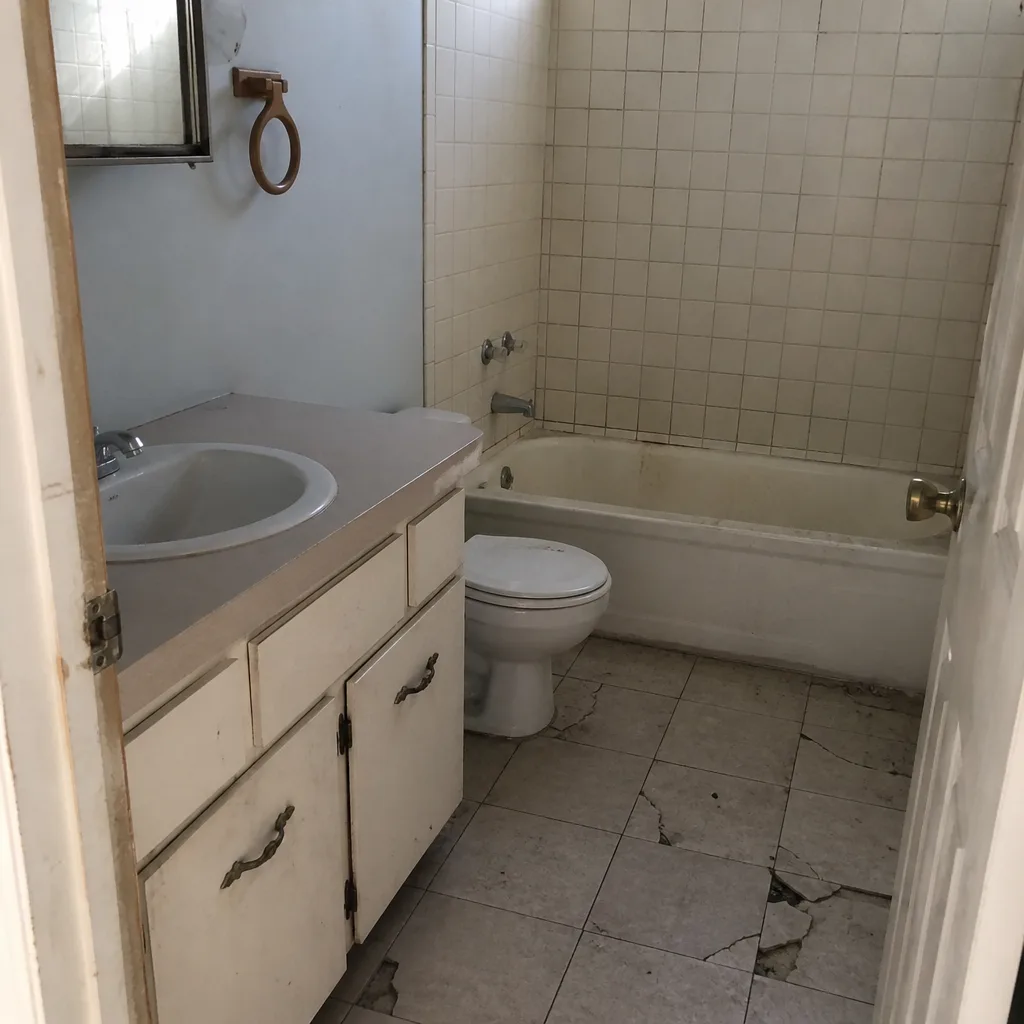 Before
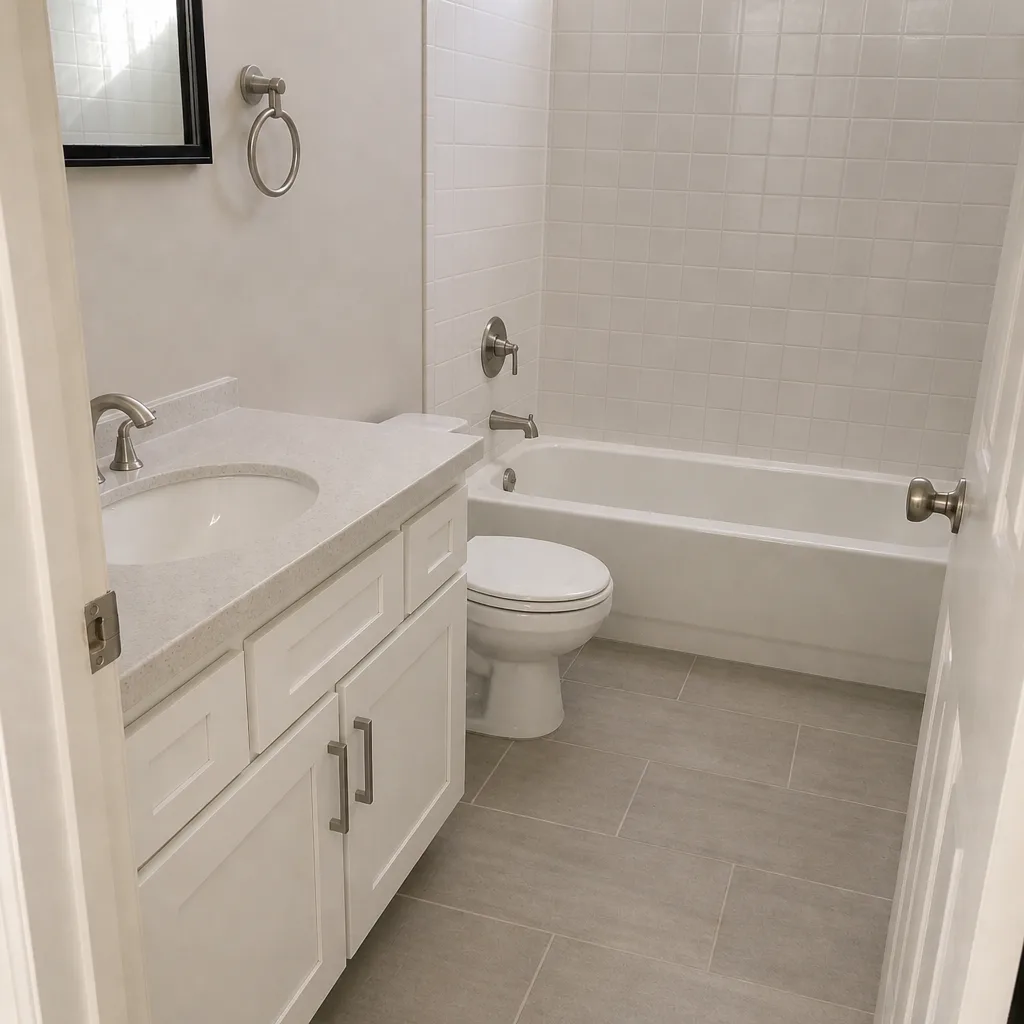 After
When to Call a Professional
Most of this checklist is homeowner-friendly. A few things aren’t: any stucco crack wider than a pencil, any crack with noticeable movement between visits, attic framing gaps that repeat at the same stress point, ceiling cracks that line up with a truss, and concrete that’s visibly displaced. Also call a professional for anything in an attic or on a roof – the heat and heights aren’t worth the risk. When you do call a licensed contractor, get the price in writing before anyone picks up a tool. Sawyer Remodel Enterprise offers free estimates in Enterprise – call (844) 797-5994 to schedule one.
Frequently Asked Questions

Twice a year, in spring and fall. Desert thermal cycling is hardest on stucco in the transitions between seasons, so those are the right times to walk the exterior and mark any new cracks. A spring walk catches winter damage; a fall walk catches summer damage. Call (844) 797-5994 for an exact quote if you find cracks you’re not sure about – estimates are free.
Ultraviolet exposure. Enterprise gets 280-plus sunny days a year, and UV breaks down the polymers in exterior caulk faster than in cooler, cloudier climates. That’s why we recommend a 12-month re-inspection instead of the standard five-year advice. Call (844) 797-5994 to schedule your free estimate on a re-caulk.
Usually not. Hairline cracks under 1/16 inch in desert concrete are normal and cosmetic. Watch for two things that signal a real issue: a crack wider than a credit card edge, and one side of the crack sitting higher than the other. Those are worth a professional look. Call (844) 797-5994 for a free estimate – we’ll tell you what’s routine and what isn’t.
Truss uplift is a gap that opens between a roof truss’s bottom chord and the drywall ceiling below, usually caused by temperature and moisture differences between the attic and the living space. In Enterprise, summer heat loads make it more common. If you’re seeing cracks along your ceiling in a straight line, that’s one thing to check. Call (844) 797-5994 to schedule a free attic walk-through.
It depends on the scope. Small cosmetic crack repair usually doesn’t require a permit; structural or larger-area stucco repair typically does. A licensed contractor will pull the permit and pass the inspection, which is one reason to have a professional handle anything beyond a tube of caulk. Call (844) 797-5994 for a free estimate that includes permit scope.
Not on a Sawyer Remodel Enterprise job. The number on the invoice is the number you approved. We put the written price in your hands before any work starts, and we back every project with our 365-Day Done Right Promise – if it’s not done right, we make it right. Call (844) 797-5994 to schedule your free estimate.
The Bottom Line
Maintenance in Enterprise isn’t about gutters and chimney sweeps. It’s about the three things the desert actually destroys: caulk, stucco, and attic framing. Inspect stucco twice a year, check and re-caulk exterior seals every 12 months, look at attic framing after summer heat, and watch concrete flatwork for anything wider than a hairline with vertical displacement. That’s the short version, and it’s what we recommend for every Enterprise home. Get someone licensed to look at anything beyond the simple stuff – a friend or family member doing the work is fine for the light end of the list, but structural and moisture issues belong to a pro. Sawyer Remodel Enterprise offers free estimates on maintenance, repairs, and remodels throughout the valley.
Ready to get the walk-through scheduled? Call (844) 797-5994 for a free estimate. We’ll answer, we’ll give you a written price before any work starts, and you’ll get a live arrival time and photo updates along the way under The Relay Visibility Guarantee. Every project is backed by our 365-Day Done Right Promise. That’s the number to call when you want a straight answer about your Enterprise home.
Written by the team at Sawyer Remodel Enterprise.