Last updated November 18, 2026

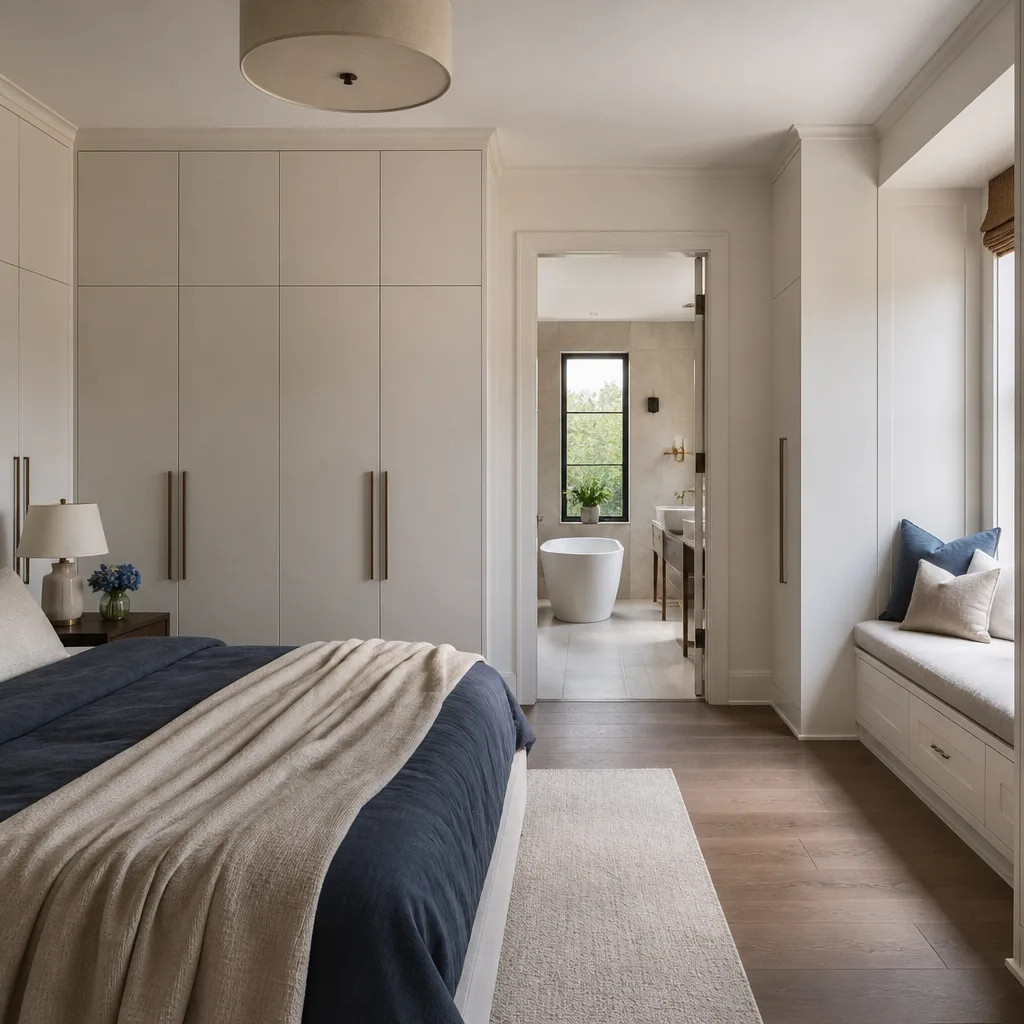
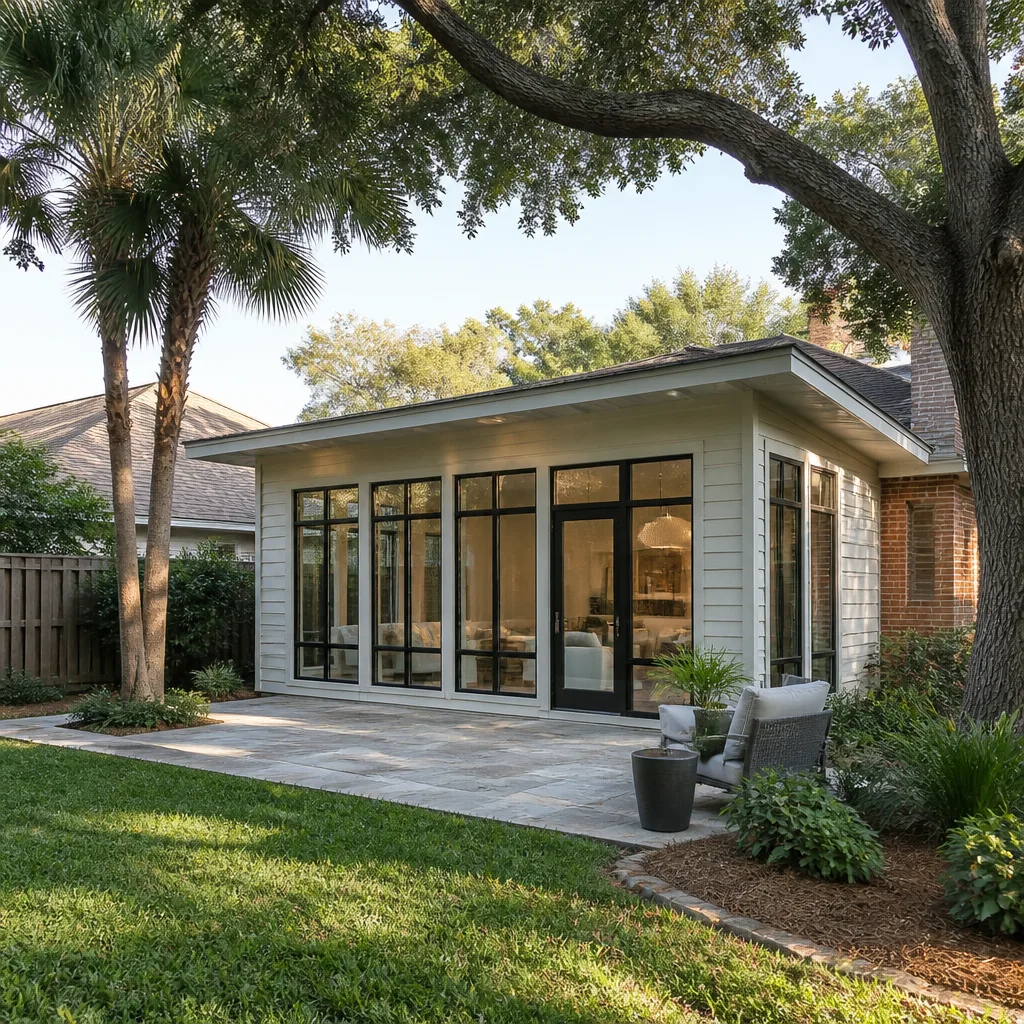
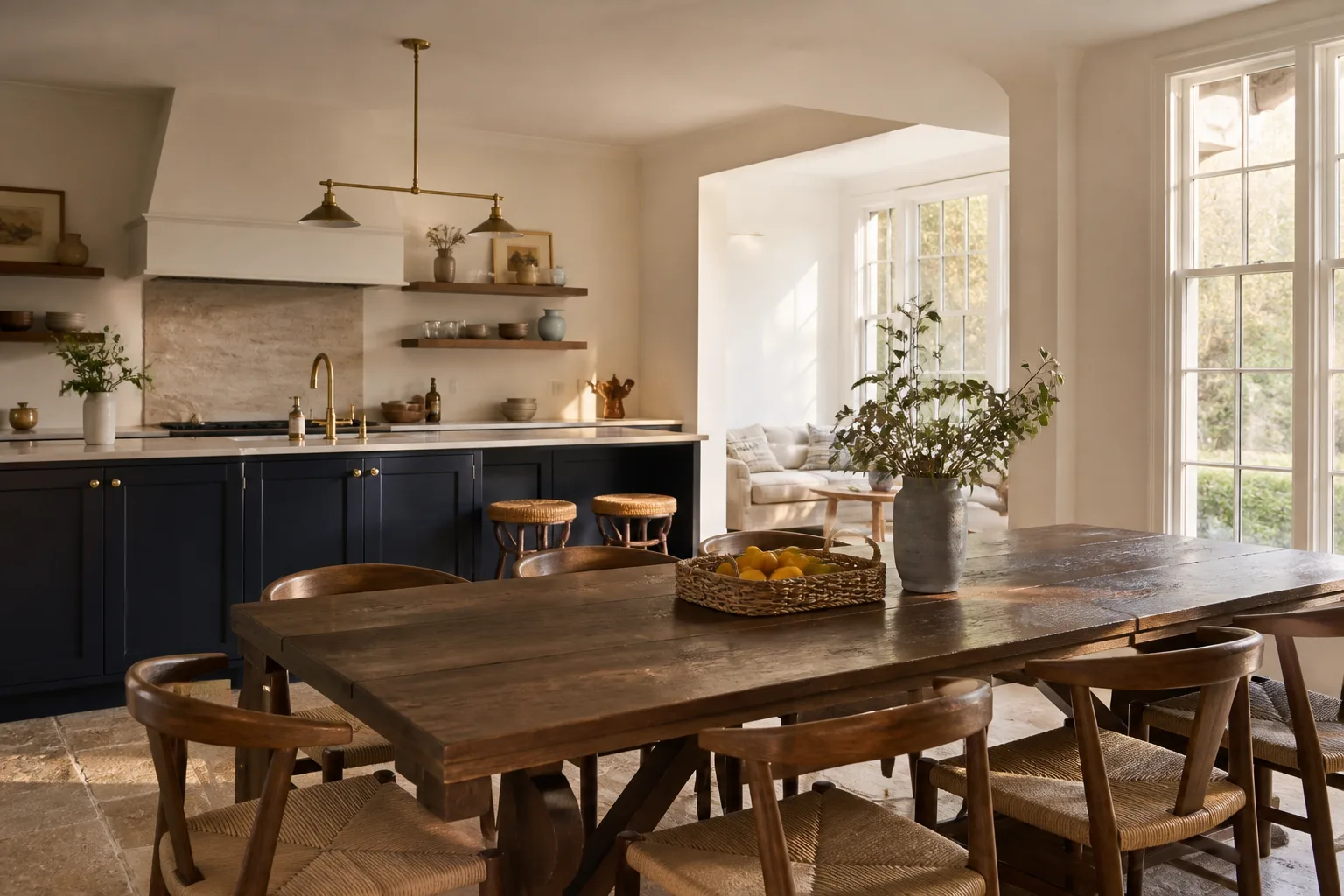

Free written scope consultation - allowances, timeline, and change-order rules on paper before a single trade is scheduled
Construction Cost Breakdown: The Enterprise Homeowner’s Reference for 2026
The national average for a bathroom remodel is about $12,000. In Enterprise, NV, a mid-grade bathroom lands closer to $18,000 – $24,000. That gap isn’t greed. It’s Clark County permit fees, desert-rated materials that survive 110-degree summers, and a labor market reshaped by casino and hospitality construction pulling skilled trades off residential jobs. If you budget from a national calculator, you’ll be short by thousands before demolition even starts. This guide breaks down what Enterprise homeowners actually pay in 2026, including the line items contractors bundle together and never show you separated. You’ll learn where the money really goes and how to read a quote that matches the scope.
Quick Answer
In Enterprise, NV, expect roughly $18,000 – $24,000 for a mid-grade bathroom remodel, $45,000 – $80,000 for a mid-grade kitchen, and $120,000 – $200,000+ for a room addition in 2026. Clark County permit fees, desert-rated materials, and hospitality-driven labor competition push residential pricing 30 – 50% above national averages. The single biggest variable is the completeness of your written quote: a low bid usually omits demolition, disposal, substrate, and site protection, and those costs don’t disappear. They reappear as change orders.
Styles & brands we work with
- Kitchen remodeling
- Bathroom remodeling
- Home additions & ADU
- Roofing
- Windows & doors
- Driveway & pavers
- Fence
Table of Contents
- Why Construction Costs More in Enterprise Than National Averages
- Labor Rates: What Casino Construction Does to Your Quote
- The Material Line Items Homeowners Never See Separated
- Clark County Permit Fees for Common Residential Projects
- The Hidden Third: Demolition, Disposal, and Site Protection
- How to Read a Contractor Quote Line by Line
- Project Timelines and What Delays Actually Cost
- Common Mistakes to Avoid
- When to Call a Professional
- Frequently Asked Questions
Why Construction Costs More in Enterprise Than National Averages
Enterprise sits in a construction market shaped by two forces national cost calculators ignore: extreme desert climate and a labor pool competing with casino and resort development. Those two forces alone explain most of the 30 – 50% gap between here and the national numbers.
The climate drives material specs first. Standard drywall, exterior paint, and roofing rated for moderate climates fail early in Enterprise’s heat cycles. Desert-rated elastomeric coatings, higher-UV-rated shingles, and heat-tolerant sealants cost more upfront. They also last longer, which is the trade-off most homeowners accept once they see a five-year timeline of failures in a neighbor’s house.
Second, soil and slab conditions matter. Expansive clay soils in parts of Enterprise put stress on slabs and foundations, and any remodel touching structure may need engineering input that a national calculator never accounts for. A bathroom remodel is small; a footing for a room addition is not.
Third, supply chains. Not every supplier stocks Cambria slabs or James Hardie board locally at every moment. Special-order lead times aren’t just schedule risk; they can carry freight surcharges that a low bid quietly excludes.
What this means for your budget: leave 10 – 15% contingency on any Enterprise remodel. That’s not padding a contractor’s number – it’s acknowledging a market where the variables are real and predictable once you know them. In our experience, homeowners who plan a contingency finish happier than the ones who don’t. The Sawyer Remodel Enterprise home page lays out how we structure written quotes so those variables are visible before the first tool comes out.
Labor Rates: What Casino Construction Does to Your Quote
Skilled trades in Southern Nevada choose between residential work and the steady, higher-wage pipeline of casino and hospitality projects. That competition drives residential labor rates up roughly 20 – 35% versus markets without a dominant hospitality sector. It also affects who shows up. A tile setter who can earn $55 – $70/hour on a resort job doesn’t rush to a $40/hour residential gig unless the contractor runs a tight, reliable operation.
Here’s what that means line by line for a 2026 Enterprise project:
- General labor (demo, hauling, cleanup): $28 – $38/hour
- Framing carpenter: $55 – $75/hour
- Tile setter (residential): $55 – $85/hour
- Plumber (licensed): $95 – $140/hour
- Electrician (licensed): $90 – $130/hour
- HVAC technician: $85 – $125/hour
- Drywall and finish (per square foot): $2.25 – $4.50/sf installed
Those are ranges, not quotes. A contractor who hires background-checked, uniformed technicians and pays them to stay will often land at the higher end. That’s a good sign: cheap labor on a casino-adjacent market usually means someone was pulled off a job mid-project. The real cost of a low labor rate isn’t the hourly number; it’s the schedule slip when your crew gets poached.
When we quote a project in Enterprise, we name the labor line items separately so you can see where the hours go. You don’t get to negotiate a $60 tile setter down to $35 in this market, and if a contractor promises that, someone is either absorbing a loss or about to disappear. Sticking to a written price before work starts, backed by The Relay Visibility Guarantee, means the labor line on your invoice matches the one you approved.
The Material Line Items Homeowners Never See Separated
Ask for a quote on a bathroom and you’ll usually get one line: “Tile and fixtures.” That line hides five physical products and a dozen consumables. Here are the items a complete quote separates, and what they cost in Enterprise in 2026:
- Cement backer board (1/2″): $1.75 – $3.50 per square foot. Tile set directly on drywall fails in a wet environment. Backer board is not optional.
- Waterproofing membrane (liquid or sheet): $120 – $350 per shower. Schluter-Kerdi or comparable sheet membranes cost more than a brush-on product and hold up far better under constant wet-dry cycling.
- Schluter edge trim (the metal strip that waterproofs where your tile meets the floor): $18 – $45 per 8-foot stick. Homeowners don’t know to ask for this; without it, the tile-to-floor joint is the first place to grow mold.
- Fastener specs: exterior-rated, corrosion-resistant screws cost $0.05 – $0.12 each. A 250-square-foot bath may use 400 – 800 of them. Cheap drywall screws rust and back out within a season. The upcharge for the right fastener is trivial; the repair bill for the wrong one is not.
- Subfloor repair allowance: $250 – $900 depending on rot extent. Never assume the subfloor under an old bath is sound until it’s exposed.
- Desert-rated sealants and caulk: $8 – $22 per tube; $75 – $180 total for a typical bath. Standard latex caulk fails in Enterprise summers.
Tile, fixtures, and cabinets are the visible line items. Backer board, membrane, trim, fasteners, and subfloor are the “invisible” ones. A quote that lists only the visible stuff isn’t a cheaper quote; it’s an incomplete one. Brand names help too, which is why our customers work directly with Cambria and KraftMaid selections, where the manufacturer backs the product and the spec is on paper. Then when something needs replacement, there’s a brand record to work from. A quick scan of the Bathroom Remodeling in Enterprise page shows how these line items get documented up front.
Clark County Permit Fees for Common Residential Projects
Permits in Clark County aren’t a small pass-through; on a bathroom, they can run $450 – $900 depending on fixture count and valuation. These 2026 figures are typical ranges. Actual fees are set by the county at time of application and depend on project valuation and inspection count, so treat these as budgets, not contracts:
- Bathroom remodel (not moving walls or plumbing): $450 – $900
- Bathroom remodel with plumbing relocation: $700 – $1,400
- Kitchen remodel (electrical and plumbing, no structural change): $650 – $1,500
- Kitchen remodel with structural wall removed: $1,100 – $2,200, plus a structural engineer letter ($400 – $900)
- Room addition (up to 400 sq ft): $3,200 – $7,500 in permits, plus plan review and engineering
- Re-roof (permit, no structural change): $300 – $650
- Water heater replacement: $150 – $275
Two things Enterprise homeowners get wrong here. First, some skip the permit to save money. That’s a bad trade: unpermitted work kills resale value and can force a tear-out when you sell. Second, some get quoted a permit fee that doesn’t include inspection reinspection charges (roughly $120 – $180 each time an inspection fails). A permit pulled correctly costs less than a permit fixed later.
We pull permits and pass inspections as a matter of course on every project that requires them. That’s part of the price in writing: the permit line is separated on the quote, and it doesn’t grow to hide a callback. The difference between a complete permit line and a missing one is often $400 or more on the final invoice.
The Hidden Third: Demolition, Disposal, and Site Protection
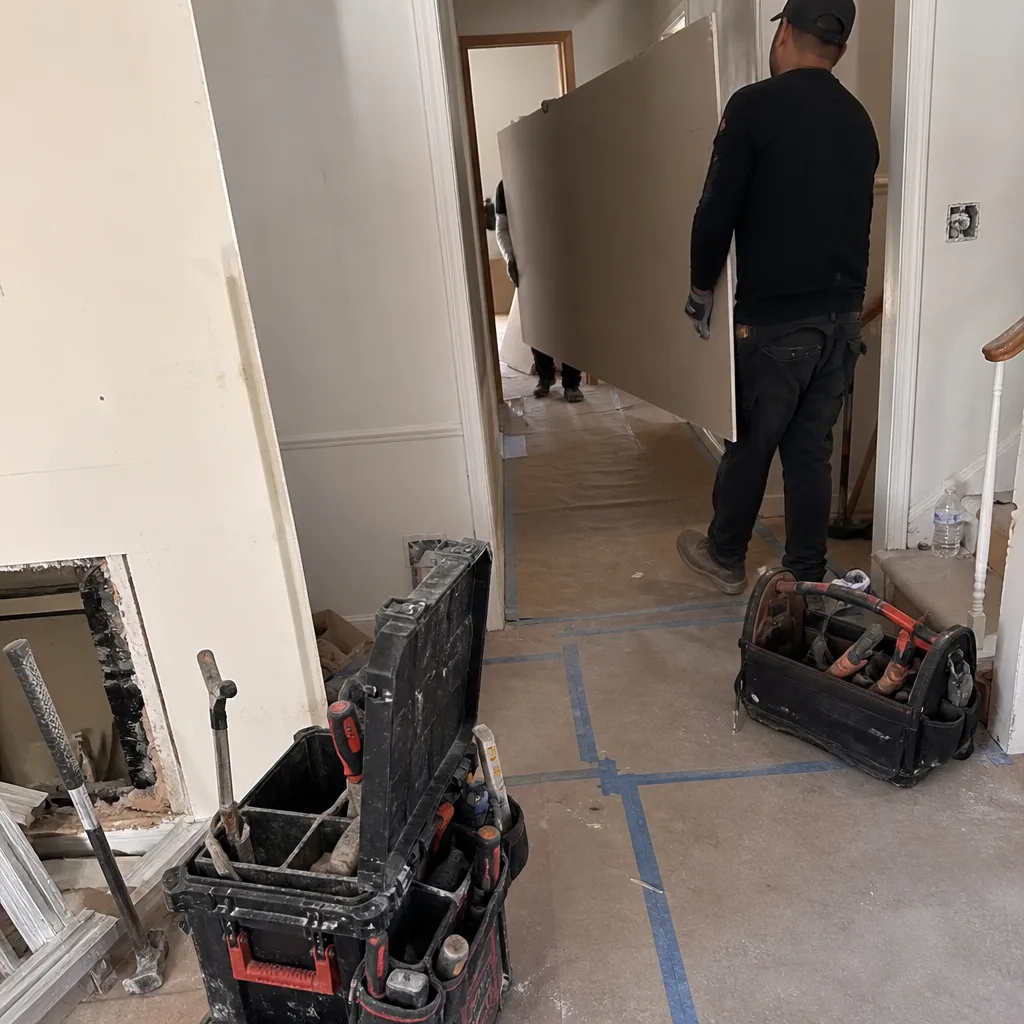
On a typical bathroom remodel, demolition, disposal, and site protection represent roughly a third of the labor total. On a kitchen, it’s closer to a quarter. On an addition, less – because there’s less to tear out. But these are the lines most likely to be missing entirely from a low bid. That’s not a coincidence. They’re easy to hide because they’re not glamorous.
Here’s what a complete quote shows:
- Demo labor: 15 – 25 hours on a bathroom, 30 – 50 on a kitchen. Tear-out is slow, careful work; one careless swing takes out a plumbing line or a load-bearing wall.
- Disposal: 1 – 3 dumpsters on a bathroom, 2 – 4 on a kitchen, at $425 – $725 each in Clark County. Debris weight matters here; tile and cast iron are heavy.
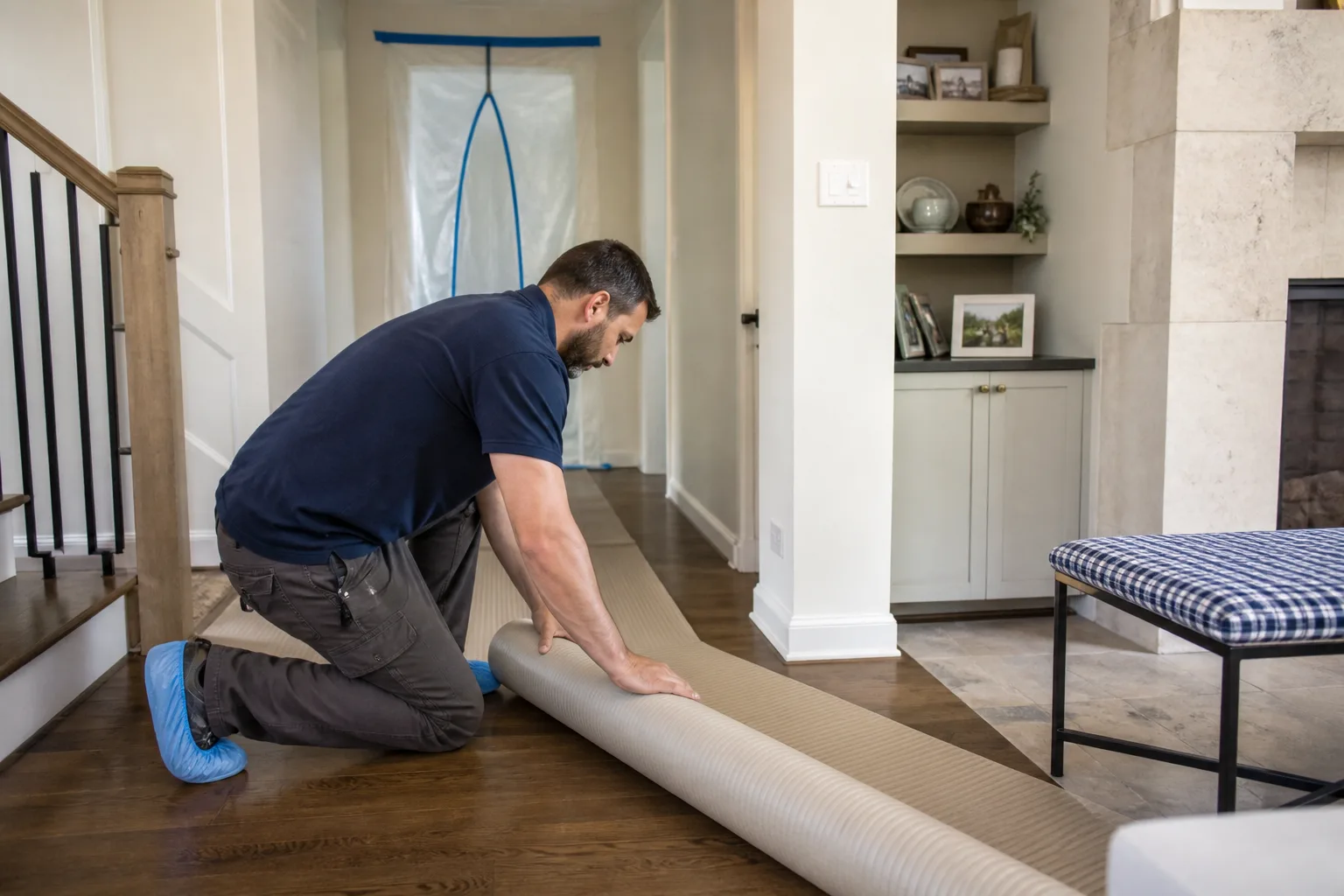
- Site protection: plastic sheeting, protective floor coverings, HVAC filter protection during dust. $150 – $450 on a mid-grade remodel. Skip it and you’re cleaning desert dust out of every vent in the house.
- Dust containment: zipper-door barriers and negative pressure systems if the room is adjacent to living space. $200 – $600. Worth every dollar in an occupied home.
- Post-demo inspection: 1 – 3 hours to confirm what’s behind the wall before the next phase. This is where hidden rot, water damage, or outdated wiring gets caught – before it becomes a change order.
If a quote is 15 – 20% below the other two you received and doesn’t show these line items by name, they’re not giving you a deal. They’re planning to add them later. In our experience, homeowners who demand a demolition line item on the bid avoid most change-order surprises. When you see a written price from us, it includes every one of these – the demo, the dumpster, the site protection, the post-demo inspection. The number on the invoice is the number you approved.
How to Read a Contractor Quote Line by Line
Here’s the practical process. Use it on any quote you receive in Enterprise, whether it’s from us or anyone else:
- Count the line items on labor. A complete bathroom quote should have 15 or more separate labor lines. Fewer than 10 means things are bundled, and bundling hides exclusions.
- Find the permit line. If it’s not there and the work requires a permit (which most does), the bid is incomplete.
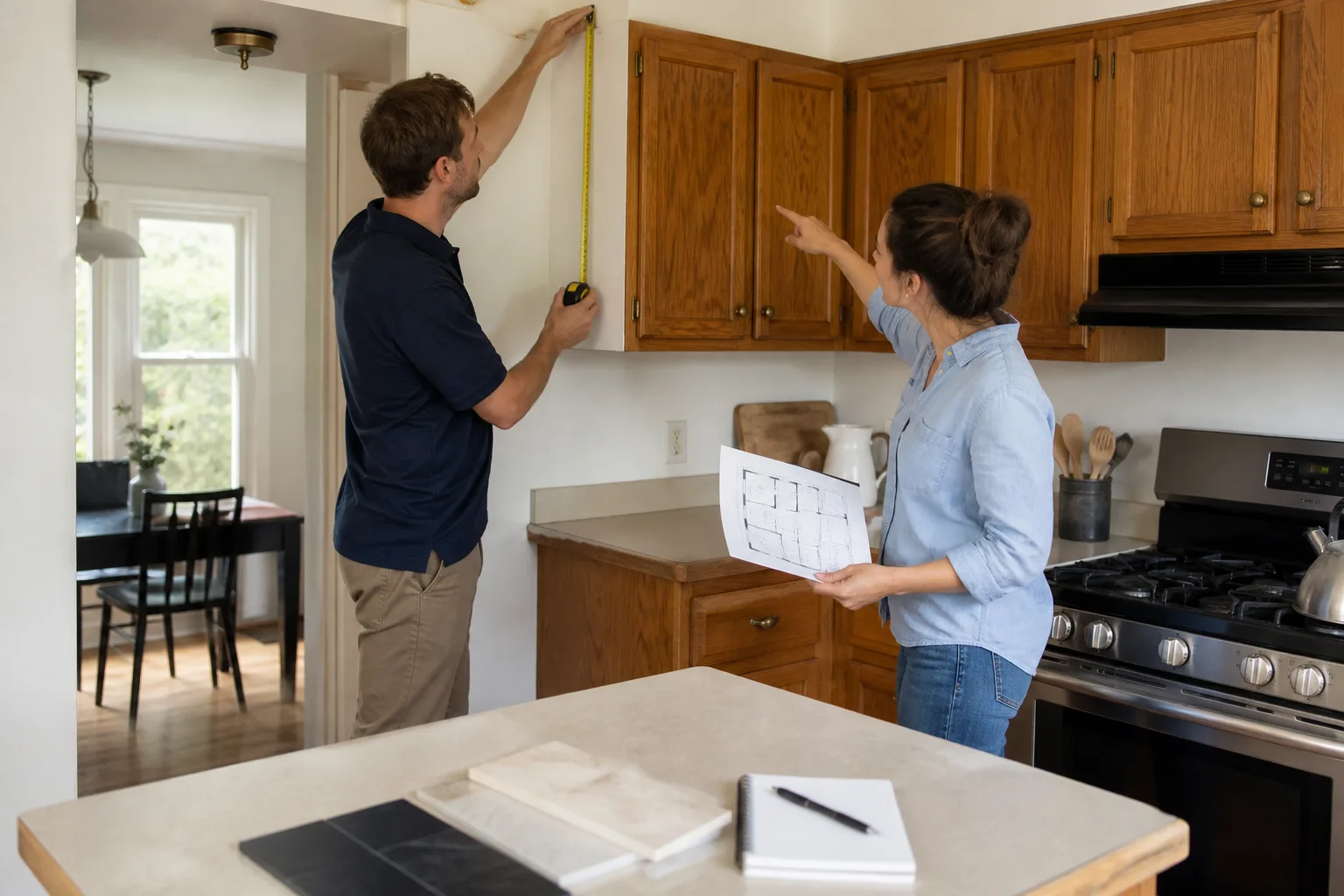
- Find the demolition line. Missing it means you’re either doing demo yourself or the price will grow.
- Find the disposal line. $400 – $1,500 in dumpster costs belongs on the quote, not the invoice.
- Look for material allowance vs. specified material. “Tile allowance: $3/sf” is a trap. A specified material is “Daltile Marazzi 12×24 at $6.40/sf.” The second one is a real number you can check.
- Check the warranty language. Ours is the 365-Day Done Right Promise, written on every project: if it’s not done right, we make it right. A quote without warranty terms in writing isn’t a quote; it’s a handshake.
- Confirm the price is fixed, not estimated. The words matter. “Estimated” means it will change; “fixed” means it won’t. Ask which word is on your contract.
If you want to see what a full scope comparison looks like on a bigger project, the General Contractor in Enterprise page walks through the sequencing. Same logic applies to a kitchen; the Kitchen Remodeling in Enterprise page covers the full scope and adds cabinet and appliance specification detail.
Project Timelines and What Delays Actually Cost
Timelines in Enterprise run 10 – 20% longer than national averages for the reasons above. Here’s what 2026 projects actually take:
- Bathroom remodel, mid-grade: 3 – 5 weeks (national average: 2 – 4 weeks)
- Bathroom remodel, high-end with layout change: 5 – 7 weeks
- Kitchen remodel, mid-grade: 6 – 9 weeks (national average: 5 – 7 weeks)
- Room addition, 300 sq ft: 10 – 16 weeks
- Whole-home renovation: 4 – 7 months
Delays cost real money. Every extra week of a bathroom remodel means the family is sharing one bath, or paying $1,400 – $2,600 for a short-term rental. Cabinet and countertop lead times (KraftMaid and Cambria can run 4 – 7 weeks; Wellborn is often similar) are the most common cause of schedule slips in Enterprise. That’s why the schedule should be written down at the start, with a live arrival time for each phase, so you know the day the cabinet install crew is showing up.
A delay from material lead time is unavoidable sometimes. A delay from a contractor who doesn’t call is not. The difference between the two is the whole point of The Relay Visibility Guarantee: you get a live arrival time and photo updates before and after each phase, so a project never disappears into silence.
See the difference
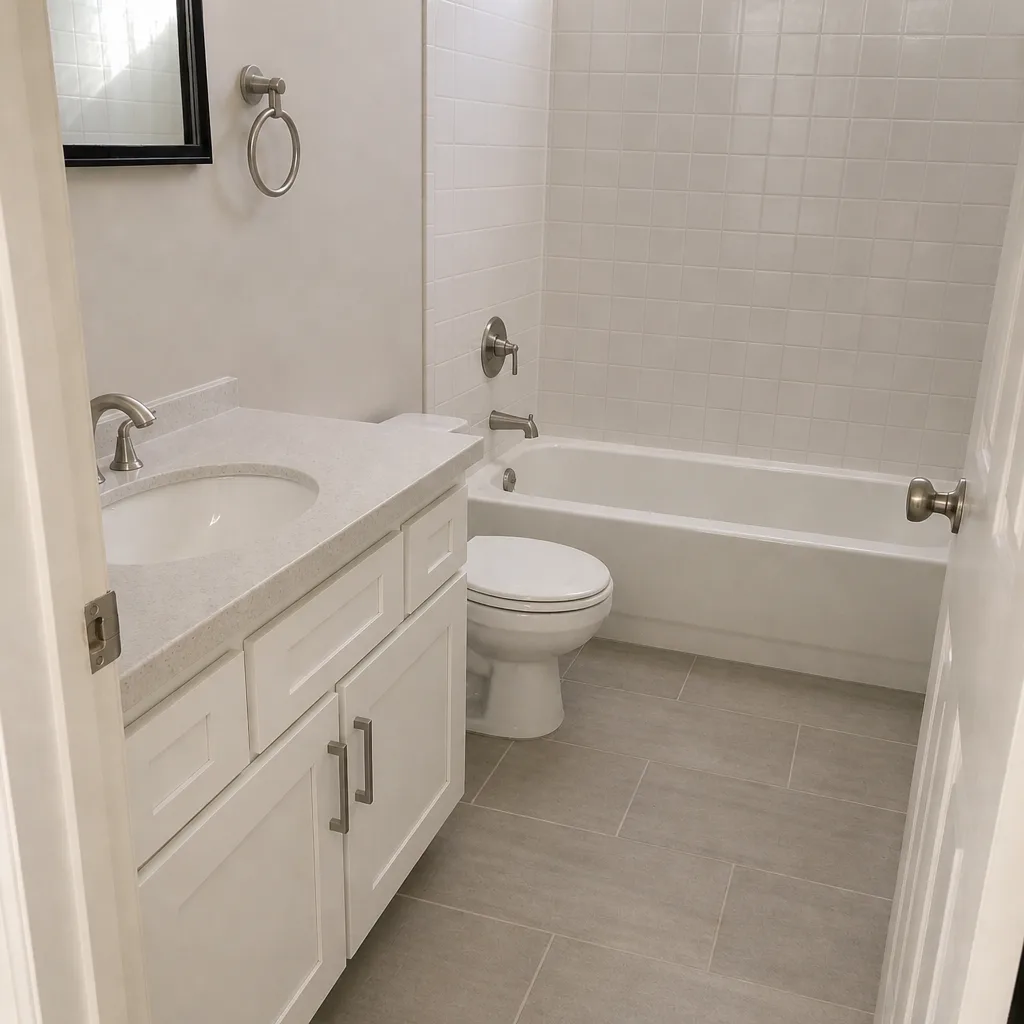
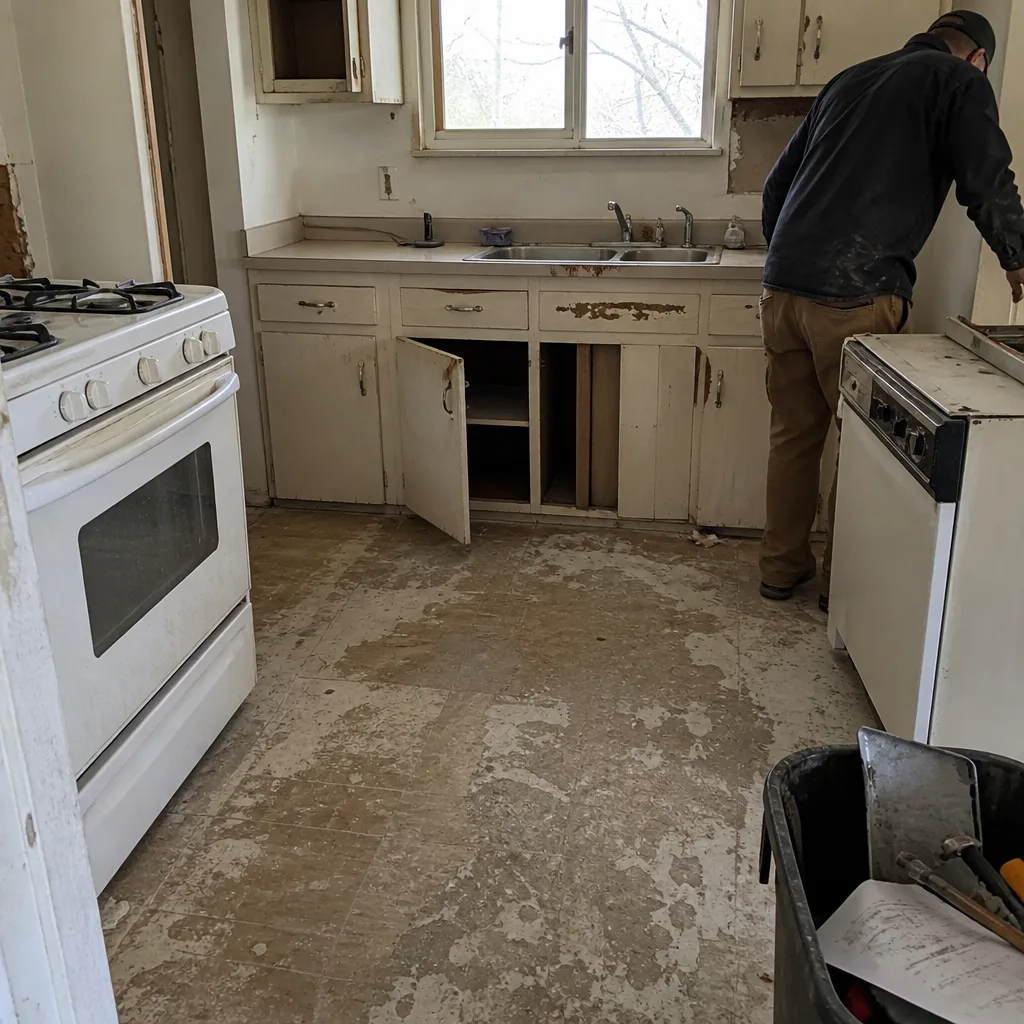 Before
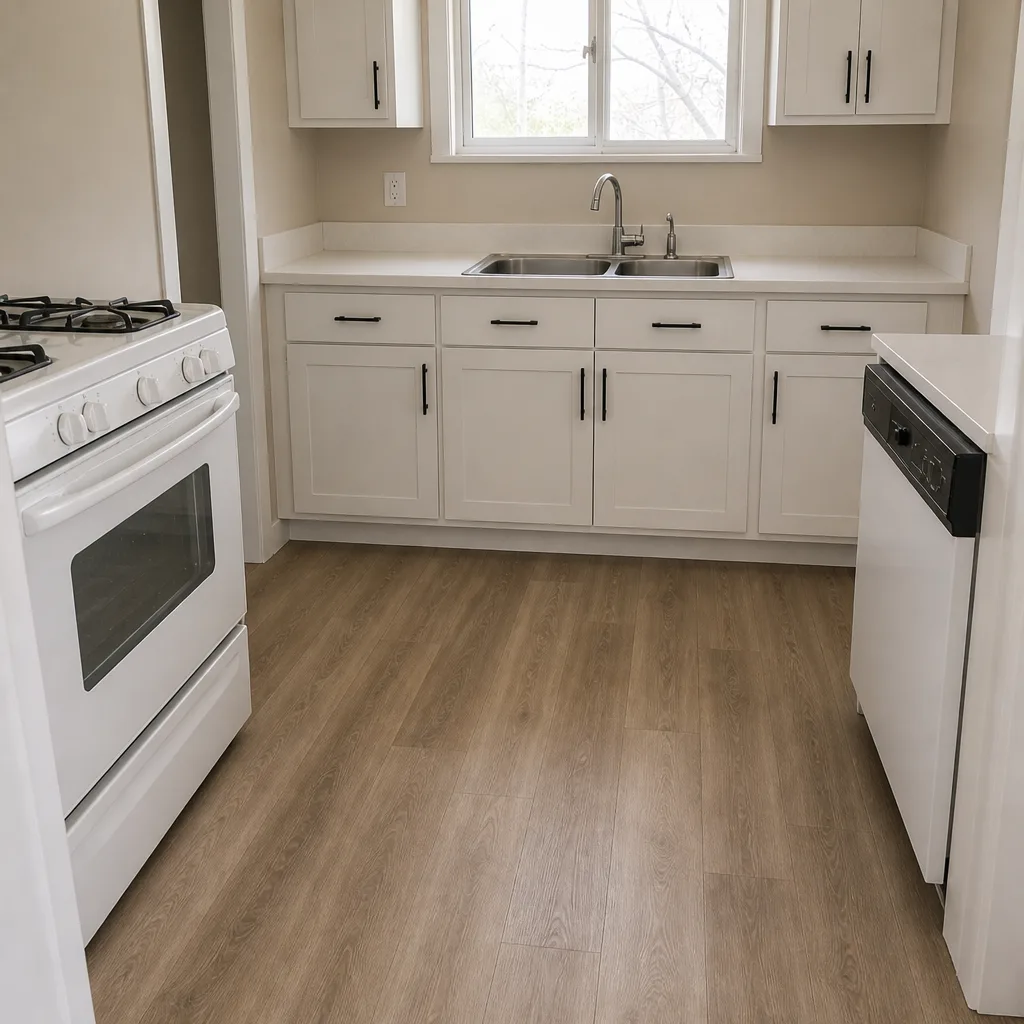 After
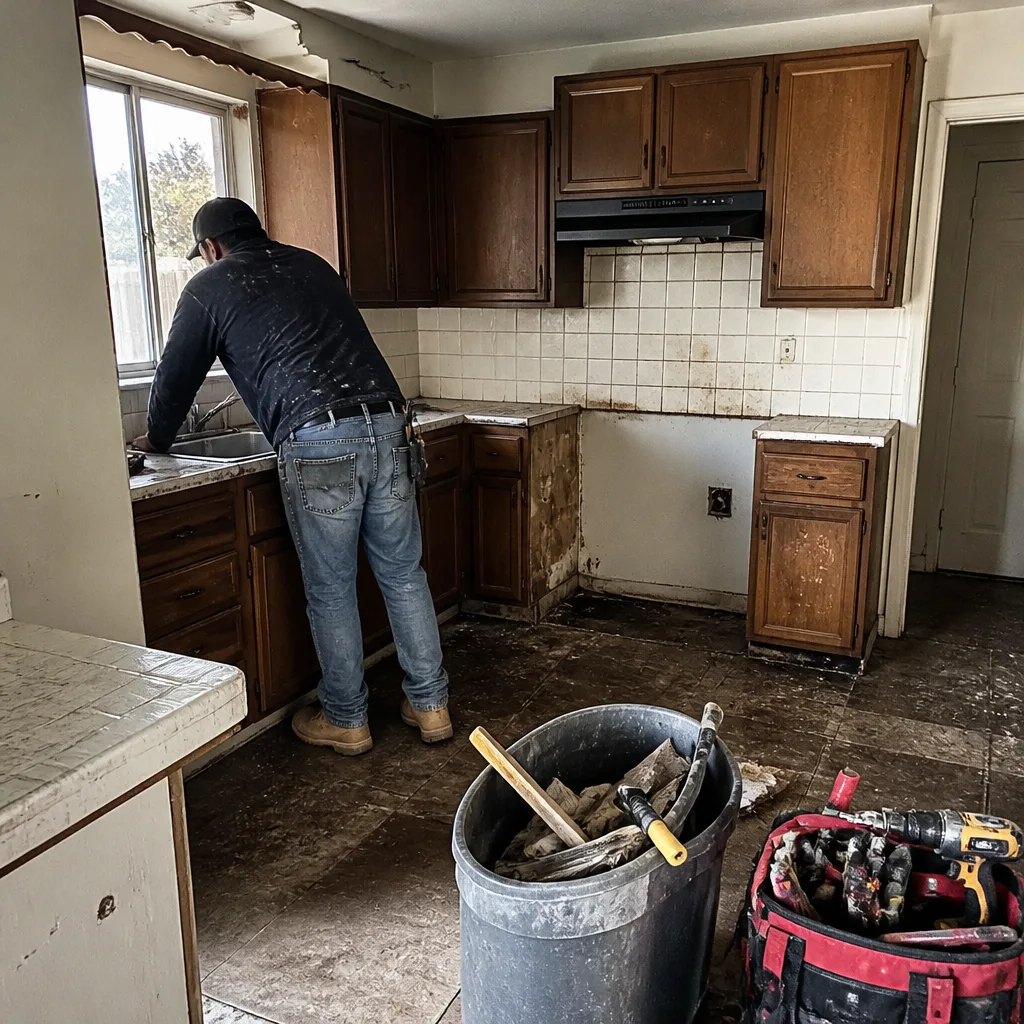 Before
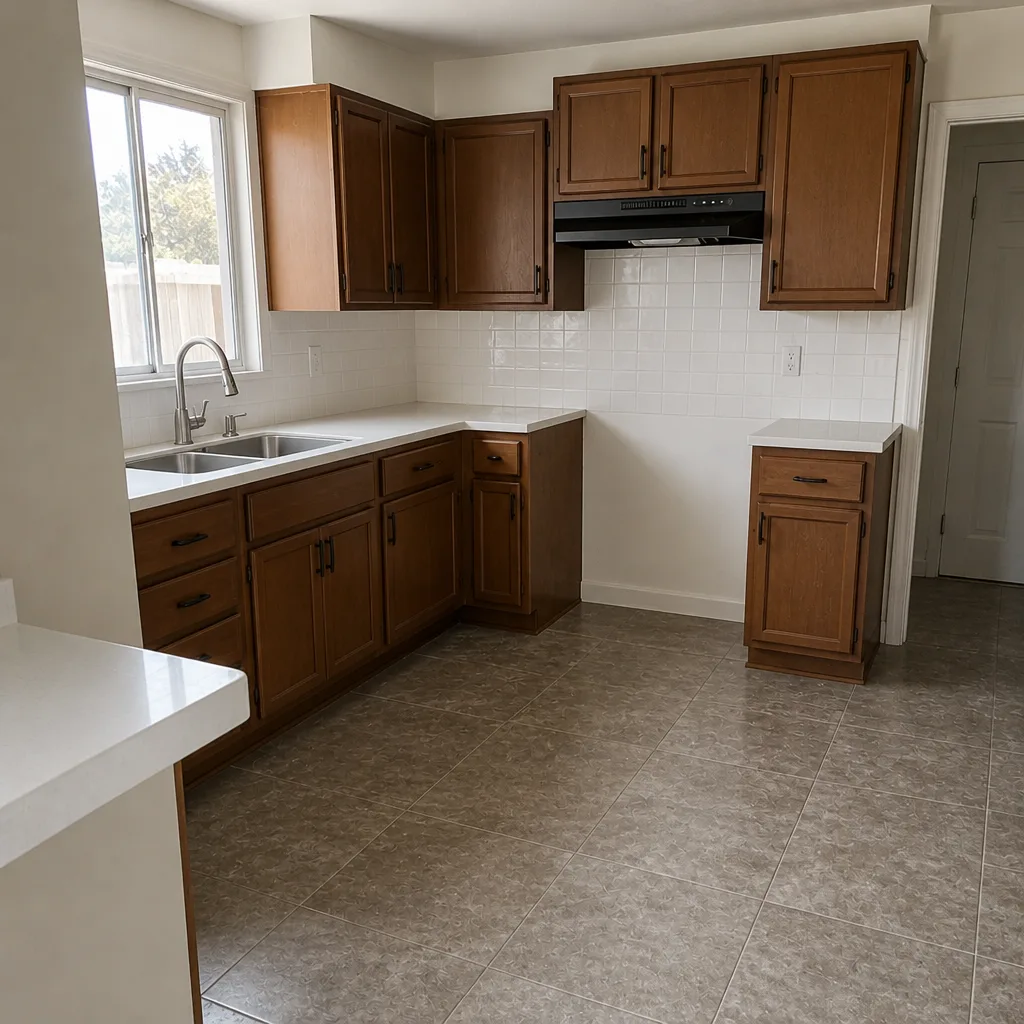 After
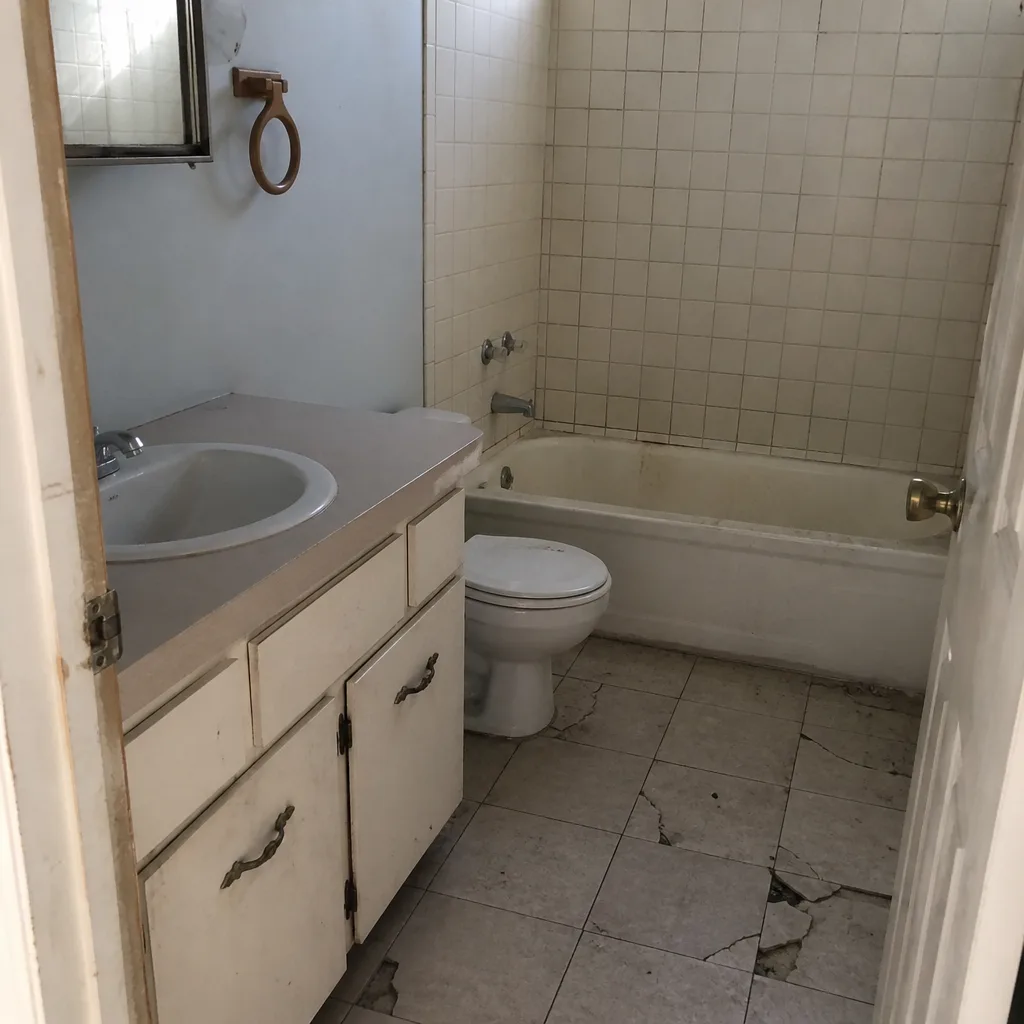 Before
 After
Common Mistakes to Avoid
- Budgeting from national averages. A $12,000 national bathroom number in Enterprise is off by 30 – 50%. A 2026 mid-grade bath here runs $18,000 – $24,000; budget from local numbers, not a website calculator.
- Accepting a quote without a demolition line. In Enterprise, contractors who omit demo are either planning a change order or planning to leave. Ask what it costs; if the number isn’t there, get it in writing before signing.
- Skipping the permit to “save money.” Unpermitted work in Clark County can force a tear-out at resale and can void homeowner insurance after a claim. The permit fee is one of the cheapest line items on the project.
- Choosing a bid on price alone when the scope is missing. A $16,000 bathroom bid is not cheaper than a $22,000 bid if the $16,000 one omits disposal, site protection, and subfloor allowance. Compare by line item, not by total.
- Letting the schedule live in someone else’s head. A written schedule with named phases and live arrival times prevents the “we’ll be there the week of the 14th” fog that eats up a family’s month.
- Selecting fixtures without checking the spec sheet. A Kohler shower valve that fits one rough-in size won’t fit another, and the reframing cost is on you. Confirm the model and rough-in before demolition starts.
- Ignoring desert-specific material specs. Standard exterior paint, sealants, and shingles fail fast in Enterprise heat. The cheaper product is the more expensive one over a five-year horizon.
When to Call a Professional
Call a licensed contractor when the work touches anything inside the wall, under the floor, or above the ceiling, and when a permit is required. That covers moving plumbing, relocating electrical, removing walls, adding square footage, replacing a roof, and any remodel where you’re not certain what’s behind the surface. It also covers the projects you’d rather not find out the hard way: a shower pan that wasn’t waterproofed correctly can cost more to fix than to install, and an improperly vented bathroom fan can rot a wall over a single summer in Enterprise. Small cosmetic work – repainting a wall, swapping a faucet – is fine for a confident homeowner. Anything that involves a permit, a load, a wet zone, or gas isn’t. Sawyer Remodel Enterprise offers free estimates in Enterprise and will put the price in writing before any work starts. Call (844) 797-5994.
Frequently Asked Questions
Expect $18,000 – $24,000 for a mid-grade bathroom remodel in Enterprise, and $32,000 – $55,000 for a high-end project with layout changes. The range depends mostly on whether the plumbing moves, what tile you select, and whether the subfloor needs repair. A written line-item quote from us breaks out each of those so you know where your number sits. Call (844) 797-5994 for a free, itemized estimate.
Not if the quote was complete and the scope is clear. A fixed written price means the number on the invoice matches what you approved. Where prices do change: hidden conditions discovered during demolition (subfloor rot, outdated wiring) and design changes you request. Both are handled with a written change order you approve before we proceed. No surprise invoice at the end.
Yes. Every project that requires a permit in Clark County gets one pulled in our name, and we pass the inspection. The permit line is listed separately on your written quote, so you can see exactly what the fee covers. Skipping permits to save a few hundred dollars costs more at resale and after an insurance claim.
A mid-grade bathroom runs 3 – 5 weeks. A kitchen runs 6 – 9 weeks. A 300 square foot addition runs 10 – 16 weeks. Lead times for cabinets and countertops (KraftMaid, Cambria, and similar brands can run 4 – 7 weeks) are the most common reason for schedule slips in Enterprise. Your written schedule is set at the start, with live arrival times for each phase.
Substrate and preparation. Backer board, waterproofing membrane, edge trim, fasteners, subfloor repair, site protection, and disposal typically add 12 – 18% to a quote that doesn’t show them. If a bid is 15% lower than the others and those lines are missing, it’s not cheaper – the costs are just invisible until they show up as change orders.
Three reasons: Clark County permit fees, desert-rated materials that survive the heat, and labor competition from casino and hospitality construction pulling skilled trades off residential jobs. Together they push residential pricing 30 – 50% above national averages for the same scope of work. Budgeting from that reality, not a national calculator, is the difference between a finished project and a stalled one.
The Bottom Line
Enterprise construction costs more than the national averages, and the reason isn’t a mystery: permit fees, desert material specs, and a labor market shaped by hospitality construction add 30 – 50% to the same scope. A mid-grade bathroom runs $18,000 – $24,000, a kitchen $45,000 – $80,000, and a room addition $120,000 – $200,000+. The biggest lever you control is the quote itself. Demand a written, line-item price that includes demo, disposal, site protection, substrate materials, specified fixtures, and permits – not a bundled estimate. A cheap bid that hides the hidden third isn’t cheaper. It’s a delayed change order. Budget from local numbers, read the quote line by line, and insist on a written price before a single tool is picked up.
Sawyer Remodel Enterprise puts the price in writing before work starts, keeps you updated with photo updates and live arrival times, and backs the finished job with the 365-Day Done Right Promise. For a free estimate on your 2026 project, call (844) 797-5994.
Written by the team at Sawyer Remodel Enterprise.